
Thailand breed guide
Labrador Retriever in Thailand: is this breed right for you?
A Labrador Retriever can be an affectionate, trainable family companion, but the easy-going reputation should not hide the size, strength, shedding and energetic puppy years. The right home enjoys daily activity and wants the dog involved in family life.
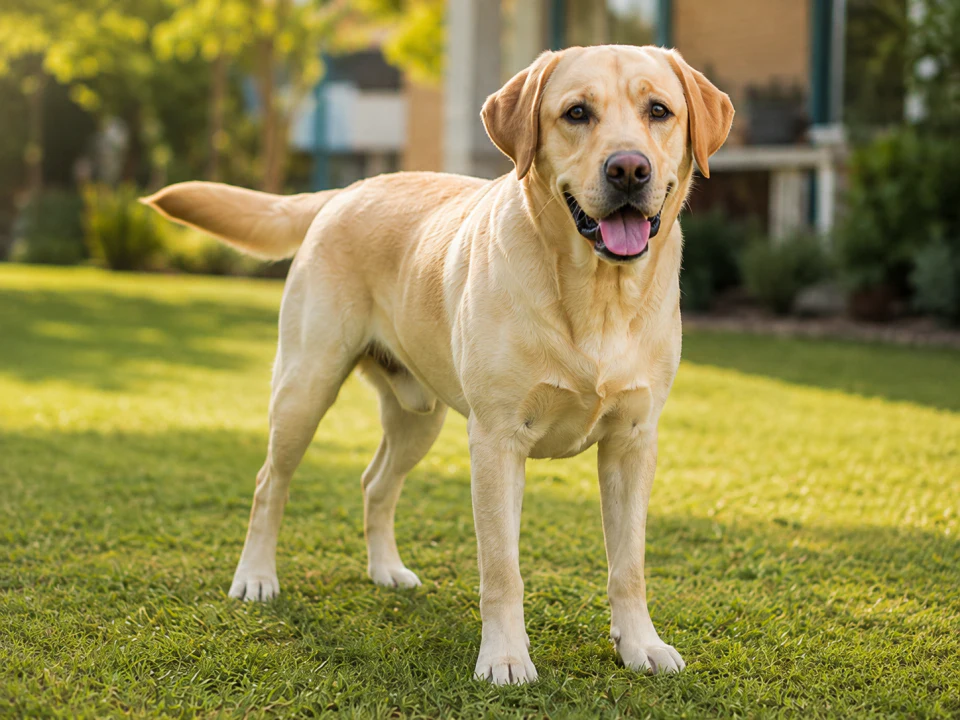
Is a Labrador Retriever suitable for life in Thailand?
Yes, for a household ready for a medium-to-large dog that needs company, training and daily activity. Labradors are widely known for friendliness and willingness to work with people. They often enjoy family routines, retrieving, water and food-based training.
They are not automatically calm or effortless. A young Labrador can be bouncy, mouthy, strong and extremely interested in food. Thailand’s heat requires sensible exercise timing, while the short double coat sheds more than its neat appearance suggests.
Quick facts
Recognised height
About 54 to 57 cm under the FCI standard
Expected lifespan
Often a commitment of 10 years or more
Exercise
Daily walks, retrieving, sniffing and training
Grooming
Simple coat care but regular shedding
Home
Best where a substantial active dog can move and rest comfortably
Best suited to
Involved households wanting a friendly, trainable companion
What should families understand about Labrador puppy energy?
The familiar steady adult is not the starting point. Labrador puppies explore with their mouths, become excited easily and grow into strong adolescents before mature behaviour develops. Calm greetings, lead manners, settling and not jumping on people are valuable from the beginning.
Daily routine matters more than exhausting the puppy. Appropriate play, short training, sniffing, rest and gradual exposure to ordinary life create a better foundation than forced long-distance exercise.
Temperament and family suitability
The FCI describes Labradors as good-tempered, adaptable, devoted, intelligent and eager to please, without aggression or undue shyness. Many are outgoing and affectionate, but that does not mean every dog wants the same amount of contact or stimulation.
A Labrador often suits family life when adults provide structure and children understand calm interaction. The breed’s enthusiasm can overwhelm very young children unless greetings and indoor movement are trained.
Adult size and expected lifespan
The FCI gives an ideal height of 56 to 57 cm for males and 54 to 56 cm for females. Weight and build vary, but this is a substantial dog that needs suitable transport, non-slip footing, feeding and handling.
Plan for a long relationship through energetic youth, mature adulthood and later years. No lifespan is guaranteed, and keeping the dog lean and appropriately active is an everyday responsibility.
From playful puppy to powerful adult
A puppy will gain height, weight, reach and strength quickly. Habits that seem funny in a small puppy can become difficult in a full-grown dog, so teach calm household manners early.
The adult shown here illustrates the broad, athletic build of a Labrador. Final size, colour shade and temperament still vary between individuals and family lines.


Exercise and mental stimulation
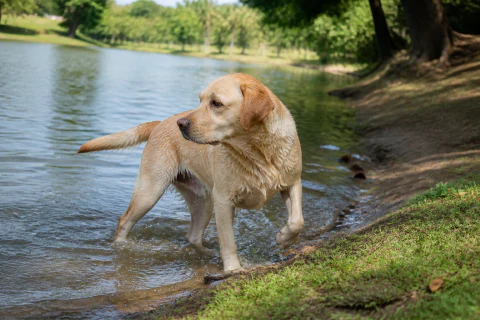
Most adult Labradors benefit from daily walks plus purposeful activity such as retrieving, swimming where water is safe, scent games and training. Repetition alone can become dull, while variety uses both body and mind.
Puppies need natural movement, play and rest rather than forced distance. In Thailand, put longer activity into cooler periods and use indoor searches or training during hot or stormy weather.
Training considerations
Food motivation and interest in people can make training enjoyable. Manage food carefully, reward the behaviour you want and teach waiting, recall, lead manners, dropping objects and settling from an early age.
Prevent rehearsals of jumping, pulling and stealing rather than relying on correction later. Everyone in the household should use the same simple rules.
Barking and independence
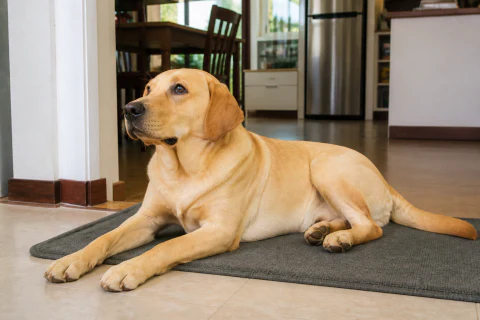
Labradors are not usually chosen primarily as alert dogs, but individuals may bark at visitors, excitement or frustration. Adequate activity and a trained settle help more than expecting silence from an under-stimulated adolescent.
They commonly prefer company. Build time alone gradually and provide a safe routine rather than changing suddenly from constant puppy attention to long absences.
Grooming, shedding and smell
The short double coat is easy to brush but sheds. Regular brushing, floor cleaning and extra coat removal during heavier shedding periods are realistic parts of ownership.
Dry the dog thoroughly after swimming, rain or bathing and check ears, skin and feet. A clean dry Labrador should not have a strong smell, but a wet dense coat and bedding can hold odour.
Children and other animals
Many Labradors are affectionate with children, but size and exuberance need supervision. Teach the dog calm greetings and teach children not to climb on, disturb or take food from any dog.
Careful introductions can support life with other dogs and household animals. Retrieving background does not remove individual chase interest or the need for management.
Condos, gardens and time alone
A garden is useful but does not meet the need for walks, training and social contact. Condo living is possible for some adults, but lifts, shared corridors, toileting, noise and moving a large dog through limited space all need planning.
A Labrador left alone and under-occupied may chew, scavenge or create its own entertainment. The ordinary weekday routine matters more than what the family can provide occasionally.
Heat and humidity
The dense coat, body size and enthusiastic nature can make hot-weather activity demanding. Use cool mornings and evenings, shade, water, air movement and indoor alternatives. Avoid hot surfaces and do not rely on the dog to stop before becoming uncomfortable.
Body condition makes a practical difference. A lean dog can usually move and cool more comfortably than an overweight one, although every individual still needs sensible limits.
Health and everyday care
Useful everyday care includes maintaining a healthy body condition, measuring food, regular brushing, tooth brushing, nail care, ear checks after water, routine vaccinations and parasite prevention agreed with the family’s vet.
This is general ownership information, not veterinary advice. A marked change from the dog’s normal appetite, energy, breathing, movement, skin, eyes or ears should be discussed with a veterinarian.
How Perfect Pedigree sources Labrador Retrievers
Perfect Pedigree has helped families find puppies in Thailand since 2014. We use long-standing relationships and current local research to understand the parents, likely adult build, temperament, early environment and practical fit for the intended home.
We explain the individual puppy’s known upbringing, veterinary care and documentation before reservation. These details vary and are confirmed rather than assumed from the Labrador label. A person remains involved before reservation.
Typical availability in Thailand
Labradors are widely known in Thailand, but suitable litters are not continuously available through Perfect Pedigree. Colour alone does not determine suitability. Timing, parents, puppy temperament and the family’s routine matter more.
Available Labrador Retriever litters and enquiries
Current options appear by litter on Available Puppies. If no Labrador is shown, tell us about children, other animals, home, activity, experience and timing so we can respond usefully.
Frequently asked questions
Is a Labrador a good first dog?
It can be for a household ready to learn, train consistently and manage a strong energetic adolescent. Friendly does not mean maintenance-free.
Can a Labrador live in a condo?
Some can, but the family must solve daily exercise, toileting, shared-space manners, heat and time alone. Size makes those practical details important.
Do Labradors shed?
Yes. The coat is short but dense and regularly releases hair, with heavier periods for some dogs.
Sources and authorship
- Fédération Cynologique Internationale, Labrador Retriever Standard No. 122, used for recognised height, coat, retrieving background and broad temperament characteristics.
- The Royal Kennel Club, Retriever (Labrador) breed information, used for general ownership, exercise, grooming and lifespan context.
- The Labrador Retriever Club, about the breed, used for the breed’s working purpose, athletic build, coat and characteristic temperament.
- Blue Cross, keeping pets cool in summer, used for practical hot-weather precautions relevant to exercise and transport in Thailand.
- Perfect Pedigree’s first-hand experience helping families find and raise puppies in Thailand since 2014, including experience with Labrador Retrievers.
Breed organisations and welfare sources are used selectively for neutral facts and practical context. Their registration, health-testing and purchasing recommendations are not presented as Perfect Pedigree policy.
Would this breed suit your family?
Browse current litters or tell us what you are looking for. We will review the enquiry personally and help you understand the next step.