Thailand breed guide
Pomeranian in Thailand: is this breed right for you?
A Pomeranian brings confidence, curiosity and a remarkable coat into a very small body. The right home enjoys an alert companion, handles it as a dog rather than an accessory and can manage grooming, noise and safe daily life.
Is a Pomeranian suitable for life in Thailand?
Yes, for a household that wants a lively, highly involved small companion. Pomeranians can adapt well to compact homes and often enjoy training, exploring and joining family routines. Their size makes transport and indoor activity easier than with a large dog.
Small does not mean effortless. Their full double coat needs care, alert barking can matter in a condo, and a tiny puppy needs protection from falls, rough handling and unsafe play with much larger dogs.
Quick facts
Recognised height
About 21 cm, with a 3 cm tolerance, under the FCI standard
Expected lifespan
Often a commitment beyond 12 years
Exercise
Daily short walks, play and learning
Grooming
Frequent coat care and regular shedding
Home
Well suited to compact homes with noise and safety managed
Best suited to
People wanting a bold, alert and closely involved small dog
Is a Pomeranian the same as a German Toy Spitz?
Under the FCI system, the Pomeranian is the Toy Spitz variety of the German Spitz and is known as Zwergspitz. Other organisations and everyday sellers may use the names differently.
Labels such as teacup, micro or tiny are marketing descriptions rather than separate FCI Pomeranian sizes. Ask about the actual parents, puppy’s development and likely adult build instead of treating a sales label as a guarantee.
Temperament and family suitability
The FCI describes the German Spitz as attentive, lively and exceptionally devoted to its owner. Pomeranians often behave like much larger dogs, showing curiosity, confidence and a strong interest in household activity.
Some are socially bold and others more cautious. Calm exposure, respectful handling and reward-based training help prevent fear from being mistaken for stubbornness.
Adult size and expected lifespan
The current FCI standard gives the Toy Spitz or Pomeranian a height of 21 cm with a tolerance of 3 cm. Individual build varies, and an extremely small puppy requires more protection in ordinary life.
Many Pomeranians remain part of the family for well over a decade. Plan for dental care, grooming, companionship and support across a long life rather than choosing only for puppy size.
From tiny puppy to full-coated adult
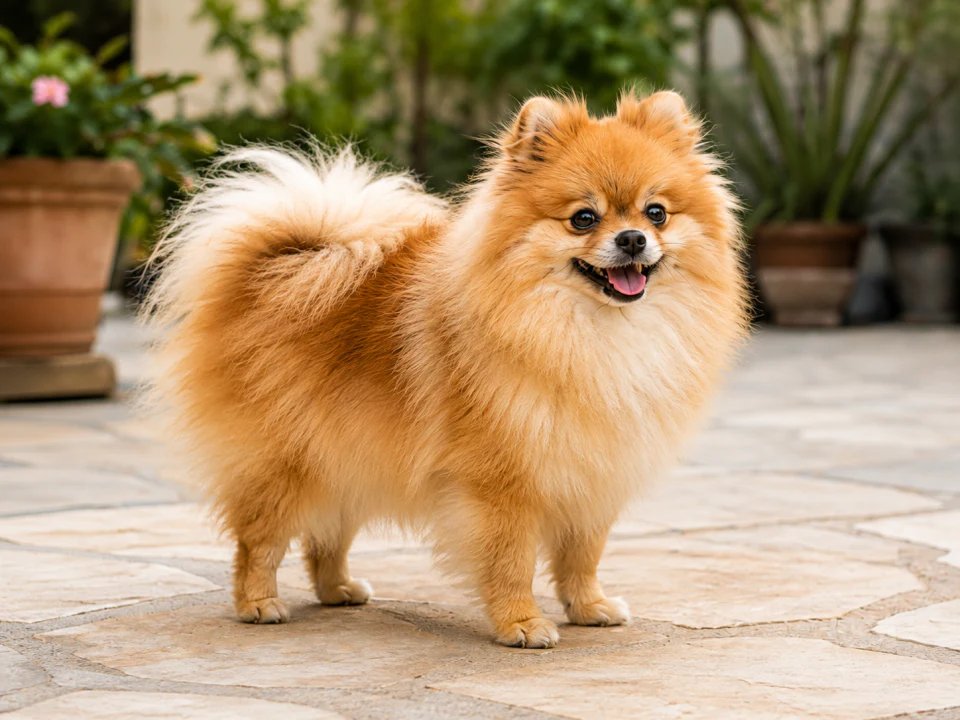
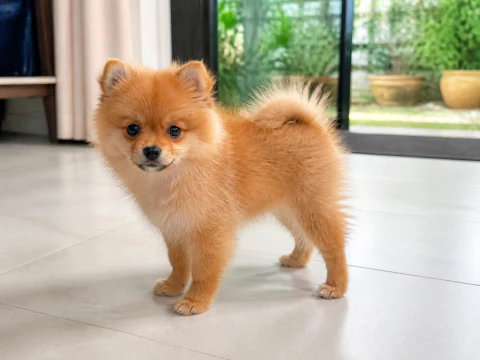
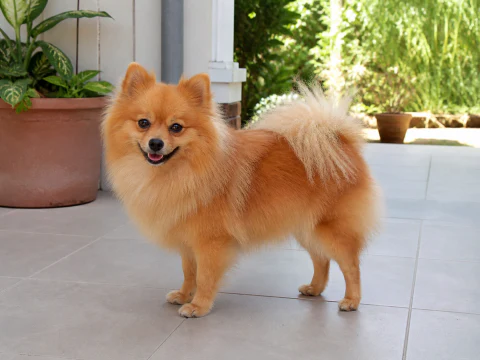
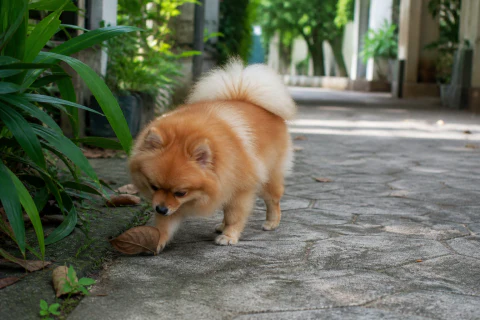
A puppy will change considerably as the adult coat develops. A temporary uneven puppy-to-adult coat stage is normal, and colour shading may also change.
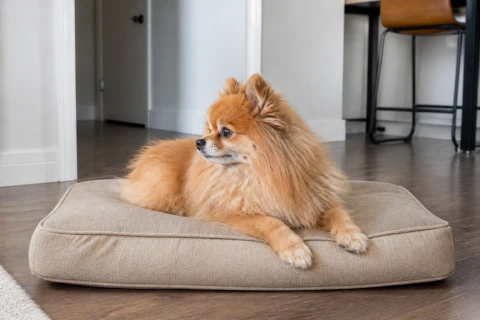
The adult image shows the breed’s characteristic outline and one possible coat colour. Coat volume can make the dog appear larger than the body underneath.
Exercise and mental stimulation
Pomeranians need daily movement and mental activity even though distances are modest. Short walks, sniffing, training and play give the dog a useful outlet and help build confidence.
Avoid carrying the dog everywhere. Safe opportunities to walk, explore and make choices support normal behaviour, while Thailand’s heat may move some activity indoors.
Training considerations
Use small rewards and short sessions for toileting, coming when called, settling, lead walking and accepting grooming. Tiny dogs notice inconsistency just as readily as large ones.
Toileting can require patience in condos or heavy rain. Provide a clear routine and reward success rather than changing the expected location repeatedly.
Barking and independence
Alert barking is a genuine Pomeranian consideration. The breed notices people, doors, lift sounds and other dogs. Teach a quiet settle, reduce repeated window or corridor rehearsals and reward calm observation.
Many form close attachments. Build relaxed time alone gradually so constant carrying and attention do not become the only way the puppy feels safe.
Grooming, shedding and smell
The double coat needs regular brushing through to the skin, with particular attention behind the ears, around the legs and where a harness rubs. Brushing only the surface can leave hidden tangles.
The coat sheds and should not be treated as maintenance-free. Thorough drying after bathing or rain, clean bedding and routine skin checks help keep the coat fresh.
Children and other animals
A Pomeranian can enjoy family life, but the small body is vulnerable to being dropped, stepped on or handled roughly. Young children need close adult supervision and simple rules about picking the dog up.
Introduce larger dogs carefully. Confidence does not protect a very small dog from accidental injury during fast or uneven play.
Condos, gardens and time alone
A condo can suit the breed well when barking, toileting and shared-space confidence are addressed. A cool indoor environment and a safe bed away from busy feet are more important than a large garden.
Use secure harnesses, close gates and supervise balconies. Small dogs can fit through spaces and reach hazards that a family may not notice at first.
Heat and humidity
The full coat and small body require sensible management. Use shade, water, air movement and short outdoor periods in hot weather. Keep the coat clean and free from mats rather than assuming aggressive clipping is the only answer.
Hot paving can affect a dog this close to the ground. Check surfaces and choose cooler times for walks.
Health and everyday care
Useful everyday care includes frequent brushing, tooth brushing, nail care, keeping eyes and face clean, maintaining a healthy body condition and following the family vet’s routine vaccination and parasite plan.
This is general ownership information, not veterinary advice. A marked change from the dog’s normal appetite, energy, breathing, movement, skin, eyes or mouth should be discussed with a veterinarian.
How Perfect Pedigree sources Pomeranians
Perfect Pedigree has helped families in Thailand since 2014. We use long-standing relationships and current research to understand the parents, likely adult size, early environment and confidence of a puppy before suggesting a fit.
We do not rely on terms such as teacup or micro as promises. Known veterinary care and documentation are explained for the individual puppy before reservation. A person remains involved throughout the enquiry.
Typical availability in Thailand
Pomeranians are regularly sought in Thailand, but colour, size and suitable timing vary. We avoid treating an unusually tiny size or one fashionable colour as more important than the puppy’s overall fit.
Available Pomeranian litters and enquiries
Browse current litters first. If none is shown, tell us about children, other dogs, condo living, preferred size and timing so we can respond with realistic guidance.
Frequently asked questions
Is a Pomeranian good for condo living?
Often yes. The main practical issues are alert barking, toileting, safe handling and enough daily activity rather than floor area alone.
Does a Pomeranian need exercise?
Yes. Short walks, exploration, play and training matter even though a small dog does not need the distance of a larger active breed.
Is a teacup Pomeranian a separate breed?
No. Teacup and micro are sales descriptions, not separate FCI Pomeranian varieties. Ask about the actual parents and likely adult build.
Sources and authorship
- Fédération Cynologique Internationale, German Spitz Standard No. 97, used for the Toy Spitz or Pomeranian variety, recognised height, coat and broad temperament characteristics.
- The Royal Kennel Club, Pomeranian breed information, used for general ownership, apartment suitability, grooming and lifespan context.
- American Kennel Club, Pomeranian breed information, used selectively for adult size, activity, training and double-coat care.
- PDSA, dogs in hot weather and on hot walks, used for practical exercise timing, water, shade and hot-surface precautions.
- Perfect Pedigree’s first-hand experience helping families find and raise puppies in Thailand since 2014, including experience with Pomeranians.
Breed organisations and welfare sources are used selectively for neutral facts and practical context. Their registration, health-testing and purchasing recommendations are not presented as Perfect Pedigree policy.
Would this breed suit your family?
Browse current litters or tell us what you are looking for. We will review the enquiry personally and help you understand the next step.