
Thailand breed guide
Miniature Schnauzer in Thailand: is this breed right for you?
A Miniature Schnauzer is a bright, robust small dog with plenty of character and a practical low-shedding coat. The right home enjoys training, can manage alert barking and is ready for regular brushing and trimming.
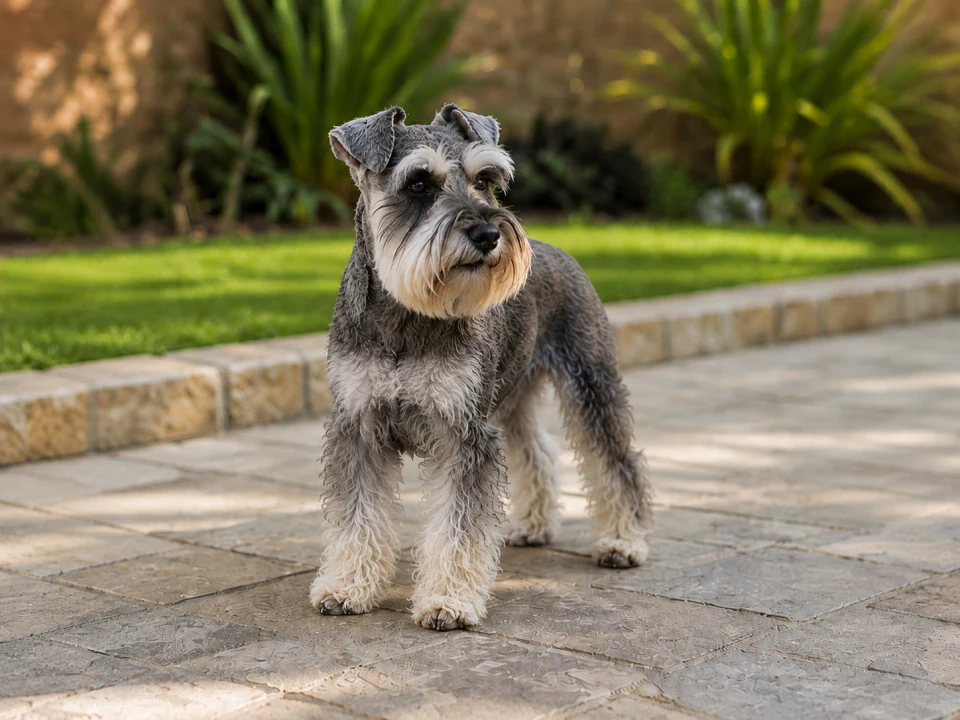
Is a Miniature Schnauzer suitable for life in Thailand?
Yes, for people who want a small but energetic companion and will give it daily activity, training and company. Miniature Schnauzers are sturdy, alert and often highly involved with the household. Their size can suit condos and city transport.
The important practical issues are noise, grooming and mental activity. The wiry coat sheds relatively little into the home but does not maintain itself, and an under-occupied Schnauzer may announce every sound.
Quick facts
Recognised height
30 to 35 cm under the FCI standard
Recognised weight
About 4 to 8 kg under the FCI standard
Exercise
Daily walks, sniffing, play and training
Grooming
Frequent brushing and regular clipping or specialist coat care
Home
Can suit a condo when barking and activity are managed
Best suited to
People wanting an alert, trainable and robust small companion
How is a Miniature Schnauzer different from a Standard Schnauzer?
They are separate sizes with different histories and practical commitments. The Miniature is 30 to 35 cm under the FCI standard, while the Standard is 45 to 50 cm and considerably heavier and stronger.
Both share the distinctive eyebrows, beard, wiry coat and alert character. Choose according to real adult size, activity and handling rather than treating the Miniature as simply a scaled-down Standard in every respect.
Temperament and family suitability
The FCI describes the Miniature Schnauzer as intelligent, fearless, enduring and alert, with character suited to a companion and small watchdog. Many are playful, affectionate and keen to participate.
Alertness can tip into suspicion or noisy reactivity without calm social experience. Introduce the puppy gradually to people, traffic, lifts, visitors and dogs while rewarding composed behaviour.
Adult size and expected lifespan
The FCI range is 30 to 35 cm and approximately 4 to 8 kg. The square, sturdy build can feel more substantial than some other dogs of similar height.
Plan for more than a decade of grooming, activity and companionship. Adult size is best estimated from the actual parents and development, not from terms such as toy Schnauzer, which is not a separate FCI variety.
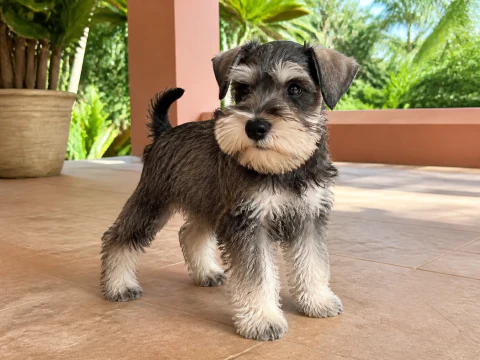
From compact puppy to sturdy adult
A puppy will develop a more defined beard, eyebrows and adult coat. Early grooming practice makes later brushing, clipping and face cleaning much easier.
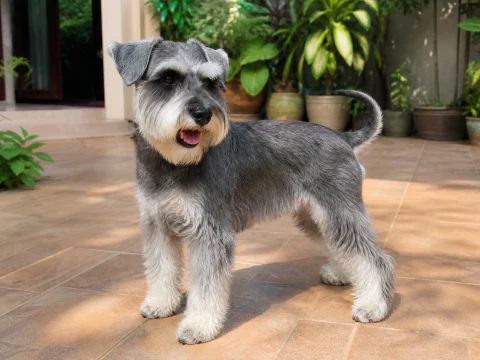
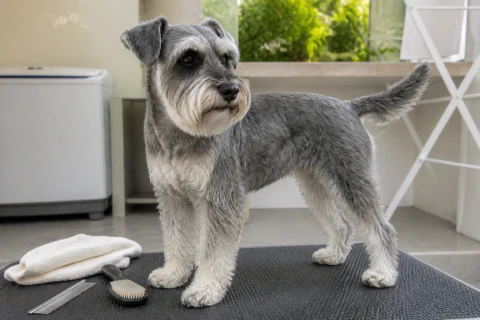
The adult dog shown here illustrates one possible salt-and-pepper coat and practical trim. Other recognised colours and coat finishes are possible.
Exercise and mental stimulation
Miniature Schnauzers usually enjoy daily walks, sniffing, games and learning. Their terrier background can produce enthusiasm for movement and small animals, so purposeful activity is useful.
The compact body makes indoor training practical during Thailand’s hottest hours. Use cooler periods for longer walks and vary routes and games to keep an intelligent dog engaged.
Training considerations
Use reward-based training for toileting, recall, lead manners, settling, grooming cooperation and calm greetings. Short varied sessions help retain interest.
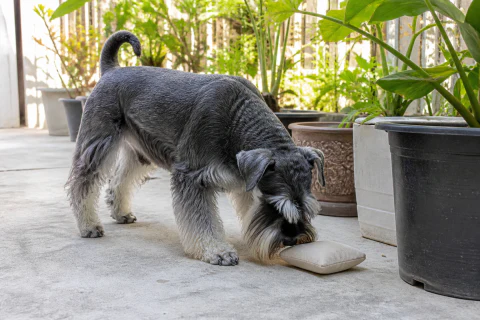
Practise giving up found objects and returning from distractions in safe settings. Individual chase interest varies and should be managed rather than tested near traffic or wildlife.
Barking and independence
Alert barking is one of the most important household considerations. Manage views and repeated corridor triggers, teach a quiet settle and reward the dog for noticing without escalating.
Many want to be close to the family. Teach relaxed time alone gradually, with predictable departures and an appropriate toilet and activity plan.
Grooming, shedding and smell
The wiry outer coat and softer undercoat need regular brushing, beard cleaning and professional attention. Many family dogs are clipped, while specialist hand stripping is a different coat-maintenance choice.
Low shedding does not mean no shedding or no allergy risk. Perfect Pedigree does not describe any dog as hypoallergenic. Keep the beard dry and clean after drinking and meals to reduce smell.
Children and other animals
A well-socialised Miniature Schnauzer can be an engaging family dog. Children should respect food and rest and should not pull the beard or lift the dog without adult guidance.
Early calm introductions help with other animals. Terrier interest in small moving animals varies, so supervision remains important.
Condos, gardens and time alone
Condos can work well when barking, toileting and daily activity are managed. A garden is not essential and does not replace walks, training or social contact.
Provide a cool resting place and enough ordinary weekday engagement. A busy brain with no outlet often finds its own noisy or destructive work.
Heat and humidity
Use shade, drinking water, air movement and cooler exercise times. Keep the coat maintained and the beard, feet and body fully dry after rain or bathing.
A practical clip can make care easier, but no haircut makes strenuous midday exercise sensible. Adjust activity to the dog and the day.
Health and everyday care
Useful everyday care includes frequent brushing, beard and face cleaning, tooth brushing, nail care, maintaining a healthy body condition and following the family vet’s routine vaccination and parasite plan.
This guide is general ownership information, not veterinary advice. A marked change from the dog’s normal appetite, energy, movement, skin, eyes, ears or toileting should be discussed with a veterinarian.
How Perfect Pedigree sources Miniature Schnauzers
Perfect Pedigree has helped families in Thailand since 2014. We use long-standing relationships and current local research to understand the parents, expected adult size, early environment, confidence and fit for the intended home.
Known veterinary care and documentation are explained for the individual puppy before reservation. Details vary, so we confirm them rather than applying one kennel-club assumption. A person remains involved before reservation.
Typical availability in Thailand
Miniature Schnauzers are known in Thailand but suitable litters are not permanently available. Colour, coat, parent size, confidence and timing can vary between enquiries.
Available Miniature Schnauzer litters and enquiries
Current options appear by litter on Available Puppies. If none is shown, tell us about your home, neighbours, children, other animals, activity and timing.
Frequently asked questions
Is a Miniature Schnauzer suitable for a condo?
It can be, provided alert barking, toileting, activity and time alone are managed consistently.
Does a Miniature Schnauzer shed?
The wiry coat generally releases relatively little hair into the home, but it still needs regular brushing and professional maintenance.
Is a toy Schnauzer a recognised size?
No. The FCI recognises Miniature, Standard and Giant Schnauzers as separate breeds or varieties. Ask about actual parent size rather than a toy label.
Sources and authorship
- Fédération Cynologique Internationale, Miniature Schnauzer Standard No. 183, used for recognised size, coat and broad temperament characteristics.
- The Royal Kennel Club, Miniature Schnauzer breed information, used for general ownership, apartment suitability, grooming and lifespan context.
- American Miniature Schnauzer Club, frequently asked questions, used for breed-specific coat care, shedding and the distinction from unrecognised toy or micro labels.
- PDSA, dogs in hot weather and on hot walks, used for practical exercise timing, water, shade and hot-surface precautions.
- Perfect Pedigree’s first-hand experience helping families find and raise puppies in Thailand since 2014, including experience with Miniature Schnauzers.
Breed organisations and welfare sources are used selectively for neutral facts and practical context. Their registration, health-testing and purchasing recommendations are not presented as Perfect Pedigree policy.
Would this breed suit your family?
Browse current litters or tell us what you are looking for. We will review the enquiry personally and help you understand the next step.