
Thailand breed guide
Standard Schnauzer in Thailand: is this breed right for you?
A Standard Schnauzer is a strong, intelligent medium-sized dog with alert character and real working heritage. The right home wants an active companion, provides consistent training and can manage a wiry coat, watchfulness and Thailand’s heat.
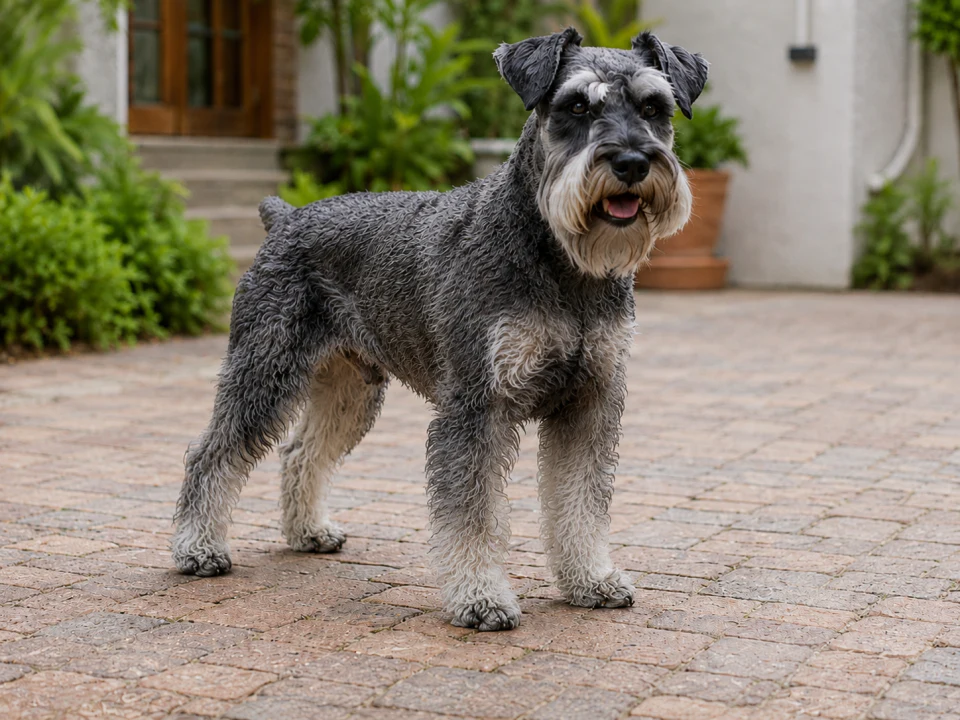
Is a Standard Schnauzer suitable for life in Thailand?
Yes, for an experienced or well-prepared household that wants an involved medium-sized dog. Standard Schnauzers are sturdy, alert and capable. Many enjoy training, purposeful games, long walks at suitable times and participating in family life.
They need more structure, space and activity than the Miniature. Watchfulness, independence and strength can be valuable qualities in the right home but become difficult if the dog is under-socialised or left to invent its own routine.
Quick facts
Recognised height
45 to 50 cm under the FCI standard
Recognised weight
About 14 to 20 kg under the FCI standard
Exercise
Daily varied activity, training and problem-solving
Grooming
Regular brushing and clipping or specialist coat care
Home
Best with room, structure and an active household routine
Best suited to
People wanting a clever, alert and substantial companion
How is a Standard Schnauzer different from a Miniature Schnauzer?
The Standard is a separate, older working breed, not simply an oversized Miniature. At 45 to 50 cm and around 14 to 20 kg under the FCI standard, it has much more reach, strength and physical presence.
Both share a wiry coat, beard, eyebrows and alert intelligence. The Standard generally needs more space, exercise, handling confidence and deliberate socialisation. Families should compare the actual adult commitment rather than choosing on appearance alone.
Temperament and family suitability
The FCI describes the Standard Schnauzer as lively but capable of calm, good-natured, playful, devoted, alert and intelligent. Many form strong family bonds and notice everything happening around the home.
The same qualities need direction. Calm exposure to people, traffic, visitors, handling and other dogs helps an alert puppy distinguish ordinary life from a genuine reason to react.
Adult size and expected lifespan
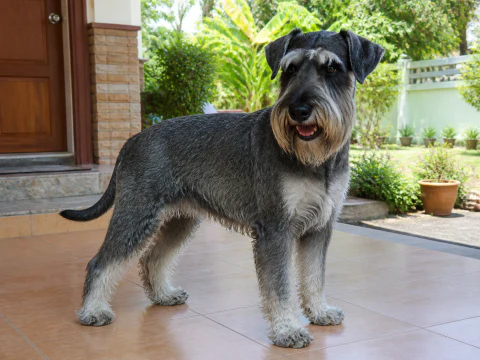
The FCI standard gives a height of 45 to 50 cm and weight of approximately 14 to 20 kg. The square, muscular body makes this a substantial medium dog rather than a small companion.
Plan for a long commitment that includes training, transport, grooming, exercise and support through later life. Ask about the actual parents and build, especially where Schnauzer size names are used loosely.
Understanding the adult commitment
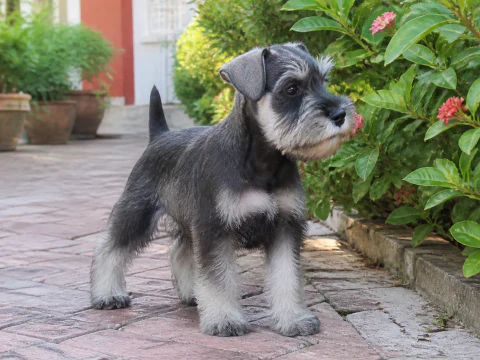
A Standard Schnauzer puppy develops into a compact, athletic adult. Early handling, lead skills, calm greetings and consistent household boundaries are worth establishing before maturity.
The supporting photograph helps show variation in size and outline. Parent size and individual development remain the best guide to a particular puppy’s likely adult build.
Exercise and mental stimulation
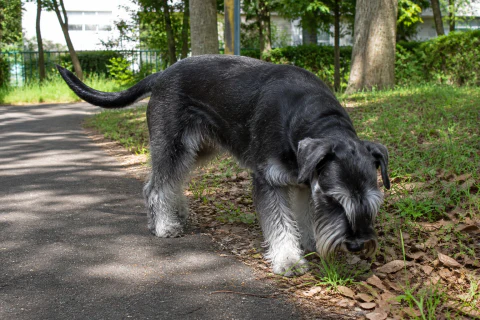
Standard Schnauzers usually benefit from daily walks, training, searching, play and varied tasks. They are not best served by a repetitive short toilet walk or an unused garden.
Use Thailand’s cooler periods for sustained outdoor activity. Indoor scent work, object searches and training can maintain engagement when heat or heavy rain restricts exercise.
Training considerations
Intelligence and independence reward clear, consistent training. Teach recall, lead manners, waiting at doors, calm greetings, settling, grooming cooperation and releasing objects while the dog is young.
Short reward-based sessions build cooperation. Preventing repeated pulling, guarding or explosive greetings is easier than trying to undo a rehearsed habit in a strong adult.
Barking and independence
The breed’s watchful background makes alert barking a genuine consideration. Teach calm observation, manage repeated fence or window rehearsals and give the dog a reliable place to settle.
Standard Schnauzers commonly value close involvement. Comfortable time alone should be taught gradually, with suitable activity before and after absences.
Grooming, shedding and smell
The wiry outer coat and dense undercoat need brushing, beard care and regular trimming. Family dogs are often clipped, while hand stripping is a specialist choice with a different finish.
Low shedding is not no shedding and does not guarantee comfort for people with allergies. Perfect Pedigree does not describe any dog as hypoallergenic. Keep the beard and coat fully dry to reduce tangles and smell.
Children and other animals
A well-managed Standard Schnauzer can be affectionate and playful with family, but strength and enthusiasm require supervision around children. Adults should guide greetings, games, food and rest.
Early introductions can support life with other dogs. Individual chase, guarding and social preferences vary, so responsible management remains necessary.
Condos, gardens and time alone
A house or spacious condo can work when the dog has room to move and settle, daily outside activity and calm shared-space manners. A garden is useful but does not replace engagement.
Consider lifts, stairs, transport, visitors and close neighbours. Moving a strong alert dog through busy common areas requires more training than moving a Miniature Schnauzer.
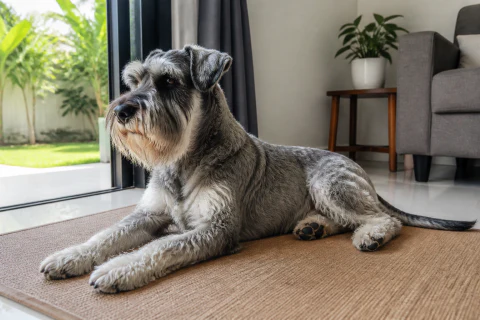
Heat and humidity
Plan exercise for cool mornings and evenings and provide shade, water, air movement and an indoor resting place. Keep the coat maintained and dry after rain or bathing.
Do not assume an athletic dog should work through midday heat. Adjust activity to humidity, surface temperature, body condition and the individual response.
Health and everyday care
Useful everyday care includes regular brushing and beard cleaning, tooth brushing, nail care, maintaining a healthy body condition and keeping routine vaccinations and parasite prevention current with the family’s vet.
This guide provides general ownership information, not veterinary advice. A marked change from the dog’s normal appetite, energy, movement, breathing, skin, eyes, ears or toileting should be discussed with a veterinarian.
How Perfect Pedigree sources Standard Schnauzers
Perfect Pedigree has helped families find puppies in Thailand since 2014. For the less commonly offered Standard Schnauzer, we use long-standing relationships and careful current research to understand the parents, adult build, temperament, early environment and suitability for the intended home.
We explain what is known about care and documentation before reservation. Details vary and are confirmed for the individual puppy rather than assumed from a registry. A person remains involved before any reservation.
Typical availability in Thailand
Standard Schnauzers are considerably less common in Thailand than Miniatures. We do not imply routine availability. A realistic enquiry may require patience, and the exact breed and adult size must be confirmed carefully.
Available Standard Schnauzer litters and enquiries
Browse Available Puppies first. If no Standard Schnauzer is shown, explain your experience, household, activity, reason for choosing the Standard rather than Miniature and preferred timing.
Frequently asked questions
Is a Standard Schnauzer just a large Miniature Schnauzer?
No. It is a separate medium-sized working breed with a different history and a substantially greater adult commitment.
Can a Standard Schnauzer live in a condo?
Some can with enough activity, training, cooling and calm shared-space manners. Strength, watchfulness and barking make management important.
Are Standard Schnauzers commonly available in Thailand?
They are much less common than Miniature Schnauzers. Availability should be confirmed for a genuine current option rather than assumed.
Sources and authorship
- Fédération Cynologique Internationale, Schnauzer Standard No. 182, used for recognised size, working background, coat and broad temperament characteristics.
- The Royal Kennel Club, Schnauzer breed information, used for the original Schnauzer’s history and general exercise, grooming and lifespan context.
- Standard Schnauzer Club of America, breed information, used for breed-specific family life, watchfulness, mental stimulation and coat-care context.
- PDSA, dogs in hot weather and on hot walks, used for practical exercise timing, water, shade and hot-surface precautions.
- Perfect Pedigree’s first-hand experience helping families find and raise puppies in Thailand since 2014, including experience with Standard Schnauzers.
Breed organisations and welfare sources are used selectively for neutral facts and practical context. Their registration, health-testing and purchasing recommendations are not presented as Perfect Pedigree policy.
Would this breed suit your family?
Browse current litters or tell us what you are looking for. We will review the enquiry personally and help you understand the next step.