
Thailand breed guide
Pembroke Welsh Corgi in Thailand: is this breed right for you?
The Pembroke Welsh Corgi is a clever, outgoing herding dog in a low, compact body. It can be a delightful family companion, but the right home expects energy, alert barking and a dense shedding coat rather than choosing it only for its distinctive appearance.
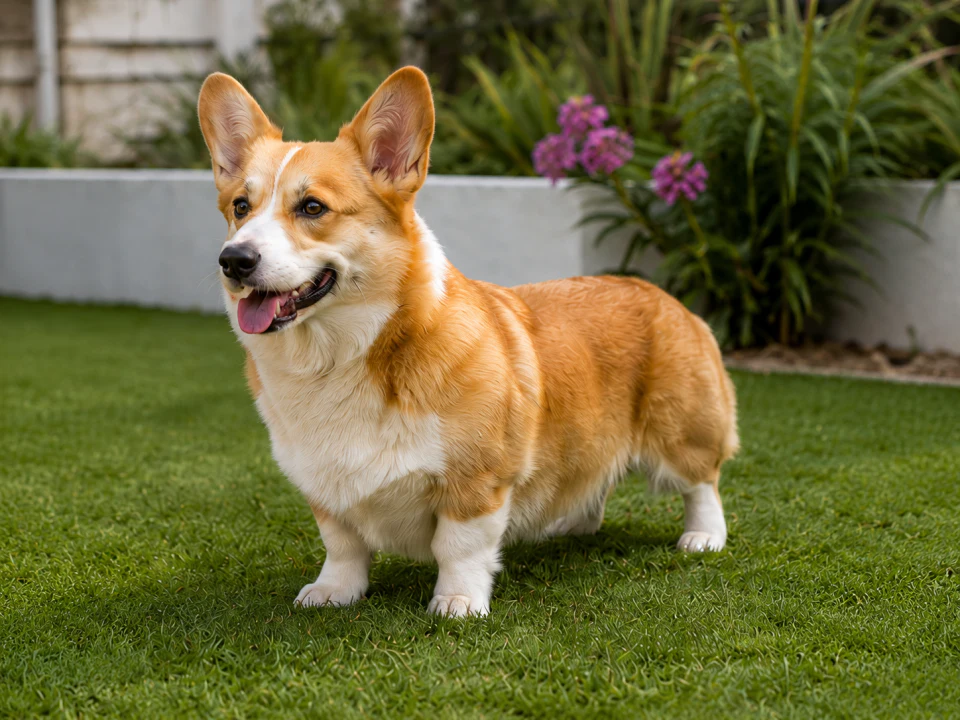
Is a Pembroke Welsh Corgi suitable for life in Thailand?
Yes, for a household wanting an engaged, trainable dog and prepared to provide daily activity, mental work and coat care. Pembrokes are small enough for many city homes but retain the awareness and drive of a pastoral breed.
The long body and short legs do not mean low energy. Many enjoy purposeful walks, games and learning, while the dense double coat makes cooler exercise times and a comfortable indoor environment important in Thailand.
Quick facts
Recognised height
About 25 to 30 cm under the FCI standard
Recognised weight
About 9 to 12 kg under the FCI standard
Exercise
Daily walks, sniffing, games and training
Grooming
Regular brushing with substantial shedding
Home
Can suit a condo when activity and barking are managed
Best suited to
Involved homes wanting a bright, active smaller herding dog
Small stature does not mean a quiet lap dog
The Pembroke was developed as a working cattle dog. Its compact height can make transport and indoor life manageable, while the mind and voice still expect useful occupation.
Families wanting an undemanding small companion may find the shedding, alertness and training needs surprising. Those who enjoy an expressive dog and regular shared activity often find those same qualities rewarding.
Temperament and family suitability
The FCI describes the Pembroke as bold, workmanlike, outgoing and friendly, without nervousness or aggression. Many are affectionate with their families and quick to notice changes around the home.
Herding background can appear as interest in movement, chasing or trying to organise people and animals. Provide constructive games and calmly redirect unwanted behaviour.
Adult size and expected lifespan
The FCI gives a height of about 25 to 30 cm and a weight of 10 to 12 kg for males and 9 to 11 kg for females. The body is substantial despite the low height.
Use ramps or thoughtful handling where repeated high jumps are avoidable, keep floors secure and maintain a lean body condition. Plan for the needs of an active adult as well as an appealing puppy.
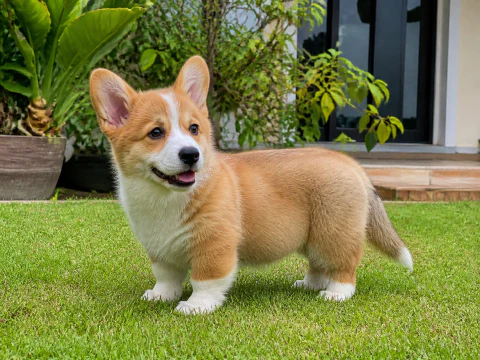
From short-legged puppy to sturdy adult
A young dog will develop a broader body and fuller double coat. Calm lead skills, controlled greetings and sensible household movement are worth teaching before adult confidence arrives.
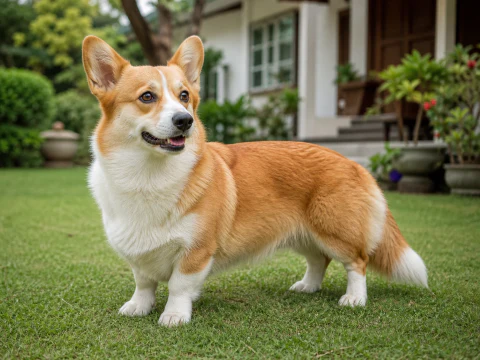
The adult shown here illustrates how easily a Pembroke can join active family life. Final size, coat colour, markings and temperament vary between individuals.
Exercise and mental stimulation
Daily walks, sniffing, training and games suit many Pembrokes. They often enjoy learning tasks and exploring more than repetitive laps of the same route.
Build puppy activity gradually and use cooler parts of the day in Thailand. Indoor searches, trick training and food puzzles help when outdoor conditions are uncomfortable.
Training considerations
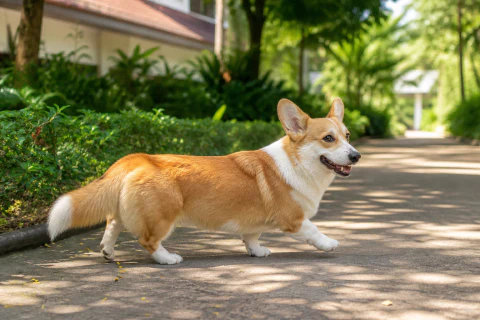
Quick learning can produce both useful skills and efficient bad habits. Reward recall, calm greetings, loose-lead walking, settling and disengaging from moving feet or wheels.
Short, varied sessions maintain interest. Consistent household rules work better than repeating commands after the dog has learned that waiting is optional.
Barking and independence
Pembrokes can be vocal alert dogs. Shared-building sounds, visitors and excitement may all produce barking, so reinforce quiet observation and a reliable settle from an early age.
They generally enjoy being involved with their people. Build time alone gradually and provide appropriate activity before expecting the dog to rest.
Grooming, shedding and smell
The weather-resistant double coat sheds, sometimes heavily. Regular brushing, particularly during seasonal coat release, and realistic home cleaning are part of ownership.
Dry the coat thoroughly after rain or bathing and check feet, ears and skin. The coat should be kept clean and unmatted rather than shaved simply because the weather is hot.
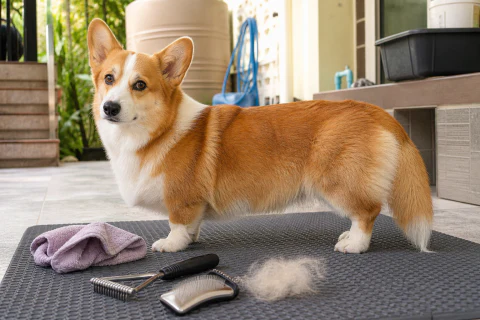
Children and other animals
A well-managed Pembroke can be a cheerful family dog. Supervise lively play, teach children calm interaction and redirect attempts to chase or nip moving feet.
Introductions to other dogs and animals should be controlled. Individual social experience and herding interest matter more than general breed reputation.
Condos, gardens and time alone
A condo can work for a Pembroke whose activity, toileting and alert barking are managed. Stairs, slippery floors, lift manners and a cool resting place deserve practical thought.
A garden provides space but does not replace walks, training or companionship. Secure boundaries matter for a curious dog interested in movement outside.
Heat and humidity
The dense double coat and active nature require sensible heat management. Use cooler exercise times, shade, water, air movement and indoor alternatives, and avoid hot surfaces.
Regular brushing removes loose undercoat and helps keep the coat functional. Adjust pace and duration to humidity and the individual dog rather than following a fixed exercise target.
Health and everyday care
Useful everyday care includes coat brushing, tooth brushing, nail care, maintaining a lean body condition, providing secure footing and arranging routine vaccinations and parasite prevention with the family’s vet.
This guide provides general ownership information, not veterinary advice. Changes in appetite, energy, movement, breathing, skin, ears or behaviour should be discussed with a veterinarian.
How Perfect Pedigree sources Pembroke Welsh Corgis
Perfect Pedigree has helped families find puppies in Thailand since 2014. For a Pembroke enquiry, we discuss activity, barking, coat care and the intended household, then consider the puppy’s temperament, upbringing and known parent information.
We explain the veterinary care, documentation and other information available before reservation. Details vary by puppy and are confirmed rather than assumed from appearance or registration. A person remains involved before reservation.
Typical availability in Thailand
Pembroke Welsh Corgis are known in Thailand, but suitable puppies and preferred timings are not continuously available. Ask for the full breed name because the Cardigan Welsh Corgi is a separate breed.
Available Pembroke Welsh Corgi litters and enquiries
Current puppies appear by litter on Available Puppies. If none is shown, tell us about your home, activity plans and preferred timing so we can discuss whether a current or later enquiry is realistic.
Frequently asked questions
Can a Pembroke Welsh Corgi live in a condo?
Yes, for a family that provides daily activity and manages alert barking, toileting, stairs and shared spaces. Small height does not remove the breed’s active herding character.
Do Pembroke Welsh Corgis shed?
Yes. They have a dense double coat and can shed heavily. Regular brushing and realistic home cleaning are necessary.
Are Pembroke and Cardigan Welsh Corgis the same breed?
No. They are separate breeds with different histories and physical details. This guide is specifically about the Pembroke Welsh Corgi.
Sources and authorship
- Fédération Cynologique Internationale, Welsh Corgi Pembroke Standard No. 39, used for recognised size, coat, pastoral background and broad temperament characteristics.
- The Royal Kennel Club, Welsh Corgi (Pembroke) breed information, used selectively for breed identity and general ownership context.
- American Kennel Club, Pembroke Welsh Corgi breed information, used selectively for herding character, training and coat-care context.
- Blue Cross, keeping pets cool in summer, used for practical hot-weather precautions relevant to life in Thailand.
- Perfect Pedigree’s first-hand experience helping families find and raise puppies in Thailand since 2014, including experience with Pembroke Welsh Corgis.
Breed organisations and welfare sources are used selectively for neutral facts and practical context. Their registration, health-testing and purchasing recommendations are not presented as Perfect Pedigree policy.
Would this breed suit your family?
Browse current litters or tell us what you are looking for. We will review the enquiry personally and help you understand the next step.