
Thailand breed guide
Dachshund in Thailand: is this breed right for you?
The Dachshund is a small hound with a bold outlook, an excellent nose and several recognised size and coat varieties. It can be a loving city companion, provided its family understands the difference between a compact body and an undemanding character.
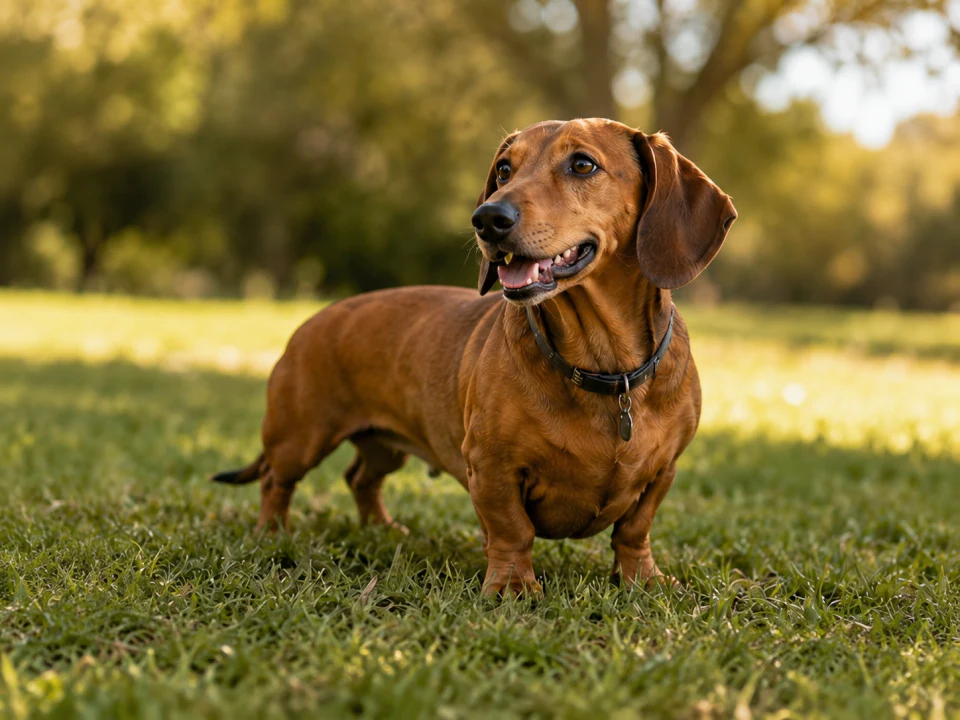
Is a Dachshund suitable for life in Thailand?
Yes, for people who enjoy a lively, affectionate dog and can provide patient training, secure exploration and sensible physical management. Dachshunds were developed to work independently, so many are curious, determined and ready to follow an interesting scent.
Their short legs do not remove the need for exercise or enrichment. They benefit from daily walks and games, while thoughtful handling, non-slip footing and control of repeated jumping help make the home easier for a long-backed dog to navigate.
Quick facts
Recognised varieties
Standard, miniature and rabbit under the FCI system
Coat varieties
Smooth-haired, long-haired and wire-haired
Exercise
Daily walks, sniffing, play and short training sessions
Grooming
Varies from simple brushing to regular coat care
Home
Adaptable to condos when barking, toileting and movement are managed
Best suited to
Patient homes wanting a small dog with genuine hound character
Understanding Dachshund sizes and coats
The FCI recognises standard, miniature and rabbit Dachshunds, each in smooth-haired, long-haired and wire-haired varieties. Other kennel-club systems may use different size categories, so a label alone does not explain the puppy in front of you.
Ask about the actual parents, their size and the puppy’s development rather than relying on informal terms. Coat variety affects grooming, but it does not reliably predict whether an individual will be quiet, easy-going or highly driven.
Temperament and family suitability
Dachshunds are often affectionate with their household, alert to changes and entertainingly self-assured. Their hunting background can also produce persistence and a strong interest in scents, movement and small animals.
Individual temperament matters. Calm early exposure to visitors, traffic, lifts, handling and friendly dogs helps a puppy build confidence without expecting it to welcome every situation.
Adult size and expected lifespan
The FCI separates the three sizes by adult chest circumference rather than a simple puppy weight promise. Development varies, and the parent dogs usually provide more useful context than an informal miniature or tiny label.
No lifespan can be promised. Plan for a long household commitment and for the dog’s routines, movement and support needs to change through puppyhood, adulthood and later life.
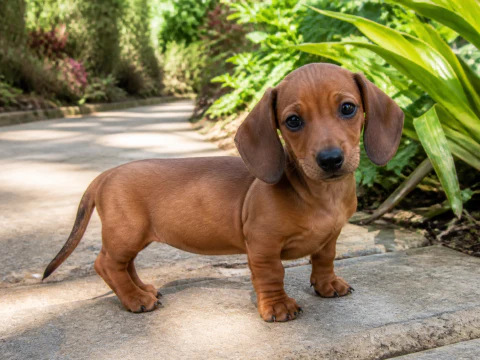
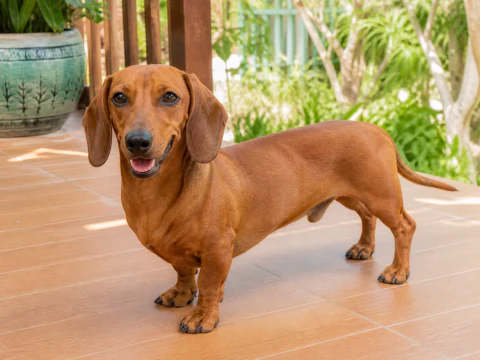
From lively puppy to confident adult hound
A puppy is a smooth-haired Dachshund. Early routines for handling, lead walking, toileting and settling help channel the confidence that often develops with maturity.
The adult dog shown here has a long-haired coat. Adults remain low to the ground but may become more substantial than a young puppy suggests. Colour, coat, size and expression vary between recognised varieties and individuals.
Exercise and mental stimulation
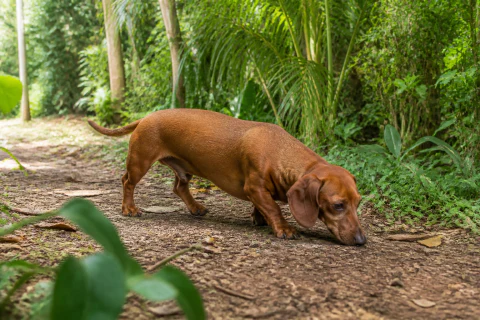
Daily walks, sniffing routes, food-search games and short play sessions suit the breed better than inactivity. Letting the dog use its nose provides valuable mental work without needing long periods of intense exercise.
Build activity gradually and use sensible surfaces. Repeated high-impact jumping, uncontrolled stairs and slippery floors are avoidable household challenges, while normal steady movement and appropriate fitness remain important.
Training considerations
Reward-based training works best when the task is clear and worthwhile. Recall, lead walking, waiting at doors, leaving found objects, settling and comfortable handling are useful priorities.
A Dachshund following a scent may appear to ignore its person. Practise in low-distraction places first and use a secure lead or long line where recall is not dependable.
Barking and independence
Many Dachshunds have a surprisingly strong voice and may alert to corridor sounds, visitors or movement outside. Reward quiet observation and prevent long periods of rehearsed barking, especially in shared buildings.
They often enjoy close company. Introduce short absences gradually, and do not assume that a small dog will automatically be comfortable alone for a full working day.
Grooming, shedding and smell
Smooth coats need simple brushing. Long coats require attention to feathering and tangles, while wire coats need their own brushing and trimming routine. All three varieties shed to some degree.
Keep nails short enough for comfortable footing, check ears and feet, brush teeth and dry the dog after rain or bathing. Regular care is easier when gentle handling is practised from puppyhood.
Children and other animals
A well-matched Dachshund can be a devoted family dog. Children should handle the dog on the floor, avoid rough lifting or chasing and leave it alone when resting or eating.
Introductions to larger dogs and small household animals need supervision. Confidence and hunting interest vary, so breed size should never be treated as proof that an interaction is safe.
Condos, gardens and time alone
A condo can work when barking, toileting and daily activity are organised. Non-slip rugs, secure balconies and sensible access to furniture can make ordinary movement easier.
A garden is useful for supervised sniffing but must be securely enclosed. Dachshunds can investigate gaps and dig, and outdoor access does not replace walks or time with the family.

Heat and humidity
Plan walks for cooler mornings and evenings, provide fresh water and shade, and use a cool indoor resting area. Smooth-coated dogs may have less insulation, while long and wire coats still require sensible heat management.
Avoid hot vehicles and sun-exposed surfaces. Adjust the outing to the individual dog’s pace and comfort instead of trying to complete a fixed distance in hot, humid conditions.
Health and everyday care
Useful everyday care includes maintaining a lean body condition, providing steady appropriate activity, using secure footing, brushing teeth, trimming nails and keeping ears and coat clean. Routine vaccinations and parasite prevention should be agreed with the family’s vet.
This guide provides general ownership information, not veterinary advice. A change in movement, comfort, appetite, energy, breathing, toileting or behaviour should be discussed promptly with a veterinarian.
How Perfect Pedigree sources Dachshunds
Perfect Pedigree has helped families find puppies in Thailand since 2014. For a Dachshund enquiry, we clarify the intended size and coat, look at the actual parents and known development, and consider how the puppy’s temperament fits the household.
We explain the veterinary care, documentation and other information available for the individual puppy before reservation. Those details are confirmed rather than assumed from a variety label. A person remains involved before reservation.
Typical availability in Thailand
Dachshunds are seen in Thailand, but particular combinations of size, coat and colour may not be continuously available. A realistic enquiry allows time to assess the individual puppy rather than choosing from a label alone.
Available Dachshund litters and enquiries
Current puppies appear by litter on Available Puppies. If none is shown, tell us the size and coat you prefer, your household routine and your timing so we can discuss a current or later enquiry.
Frequently asked questions
Are miniature and rabbit Dachshunds the same?
No. The FCI recognises standard, miniature and rabbit sizes, although other organisations use different systems. Ask about the actual parents and expected development rather than relying only on a label.
Can a Dachshund live in a condo?
Yes, when daily activity, toileting and barking are managed. Non-slip flooring and sensible access to furniture are also useful in a home designed around a long-backed dog.
Which Dachshund coat is easiest to manage?
The smooth coat usually needs the least brushing. Long and wire coats need more regular care, but temperament and suitability should matter more than choosing by grooming alone.
Sources and authorship
- Fédération Cynologique Internationale, Dachshund Standard No. 148, used for recognised sizes, coat varieties, purpose and broad temperament characteristics.
- The Royal Kennel Club, Dachshund breed information, used selectively for general breed background and ownership context.
- American Kennel Club, Dachshund breed information, used selectively for hound character, coat variety and activity context.
- Blue Cross, how to keep pets cool in summer, used for practical hot-weather precautions relevant to life in Thailand.
- Perfect Pedigree’s first-hand experience helping families find and raise puppies in Thailand since 2014, including experience with Dachshunds.
Breed organisations and welfare sources are used selectively for neutral facts and practical context. Their registration, health-testing and purchasing recommendations are not presented as Perfect Pedigree policy.
Would this breed suit your family?
Browse current litters or tell us what you are looking for. We will review the enquiry personally and help you understand the next step.