
Thailand breed guide
Belgian Malinois in Thailand: is this breed right for you?
The Belgian Malinois is an exceptionally active, responsive working dog that thrives on sustained partnership and demanding tasks. Its intelligence and athleticism are impressive, but they also make this one of the least suitable breeds for a casual pet home.
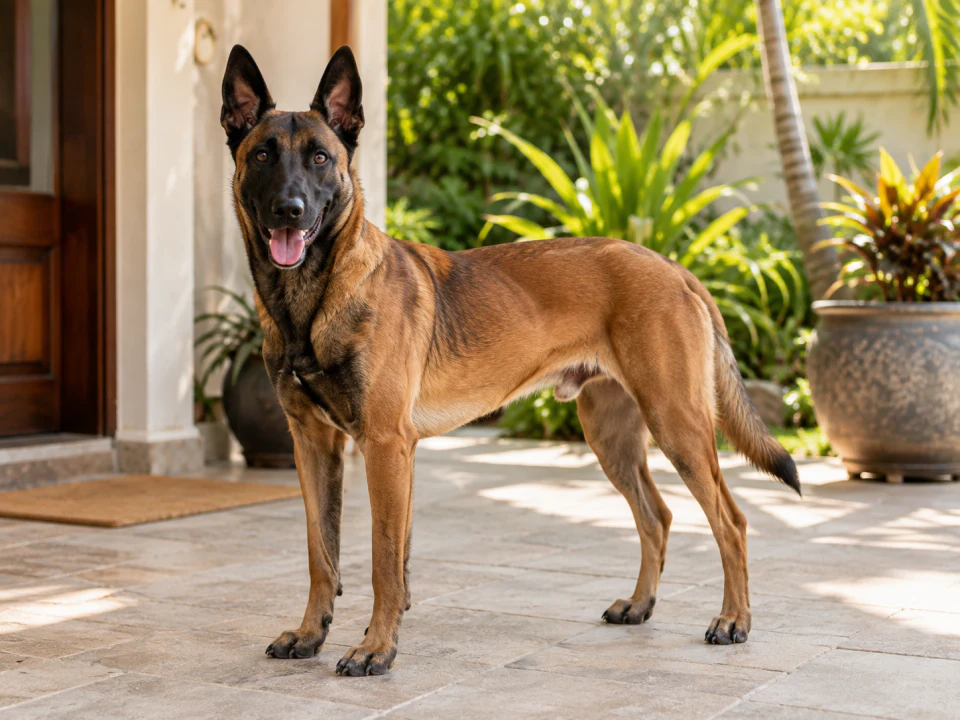
Is a Belgian Malinois suitable for life in Thailand?
Yes, for an experienced person who genuinely wants daily training and purposeful activity to be a central part of life. A suitable Malinois home enjoys the work itself rather than hoping exercise alone will make an intense dog easy.
For many ordinary households, the honest answer is no. The same drive, speed and responsiveness admired in working videos can become frustration, destructive behaviour or unsafe chasing when the dog is underused or poorly directed.
Quick facts
Recognised height
Around 58 cm for females and 62 cm for males
Adult build
Medium-large, lean, fast and muscular
Exercise
High daily physical and mental workload
Grooming
Simple double-coat care with shedding
Home
Secure management and close working partnership
Best suited to
Experienced handlers who actively want a working dog
More than a high-energy family dog
A long walk and access to a garden are rarely enough. Malinois are selected for sustained attention, fast responses and willingness to work, so they need structured learning, challenging outlets and a handler who enjoys frequent engagement.
Working demonstrations show the result of extensive training, not automatic household behaviour. Buyers should assess the individual puppy and its background rather than choosing the breed because a dramatic video made advanced work look effortless.
Temperament and family suitability
Belgian Malinois are often intensely engaged, quick to notice movement and highly responsive to a familiar handler. The recognised ideal is confident and alert, not fearful or indiscriminately aggressive.
Working drive and sociability vary significantly between individuals and family lines. A puppy should be assessed for the actual home rather than assumed suitable because of breed alone.
Adult size and expected lifespan
The FCI standard centres on about 62 cm for males and 58 cm for females, with limited tolerance. The build is powerful but lighter and more agile than many large guardian breeds.
No lifespan can be guaranteed. This is a long commitment to an active dog whose mental and physical needs may remain substantial well into adulthood.
From alert puppy to intensive working partner
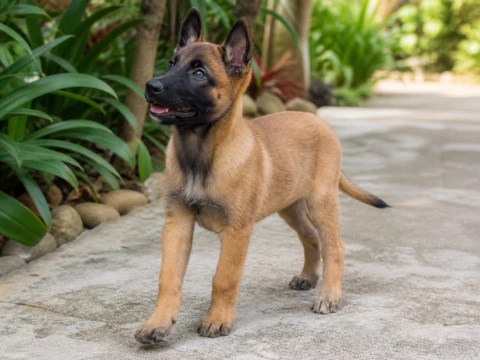
A puppy already shows an attentive expression. Early priorities include engagement, calm handling, rest, recall and carefully controlled exposure, not simply encouraging more speed and excitement.
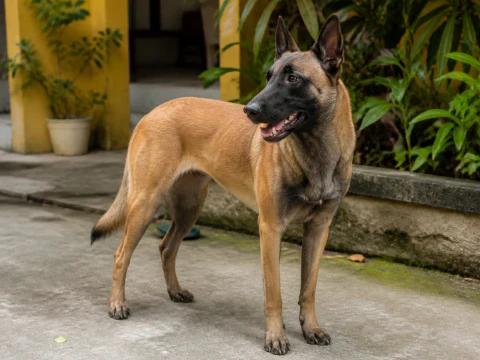
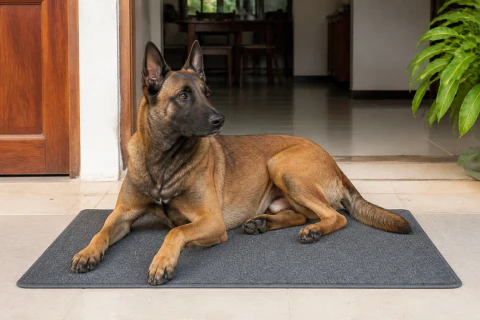
The adult dog shown here illustrates the lean, ready-for-action build. Maturity often increases capability and stamina, so the daily training commitment continues rather than ending after puppy classes.
Exercise and mental stimulation
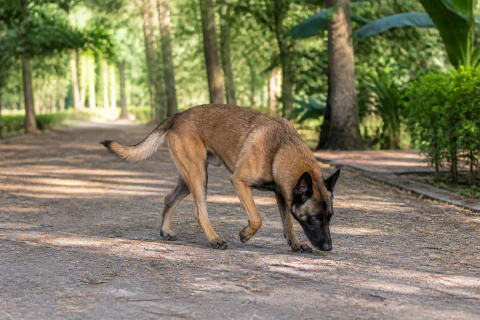
Daily activity needs to include training and thinking as well as movement. Tracking, scent work, obedience, carefully taught retrieving, herding or suitable dog sports can provide purposeful outlets.
More arousal is not always better. Teach rest, impulse control and the ability to disengage, and build young dogs gradually rather than using repetitive impact or uncontrolled running.
Training considerations
Short, precise reward-based sessions suit a fast learner. Recall, lead walking, releasing objects, settling, remaining neutral around movement and responding under distraction are valuable foundations.
Poorly timed punishment or casual protection work can create serious problems. Owners should seek a capable trainer who understands high-drive working dogs and humane modern training.
Barking and independence
Malinois may alert quickly and can become highly responsive to movement or noise. Thoughtful environmental management and rewarding calm observation are important in populated areas.
They require close engagement and may not tolerate an inactive day or sudden long absences. Time alone and quiet routines should be taught deliberately.
Grooming, shedding and smell
The short double coat is practical but sheds, especially during coat changes. Regular brushing removes loose hair and helps keep skin and coat observable.
Keep nails suitable for athletic movement, brush teeth and check feet and ears after activity. The low-maintenance coat should not be confused with a low-maintenance dog.
Children and other animals
Some Malinois live successfully with children in experienced homes, but speed, intensity and sensitivity to movement demand close adult supervision. Chasing and rough play should never be encouraged.
Introductions to dogs, cats and other animals require careful assessment and management. High interest in movement can make some individual matches unsuitable.
Condos, gardens and time alone
Secure fencing, controlled entrances and safe transport are essential. A large property can help, but land does not meet the breed’s need for training and partnership.
Condo living is rarely a comfortable first choice because of activity, sound, shared spaces and limited opportunities for controlled work. The daily lifestyle matters more than the address alone.
Heat and humidity
Plan demanding activity for cooler periods, provide water, shade and cool recovery, and reduce workload in Thailand’s heat and humidity. A motivated dog may continue working beyond sensible comfort.
Handlers must make the decision to stop or shorten activity. Avoid hot vehicles and surfaces and allow full recovery before another task.
Health and everyday care
Useful everyday care includes maintaining an athletic but appropriate body condition, varied age-suitable activity, paw and nail care, dental care and vaccination and parasite-prevention plans agreed with the family’s vet.
This guide provides general ownership information, not veterinary advice. Changes in movement, recovery, appetite, breathing, digestion, skin or behaviour should be discussed with a veterinarian.
How Perfect Pedigree sources Belgian Malinois
Perfect Pedigree has helped families find Belgian Malinois puppies in Thailand since 2014. We consider the individual puppy’s temperament, upbringing, known parent information and whether the household genuinely has the experience and daily plan this breed requires.
We explain the veterinary care, documentation and other information available for the individual puppy before reservation. We also discuss training support, workload, secure management and the difference between wanting an impressive dog and wanting the daily partnership. A person remains involved before reservation.
Typical availability in Thailand
Belgian Malinois are found in Thailand, including dogs bred with very different intended work. Availability alone does not establish suitability, and the individual puppy’s background and temperament require careful discussion.
Available Belgian Malinois litters and enquiries
Current puppies appear by litter on Available Puppies. If none is shown, tell us about your working-dog experience, training plans, household and intended activities so we can assess whether a current or later enquiry is appropriate.
Frequently asked questions
Is a Belgian Malinois a good family pet?
It can be in a highly experienced and active home, but it is not a casual family-pet choice. Daily structured work, training and secure management are central requirements.
Is a long daily walk enough for a Belgian Malinois?
Usually not. The breed needs mental work, training and purposeful engagement alongside physical exercise, plus the ability to settle and recover.
Is a Belgian Malinois the same as a German Shepherd?
No. Both are working shepherd breeds, but the Malinois is a variety of Belgian Shepherd with its own history, build, coat and typical working style.
Sources and authorship
- Fédération Cynologique Internationale, Belgian Shepherd Dog Standard No. 15, used for the Malinois variety, recognised size, coat and broad temperament characteristics.
- The Royal Kennel Club, Belgian Shepherd Dog (Malinois) breed information, used selectively for activity, grooming and general ownership context.
- American Belgian Malinois Club, about the Malinois, used for working character, sustained engagement and realistic household suitability.
- American Kennel Club, Belgian Malinois breed information, used selectively for exercise, coat care and training context.
- Perfect Pedigree’s first-hand experience helping families find and raise puppies in Thailand since 2014, including experience with Belgian Malinois.
Breed organisations and welfare sources are used selectively for neutral facts and practical context. Their registration, health-testing and purchasing recommendations are not presented as Perfect Pedigree policy.
Would this breed suit your family?
Browse current litters or tell us what you are looking for. We will review the enquiry personally and help you understand the next step.