
Thailand breed guide
Thai Ridgeback in Thailand: is this breed right for you?
The Thai Ridgeback is an athletic, short-coated Thailand-native breed with a distinctive line of reverse-growing hair along the back. Loyal and intelligent, it can also be independent, reserved and physically capable, making thoughtful matching and early training important.
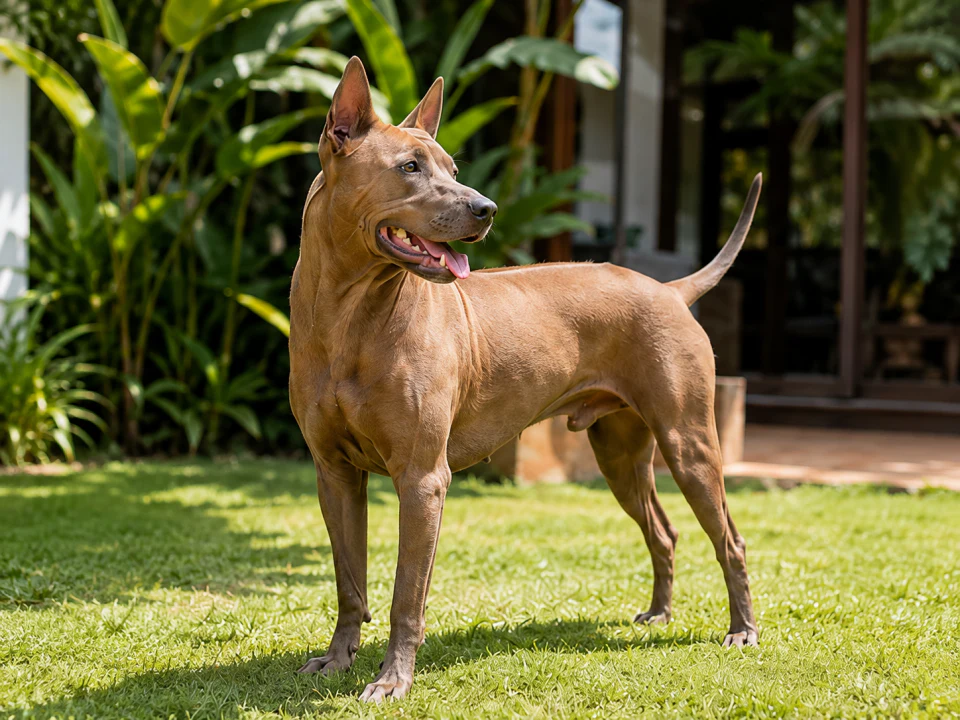
Is a Thai Ridgeback suitable for life in Thailand?
Yes, for an experienced or well-prepared household that values an active, loyal and relatively independent companion. Secure management, patient training and controlled social learning are more important than trying to make the dog behave like an automatically outgoing breed.
Thai Ridgebacks developed with hunting, guarding and self-reliant characteristics. Their intelligence often appears as quick observation and independent choices, so owners need to build cooperation rather than assume obedience will come automatically.
Quick facts
Origin
Thailand, historically associated with the east
Recognised height
About 51 to 61 cm, depending on sex
Coat
Short, smooth and solid-coloured with a dorsal ridge
Exercise
Daily athletic and mental activity
Home
Secure space with confident, involved owners
Best suited to
Experienced homes appreciating an independent native breed
The ridge is distinctive, but character matters more
The ridge is formed by hair growing in the opposite direction along the back and can appear in different symmetrical patterns. It is the breed’s visual hallmark, but it tells a family little about the individual dog’s confidence, drive or household fit.
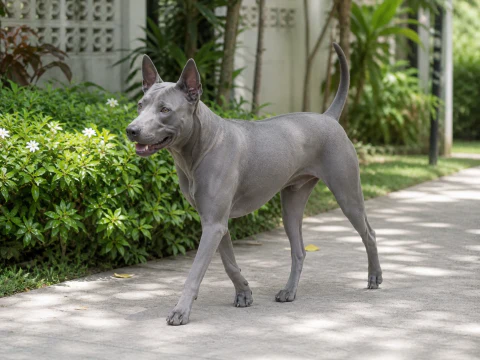
Choose for temperament, upbringing and compatibility rather than ridge shape or colour alone. The recognised solid colours include red, black, blue and very light fawn.
Temperament and family suitability
The FCI describes the Thai Ridgeback as tough, active and loyal to family. Many are intelligent, observant and reserved with unfamiliar people rather than naturally enthusiastic greeters.
Socialisation should create confidence and good recovery, not force contact. Individual temperament, parent information and early environment remain important.
Adult size and expected lifespan
The FCI standard describes males at about 56 to 61 cm and females at about 51 to 56 cm. The body is medium-sized, muscular and built for agile movement.
No lifespan can be guaranteed. Plan for a long commitment to training, secure exercise and family involvement.
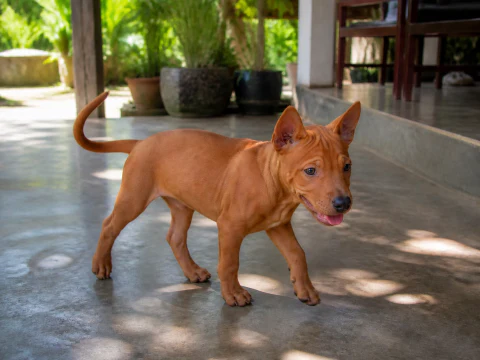
From observant puppy to athletic native dog
A puppy is at a valuable stage for gentle handling, recall, lead work, visitors, travel and calm experiences with ordinary Thai life.
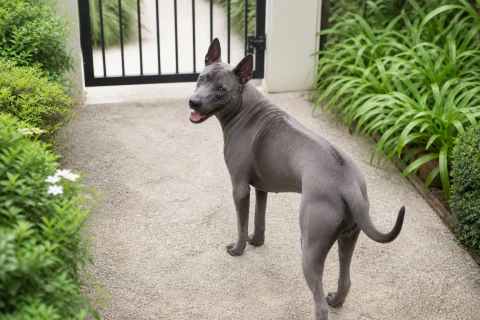
The adult dog shown here has the lean build and distinctive back associated with the breed. Adult speed, jumping ability and independence make secure boundaries and established communication particularly useful.
Exercise and mental stimulation
Daily walks, sniffing, play, training and opportunities to move in safely enclosed areas suit the breed. Mature dogs may enjoy hiking, agility or other athletic activities with their person.
Strong jumping and climbing ability make ordinary fences less reliable than they appear. Young dogs need gradually built exercise rather than repetitive impact.
Training considerations
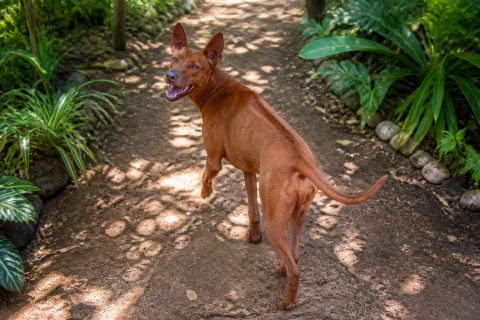
Reward-based training works best when cooperation is worthwhile. Prioritise recall, lead walking, waiting at exits, releasing objects, settling and calm handling.
Practise first in low-distraction settings and use secure leads or enclosed areas when reliability is uncertain. Independence is managed through preparation and relationship, not confrontation.
Barking and independence
Many Thai Ridgebacks are observant and may alert to unfamiliar activity. A clear visitor routine and rewarding calm recovery help the dog understand when no action is needed.
They can form close family bonds while still being self-reliant. Introduce time alone gradually and do not use outdoor isolation as the main living arrangement.
Grooming, shedding and smell
The short coat needs simple brushing and occasional bathing, with some shedding. The ridge should be treated as ordinary coat, not repeatedly rubbed or styled.
Check skin, ears and feet, keep nails comfortable and brush teeth. The light coat offers limited protection from strong sun, rough surfaces and cool air conditioning.
Children and other animals
A well-matched Thai Ridgeback can be loyal to a family. Its athletic movement and reserved nature mean interactions with children need supervision and respect for rest and food.
Hunting background and individual prey interest can affect life with smaller animals. Introductions and ongoing management should be based on the actual dog.
Condos, gardens and time alone
A secure home and safely enclosed exercise area are valuable. Gates, balconies and fences need careful assessment because the breed is agile and capable of jumping.
Condo life is possible only for an individual with strong routines for exercise, shared spaces, visitors and sound. A garden alone is not enough.
Heat and humidity
The breed developed in Thailand and has a short coat, but it can still become too hot. Use cooler times for demanding activity and provide shade, fresh water and cool indoor rest.
Avoid hot vehicles and surfaces. A motivated athletic dog may need its person to shorten activity before it chooses to stop.
Health and everyday care
Useful everyday care includes appropriate body condition, regular age-suitable movement, skin and paw observation, dental care, nail trimming and vaccination and parasite-prevention plans agreed with the family’s vet.
This guide provides general ownership information, not veterinary advice. Persistent changes in skin, movement, appetite, breathing, digestion, energy or behaviour should be discussed with a veterinarian.
How Perfect Pedigree sources Thai Ridgebacks
Perfect Pedigree has helped families find Thai Ridgeback puppies in Thailand since 2014. We consider temperament, upbringing, known parent information and whether the household understands the breed’s independence, athleticism and watchfulness.
We explain the veterinary care, documentation and other information available for the individual puppy before reservation. The discussion focuses on the actual puppy rather than treating a ridge, colour or native status as proof of suitability. A person remains involved before reservation.
Typical availability in Thailand
Thai Ridgebacks are established in Thailand, but well-matched puppies are not necessarily continuously available through Perfect Pedigree. Individual temperament and upbringing deserve more attention than colour or ridge pattern.
Available Thai Ridgeback litters and enquiries
Current puppies appear by litter on Available Puppies. If none is shown, tell us about your experience, household, secure space, colour preference if any and timing so we can discuss a current or later Thai Ridgeback enquiry.
Frequently asked questions
What creates the ridge on a Thai Ridgeback?
A strip of hair grows in the opposite direction to the rest of the short coat. Recognised ridges vary in shape but should be symmetrical along the back.
Is a Thai Ridgeback suitable for a first-time owner?
It is usually easier for an experienced owner because of its independence, athletic ability and natural reserve. A very prepared first-time owner would need strong training support and secure management.
Can a Thai Ridgeback live with other pets?
Some can, especially with careful early introductions, but individual prey interest and social history matter. Ongoing supervision may still be needed.
Sources and authorship
- Kennel Association of Thailand, Thai Ridgeback Dog breed standard, used for local breed history, recognised appearance and Thailand context.
- Fédération Cynologique Internationale, Thai Ridgeback Dog Standard No. 338, used for recognised size, purpose, colours, ridge and broad temperament characteristics.
- American Kennel Club, Thai Ridgeback breed information, used selectively for exercise, grooming and household context.
- United Kennel Club, Thai Ridgeback breed standard, used for breed history, athletic ability and characteristic reserve with strangers.
- Perfect Pedigree’s first-hand experience helping families find and raise puppies in Thailand since 2014, including experience with Thai Ridgebacks.
Breed organisations and welfare sources are used selectively for neutral facts and practical context. Their registration, health-testing and purchasing recommendations are not presented as Perfect Pedigree policy.
Would this breed suit your family?
Browse current litters or tell us what you are looking for. We will review the enquiry personally and help you understand the next step.