
Thailand breed guide
Akita Inu in Thailand: is this breed right for you?
The Akita Inu is the large Japanese Akita: dignified, loyal, independent and usually reserved rather than openly sociable. It can form a profound family bond, but the right home understands strong character, careful introductions and Thailand’s heat.
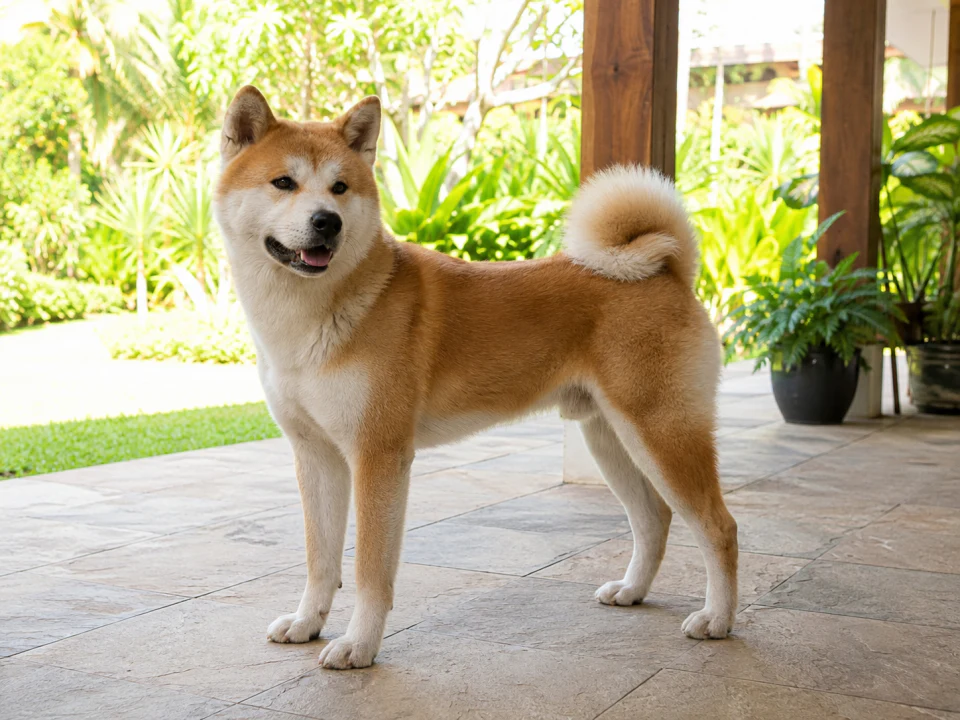
Is an Akita Inu suitable for life in Thailand?
Yes, for an experienced, calm household that respects independence and can manage a large, powerful dog responsibly. Akita Inus are often deeply loyal to family, observant and composed in the home.
They are not expected to greet every stranger or dog as a friend. Early positive experience, secure management and realistic expectations around other animals are more important than trying to force an outgoing personality.
Quick facts
Recognised height
About 61 to 67 cm, with a 3 cm tolerance
Adult build
Large, sturdy and well balanced
Exercise
Daily moderate activity with training and exploration
Grooming
Regular brushing with heavy seasonal shedding
Home
Secure, calm household with reliable indoor cooling
Best suited to
Experienced people who value a dignified independent companion
This guide covers the Japanese Akita, not the American Akita
The FCI recognises the Akita and American Akita as separate breeds. This page concerns the Japanese type, commonly called Akita Inu or Japanese Akitainu, with its more refined spitz outline and recognised red, sesame, brindle or white coat.
Names are sometimes used loosely in Thailand. We confirm the individual puppy’s type, appearance and available parent information rather than assuming that every listing called Akita Inu refers to the same breed.
Temperament and family suitability
Japanese Akita Inus are described as alert, independent, dignified and self-confident. Many are affectionate and protective with family while remaining aloof with unfamiliar people.
Individual temperament varies, and reserve should not be confused with fear or uncontrolled aggression. The aim is a calm dog that can be managed safely without requiring indiscriminate friendliness.
Adult size and expected lifespan
The FCI standard gives about 67 cm for males and 61 cm for females, with a tolerance of 3 cm. The sturdy frame and physical strength require suitable transport and confident adult handling.
Plan for a long commitment without relying on a promised lifespan. Activity, coat care, temperature management and support needs change as the dog moves from puppyhood into later life.
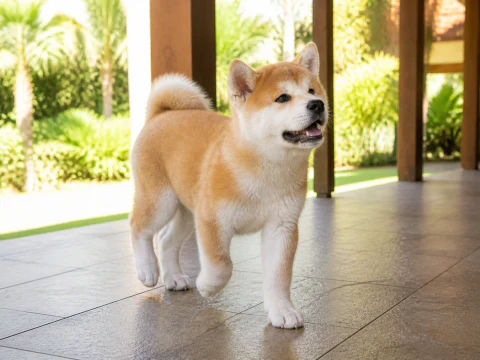
From compact spitz puppy to dignified adult
A puppy is a Japanese Akita Inu rather than the heavier American type. Puppyhood is the time to establish handling, lead manners, calm visitors and neutral experiences around other dogs.
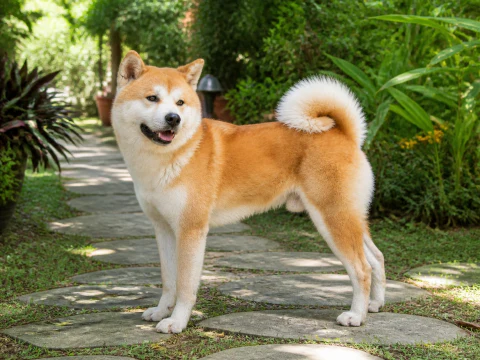
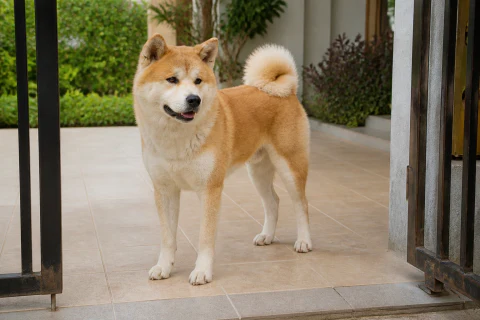
The adult dog shown here illustrates the upright ears, curled tail and composed Japanese spitz character. Maturity may bring greater reserve and selectivity, so responsible management continues after puppy socialisation.
Exercise and mental stimulation
Most adults benefit from daily walks, sniffing, exploration, training and controlled play. The breed needs activity but is not normally managed by endlessly increasing high-intensity exercise.
Secure routes and cooler conditions matter in Thailand. Young dogs need gradual development, while adults often appreciate purposeful walks and a calm home routine.
Training considerations
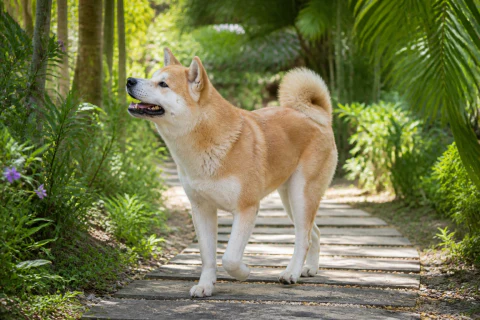
Use respectful reward-based methods for lead walking, recall practice, waiting, releasing objects, settling and cooperative handling. Short, meaningful sessions suit an intelligent dog that may not enjoy repetition.
Management remains important around unfamiliar dogs, visitors and open exits. Training should build trust and reliable routines rather than trying to suppress independence through force.
Barking and independence
Many Akita Inus are relatively quiet but will notice unfamiliar activity and may alert. A calm visitor routine helps the dog understand that the household has accepted the arrival.
They can cope with personal space better than highly dependent companion breeds, but time alone still needs gradual preparation, suitable activity and a secure, comfortable environment.
Grooming, shedding and smell
The straight double coat sheds and can release substantial undercoat seasonally. Brush regularly and more thoroughly when loose undercoat is lifting.
Dry the coat well after bathing or rain and check skin, ears, feet, nails and teeth. The coat should not be shaved as a replacement for grooming or cooling.
Children and other animals
An Akita Inu can be deeply devoted to its family, but size and independent character require adult supervision around children. Children should never disturb eating, sleeping or retreat spaces.
Some adults are intolerant of unfamiliar dogs, particularly of the same sex, and chase interest may affect smaller animals. Household compatibility needs individual assessment and careful management.
Condos, gardens and time alone
A calm, securely fenced home is usually easier than a busy condo. Shared corridors, visitors, lifts and close dog encounters need careful planning if condo living is considered.
The breed belongs with its family and needs a reliably cool indoor base. A garden helps with space but does not replace walks, training or secure gate routines.
Heat and humidity
The dense double coat and large body make Thailand’s heat an important daily consideration. Provide reliable indoor cooling, shade, water and cool recovery, and exercise only when conditions suit the individual dog.
Avoid hot vehicles and surfaces. Reduce or stop activity when the dog slows or appears uncomfortable rather than insisting on a fixed routine.
Health and everyday care
Useful everyday care includes maintaining an appropriate body condition, age-suitable exercise, dental care, nail trimming, coat and paw checks, clean dry bedding and routine vaccinations and parasite prevention agreed with the family’s vet.
This guide provides general ownership information, not veterinary advice. Changes in breathing, movement, appetite, energy, skin, digestion or behaviour should be discussed promptly with a veterinarian.
How Perfect Pedigree sources Akita Inus
Perfect Pedigree has helped families find Akita Inu puppies in Thailand since 2014. We consider individual temperament, upbringing, known parent information and whether the household understands the Japanese type, adult strength and possible selectivity with other animals.
We explain the veterinary care, documentation and other information available for the individual puppy before reservation. We also discuss heat management, training, visitors, children and the difference from an American Akita. A person remains involved before reservation.
Typical availability in Thailand
Japanese Akita Inu puppies are available in Thailand from time to time, but names and types may be used inconsistently. Confirming the individual puppy and available parent information is more useful than relying on a label alone.
Available Akita Inu litters and enquiries
Current puppies appear by litter on Available Puppies. If none is shown, tell us about your experience, home, other animals, cooling and preferred timing so we can discuss a current or later Japanese Akita Inu enquiry.
Frequently asked questions
Is an Akita Inu the same as an American Akita?
No. The FCI recognises them as separate breeds. This page covers the Japanese Akita Inu, while the American Akita is generally heavier and permits different colours and markings.
Is an Akita Inu suitable for a first-time owner?
Usually not the easiest choice. Its size, independence, reserve and potential selectivity with other dogs favour an experienced and well-prepared home.
Can an Akita Inu live with other dogs?
Some can, particularly with thoughtful early introductions, but adult compatibility varies and same-sex intolerance can occur. Individual assessment and continuing management are important.
Sources and authorship
- Fédération Cynologique Internationale, Akita Standard No. 255, used for the Japanese breed’s recognised size, coat, purpose and broad temperament characteristics.
- Japanese Akitainu Club of America, Japanese Akitainu standard, used for Japanese type, independent character and realistic family and dog-social context.
- American Kennel Club, Japanese Akitainu breed information, used selectively for breed identity, background and the distinction from the American Akita.
- Blue Cross, keeping pets safe in hot weather, used for practical hot-weather precautions relevant to Thailand.
- Perfect Pedigree’s first-hand experience helping families find and raise puppies in Thailand since 2014, including experience with Akita Inus.
Breed organisations and welfare sources are used selectively for neutral facts and practical context. Their registration, health-testing and purchasing recommendations are not presented as Perfect Pedigree policy.
Would this breed suit your family?
Browse current litters or tell us what you are looking for. We will review the enquiry personally and help you understand the next step.