
Thailand breed guide
English Bulldog in Thailand: is this breed right for you?
The English Bulldog is a compact, affectionate companion with a calm family presence and unmistakable character. Thailand ownership can work well only when breathing comfort, body condition and protection from heat shape the household’s everyday routine.
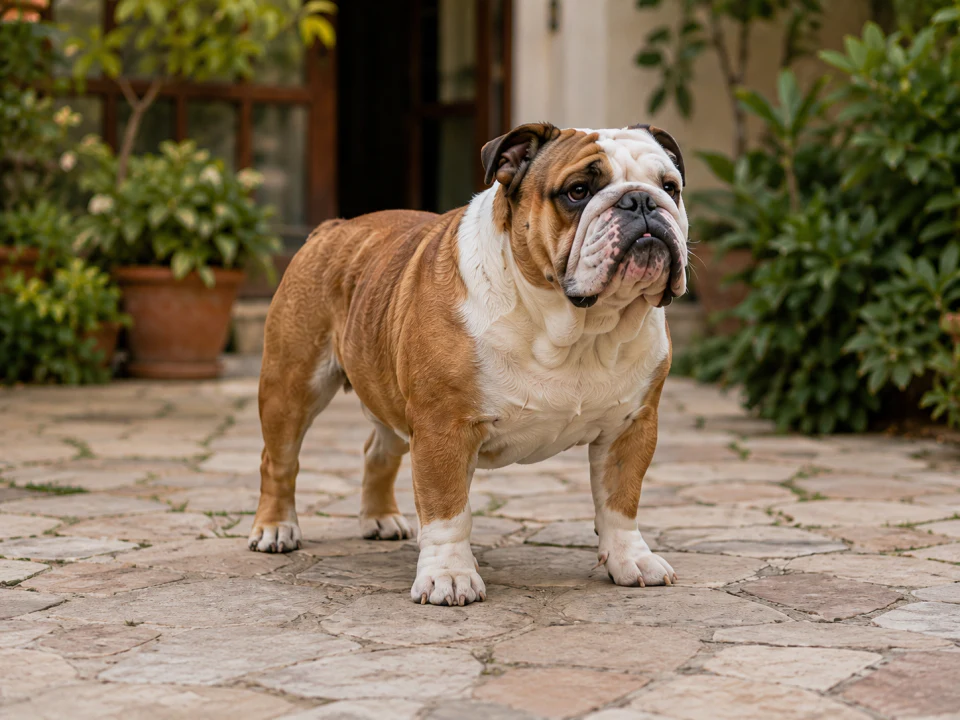
Is an English Bulldog suitable for life in Thailand?
Yes, for a household that wants a close companion and can organise life around the needs of a short-faced dog in a hot climate. English Bulldogs are often loyal, steady and happiest sharing ordinary family life rather than completing demanding exercise.
Their moderate activity needs do not make care effortless. Reliable indoor cooling, careful weight management, regular cleaning and drying of skin folds, and attention to the individual dog’s breathing and movement are central responsibilities in Thailand.
Quick facts
Recognised weight
About 23 kg for females and 25 kg for males
Adult build
Medium, compact, broad and substantial
Exercise
Regular gentle activity adjusted to the individual
Grooming
Weekly coat care plus regular fold, ear, foot and nail checks
Home
Cool indoor family home with easy outdoor access
Best suited to
Attentive households comfortable managing a short-faced breed
Low mileage does not mean low responsibility
An English Bulldog does not need the running programme of an athletic working breed, and many enjoy short walks, play and time with their family. That can suit a less sporty household.
The trade-off is more careful daily management. Exercise quality, body condition, breathing comfort, temperature, skin folds and recovery after activity matter more than reaching a fixed distance.
Temperament and family suitability
English Bulldogs are commonly affectionate, loyal and composed companions. Many enjoy visitors and family attention without needing constant high-intensity activity.
Individuals vary in confidence and sociability. Positive early experiences around people, household sounds, handling and calm dogs help the puppy develop into a settled adult.
Adult size and expected lifespan
The FCI standard gives approximately 25 kg for males and 23 kg for females. Height is less useful than the breed’s compact, broad and heavy-for-size build when planning lifting, travel and home access.
The Royal Kennel Club gives under ten years as a broad lifespan guide. It is not a prediction for an individual, so customers should plan for continuing care and support across the dog’s whole life.
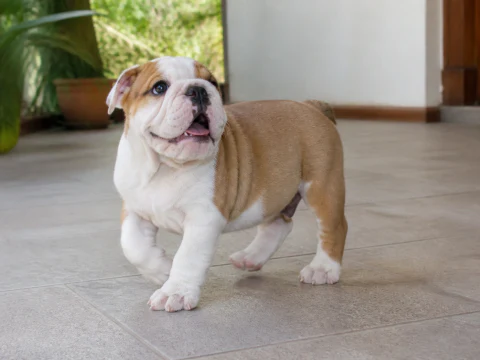
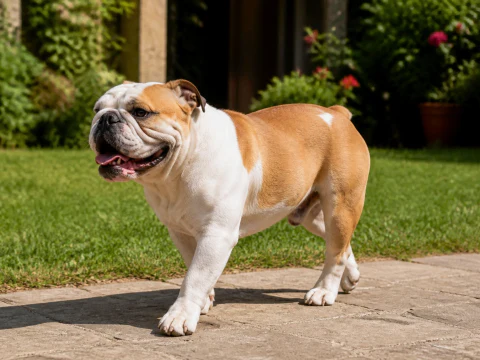
From rounded puppy to substantial adult
A puppy is still light enough to carry and easy to redirect. Puppyhood should build calm handling, lead walking, comfortable grooming, confidence in new places and a habit of resting in a cool indoor space.
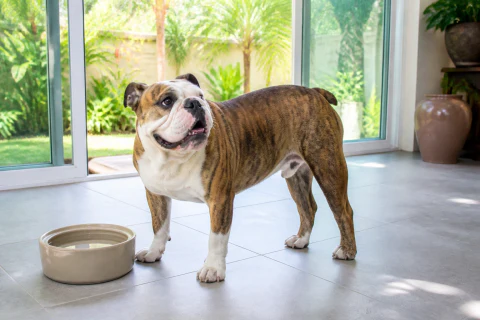
The adult dog shown here illustrates the broader chest, heavier frame and facial folds that develop later. Household plans should suit the adult dog’s transport, cooling, cleaning and movement needs, not only the appealing puppy stage.
Exercise and mental stimulation
Most adults benefit from regular gentle walks, sniffing, play and simple training rather than strenuous running. Several short, enjoyable activities may suit the individual better than one long outing.
Puppies should not be pushed through forced distance. Use the dog’s comfortable breathing, movement and recovery to guide activity, and replace outdoor exercise with indoor games when Thailand’s weather is unsuitable.
Training considerations
Reward-based training works well for lead manners, recall practice, waiting at doors, releasing objects, settling and accepting routine care. Short sessions help keep learning enjoyable.
A calm manner and consistent household rules are more productive than physical confrontation. The goal is a cooperative companion that understands ordinary routines, not a dog forced through uncomfortable activity.
Barking and independence
English Bulldogs are not usually chosen as highly vocal dogs, but individuals may alert to visitors or make other expressive sounds. Condo suitability depends on the particular dog and building, not the breed label alone.
Many value close human company. Introduce time alone gradually and provide a cool, secure resting place rather than expecting the dog to remain outside or entertain itself for a full working day.
Grooming, shedding and smell
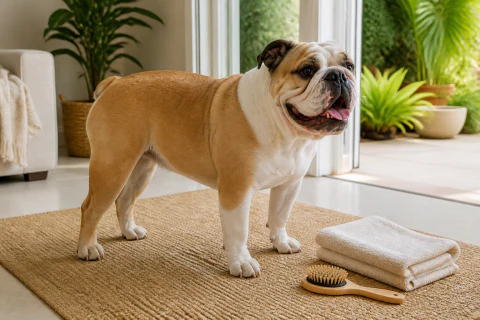
The short coat sheds and normally benefits from weekly brushing. Regularly check and gently clean facial folds, then dry them thoroughly rather than leaving moisture trapped against the skin.
Check ears, feet, nails, teeth and the area around the tail as part of an ordinary routine. Bathing should be followed by complete drying, especially in Thailand’s humidity.
Children and other animals
A well-matched English Bulldog can be an affectionate family companion. Its solid body can still knock over a small child, so adults should supervise greetings and protect the dog’s sleep and meals.
Some live happily with other dogs and cats, while others are more selective. Calm introductions and management of food, toys and resting places are more reliable than assuming universal compatibility.
Condos, gardens and time alone
A condo or smaller home can work because the breed does not require a running field, provided cooling, toileting, lifts or stairs and regular gentle activity are practical.
A garden is convenient but does not replace family contact or safe walks. Repeated stairs, slippery floors and hot outdoor areas deserve attention for a low, heavy dog.
Heat and humidity
Reliable indoor cooling is essential for an English Bulldog in Thailand. Use the coolest suitable times for short outdoor activity, provide water and shade, and allow complete recovery in a cool room.
Short-faced dogs can overheat quickly because panting may be less effective. Never leave the dog in a vehicle or warm enclosed area, and stop activity promptly if breathing or movement becomes uncomfortable.
Health and everyday care
Useful everyday care includes keeping the dog lean enough to move comfortably, maintaining a gentle activity routine, cleaning and drying folds, checking teeth, ears, feet and nails, and providing clean, cool bedding.
This guide provides general ownership information, not veterinary advice. Noisy or difficult breathing, persistent skin irritation, eye discomfort, reduced movement or another marked change from the dog’s normal should be discussed promptly with a veterinarian.
How Perfect Pedigree sources English Bulldogs
Perfect Pedigree has helped families find English Bulldog puppies in Thailand since 2014. We consider the individual puppy’s condition, temperament, upbringing, known parent information and whether the home understands cooling and daily care beyond the breed’s appearance.
We explain the veterinary care, documentation and other information available for the individual puppy before reservation. We also discuss breathing, movement, adult build, folds, family routine and the practical plan for Thailand’s heat. A person remains involved before reservation.
Typical availability in Thailand
English Bulldogs are available in Thailand from time to time. Colour and an especially wrinkled appearance should not outweigh comfortable movement, temperament, upbringing and the household’s ability to provide suitable care.
Available English Bulldog litters and enquiries
Current puppies appear by litter on Available Puppies. If none is shown, tell us about your home, cooling, household routine and preferred timing so we can discuss a current or later English Bulldog enquiry.
Frequently asked questions
Can an English Bulldog live comfortably in Thailand?
Yes, with reliable indoor cooling, carefully timed gentle activity, water and close attention to the individual dog. A hot outdoor-only life is unsuitable.
Does an English Bulldog need much exercise?
It needs regular activity for mobility, enrichment and body condition, but not strenuous distance work. The amount should suit the individual dog, age and weather.
Is an English Bulldog suitable for a condo?
It can be, when cooling, toileting, neighbours, lift or stair access and daily gentle activity are properly planned.
Sources and authorship
- Fédération Cynologique Internationale, Bulldog Standard No. 149, used for recognised build, weight, coat and broad temperament characteristics.
- The Royal Kennel Club, Bulldog, used selectively for activity, grooming, home and broad lifespan context.
- Bulldog Club of America, Are You Ready for a Bulldog?, used for realistic companion, routine, activity and owner-commitment context.
- PDSA, heatstroke in dogs, used for the heightened hot-weather risk and practical precautions for short-faced dogs in Thailand.
- Perfect Pedigree’s first-hand experience helping families find and raise puppies in Thailand since 2014, including experience with English Bulldogs.
Breed organisations and welfare sources are used selectively for neutral facts and practical context. Their registration, health-testing and purchasing recommendations are not presented as Perfect Pedigree policy.
Would this breed suit your family?
Browse current litters or tell us what you are looking for. We will review the enquiry personally and help you understand the next step.