Thailand breed guide
Miniature Bull Terrier in Thailand: is this breed right for you?
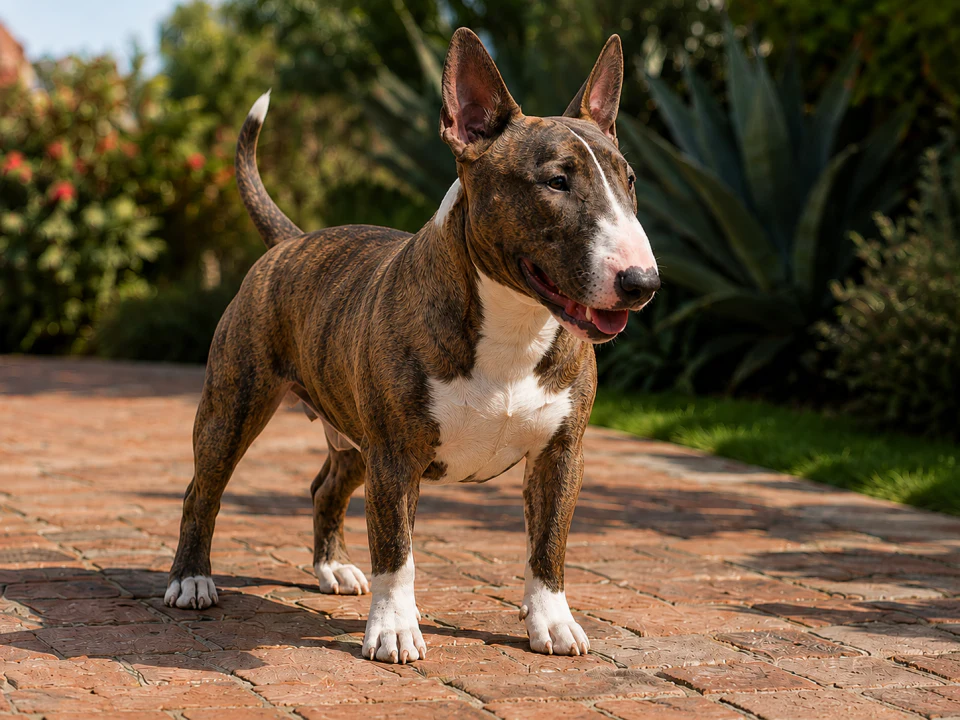
The Miniature Bull Terrier packs the Bull Terrier’s comic confidence, determination and muscular build into a smaller frame. It can be a wonderfully affectionate companion for people who want an active character and will train with patience and consistency.
Is a Miniature Bull Terrier suitable for life in Thailand?
Yes, for a household that enjoys training, play and close companionship and does not mistake small height for an undemanding personality. Miniature Bull Terriers are often affectionate, energetic and entertaining.
They remain strong, busy terriers with independent ideas. Early structure, suitable chewing outlets, calm handling and thoughtful introductions to other animals are important even though the adult is smaller than a standard Bull Terrier.
Quick facts
Recognised height
No more than 35.5 cm
Adult build
Small but strongly built and muscular
Exercise
Daily walks, play, training and mental engagement
Grooming
Straightforward short-coat care with regular checks
Home
Secure home with close family involvement
Best suited to
People who enjoy a bold, persistent and comic terrier
Smaller than a Bull Terrier, not a quieter version
The Miniature Bull Terrier has a maximum recognised height of 35.5 cm, while the standard Bull Terrier has no fixed height or weight limit. The smaller body can make transport and physical handling easier.
Character does not shrink in the same proportion. Many Minis remain energetic, determined, affectionate and inventive, so training and supervision should be planned for a genuine terrier rather than a low-effort lapdog.
Temperament and family suitability
Miniature Bull Terriers are commonly playful, affectionate and full of comic behaviour. Many want to participate in whatever their family is doing and retain a youthful enthusiasm into adulthood.
Boldness and curiosity can also produce impulsive choices. Individual temperament, early experience and the household’s response to excitement shape whether those qualities become enjoyable confidence or constant conflict.
Adult size and expected lifespan
The FCI standard states that height should not exceed 35.5 cm and sets no weight limit, asking for substance appropriate to size and overall balance. Labels such as very small should not replace an honest view of the adult parents and puppy.
The Royal Kennel Club gives over ten years as a broad lifespan guide. Plan for a long period of training, activity and companionship rather than treating puppy intensity as a short phase that disappears automatically.
From busy puppy to compact muscular adult
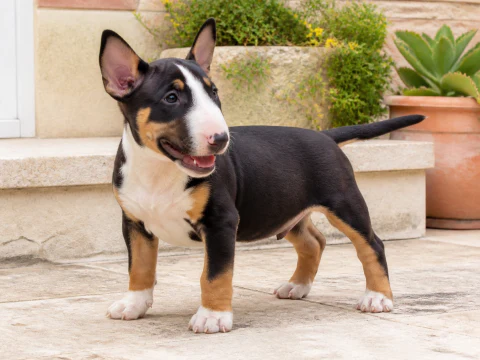
A puppy is at the ideal stage for bite inhibition, toilet routines, calm greetings, lead skills, handling and learning which objects are appropriate to chew.
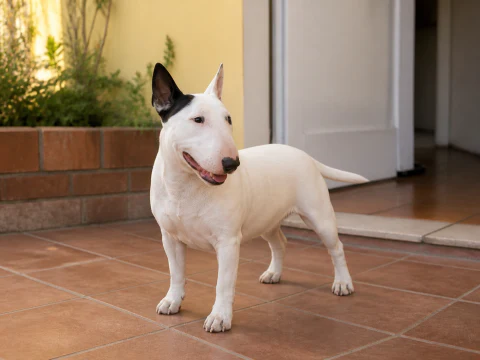
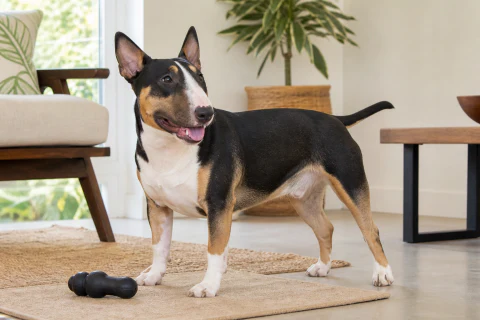
The adult dog shown here illustrates how much muscle and confidence can fit into the recognised height. Consistent training during puppyhood makes adult enthusiasm easier to enjoy and manage.
Exercise and mental stimulation
Adults benefit from daily walks, sniffing, play, searching and varied training. A compact body does not remove the need to move and think, although the dog does not require endurance work.
Young dogs need controlled activity and practice settling. During hot Thai weather, reduce outdoor intensity and use indoor games rather than allowing boredom to build.
Training considerations
Reward-based methods using food, toys and games can channel curiosity and persistence. Lead manners, recall practice, releasing objects, waiting at exits and settling are practical priorities.
The Miniature Bull Terrier Club of America describes the breed as bold and independent and advises creative, motivating training rather than heavy-handed correction. The person needs to be at least as consistent as the dog.
Barking and independence
Minis are not always constant barkers, but excitement, frustration, corridor noise or long periods alone can produce vocal behaviour. Condo suitability should be judged on the individual and daily routine.
They tend to value companionship and supervision. Build time alone gradually and leave the dog in a genuinely safe space with appropriate activities.
Grooming, shedding and smell
The short coat sheds and usually needs weekly brushing. The simple coat does not remove the need to check skin, ears, feet, nails and teeth regularly.
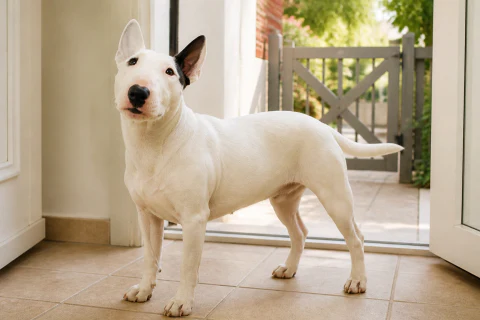
Dry the dog after rain or bathing and use grooming sessions to practise calm handling. White or lightly coated skin should not be left through prolonged intense sun.
Children and other animals
A well-matched Mini can be an affectionate and tireless playmate, but its muscular body, hard head and excited play require adult supervision around children.
Compatibility with dogs and smaller animals varies. Calm introductions, separate resources when needed and continuing management are more reliable than assuming small size guarantees easy relationships.
Condos, gardens and time alone
The smaller frame can suit a condo or compact house when activity, noise, lifts and toileting are well managed. Secure doors and gates still matter for a curious, persistent terrier.
Puppy-proofing should be taken seriously. Appropriate chewing items, supervision and teaching calm independent activities help protect the dog and household.
Heat and humidity
Schedule active walks and play for cooler conditions, provide water and shade, and allow recovery in a cool indoor space. The dog’s enthusiasm should not decide how long it remains active in heat.
Avoid hot vehicles and surfaces. On unsuitable days, short toileting trips plus indoor searching, play and training are safer than insisting on the normal outdoor routine.
Health and everyday care
Useful everyday care includes maintaining a comfortable body condition, balancing activity with rest, providing safe chewing outlets, caring for teeth and nails, and checking skin, ears and feet.
This guide provides general ownership information, not veterinary advice. Persistent skin or ear irritation, changes in hearing response, movement, appetite, energy or behaviour should be discussed promptly with a veterinarian.
How Perfect Pedigree sources Miniature Bull Terriers
Perfect Pedigree has helped families find Miniature Bull Terrier puppies in Thailand since 2014. We consider the individual puppy’s temperament, upbringing, known parent information and whether the household understands terrier persistence and the adult commitment.
We explain the veterinary care, documentation and other information available for the individual puppy before reservation. We also discuss expected size, children, other animals, chewing, training and time alone. A person remains involved before reservation.
Typical availability in Thailand
Miniature Bull Terriers are less consistently available in Thailand than standard Bull Terriers. Customers may need flexibility on colour, markings and timing while keeping temperament and household fit central.
Available Miniature Bull Terrier litters and enquiries
Current puppies appear by litter on Available Puppies. If none is shown, tell us about your experience, home, children, other animals and preferred timing so we can discuss a current or later Miniature Bull Terrier enquiry.
Frequently asked questions
How is a Miniature Bull Terrier different from a Bull Terrier?
The Miniature has a recognised maximum height of 35.5 cm. It remains a muscular, active and determined terrier rather than a calmer toy version of the standard breed.
Is a Miniature Bull Terrier suitable for a condo?
It can be when exercise, training, noise, toileting and time alone are properly managed. Small size does not remove its need for engagement.
Is a Miniature Bull Terrier easy to train?
It is intelligent but can be independent and persistent. Short, motivating reward-based sessions and consistent household rules usually work better than repetition or confrontation.
Sources and authorship
- Fédération Cynologique Internationale, Miniature Bull Terrier Standard No. 359, used for recognised history, maximum height, build, coat and broad temperament characteristics.
- Miniature Bull Terrier Club of America, breed information, used for realistic activity, companionship, time-alone and household-fit context.
- Miniature Bull Terrier Club of America, training a Miniature Bull Terrier, used for motivation, persistence and practical reward-based training context.
- RSPCA, dogs die on hot walks, used for practical exercise, shade, water and hot-surface precautions relevant to Thailand.
- Perfect Pedigree’s first-hand experience helping families find and raise puppies in Thailand since 2014, including experience with Miniature Bull Terriers.
Breed organisations and welfare sources are used selectively for neutral facts and practical context. Their registration, health-testing and purchasing recommendations are not presented as Perfect Pedigree policy.
Would this breed suit your family?
Browse current litters or tell us what you are looking for. We will review the enquiry personally and help you understand the next step.