
Thailand breed guide
Jack Russell Terrier in Thailand: is this breed right for you?
The Jack Russell Terrier is a small, athletic working terrier with intelligence, confidence and energy far beyond its size. It suits active people who enjoy training and want a lively companion, not someone choosing by compact dimensions alone.
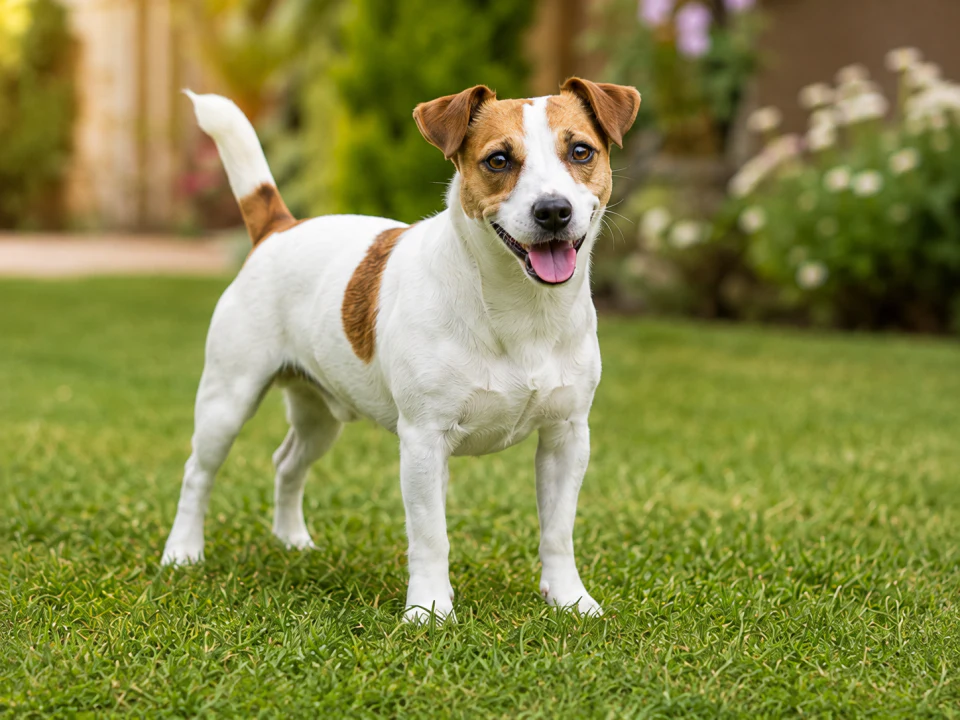
Is a Jack Russell Terrier suitable for life in Thailand?
Yes, for an active household that will give a clever terrier daily movement, training, exploration and clear boundaries. Jack Russells can be affectionate, entertaining and highly capable companions.
Their small size is deceptive. A dog developed to work underground may dig, chase, bark, investigate and make independent choices. The right home enjoys those instincts and gives them appropriate direction.
Quick facts
Recognised height
About 25 to 30 cm
Adult build
Small, flexible, athletic and sturdy
Exercise
Substantial daily activity for a small dog
Grooming
Regular care for smooth, rough or broken coats
Home
Secure home with active daily involvement
Best suited to
Engaged people who enjoy energetic terrier character
Small dog, genuine working-terrier engine
The Jack Russell fits easily into a car or condo, but physical size is not a measure of how much daily involvement a dog needs. Many want to search, chase, dig, learn and play.
A satisfied Jack Russell can settle and become a close companion. A bored one may create its own work through barking, escaping, dismantling objects or pursuing every moving animal.
Temperament and family suitability
Jack Russell Terriers are commonly alert, bold, lively and intelligent. Many form close family bonds while retaining the independence expected of a working terrier.
Confidence should not be confused with unlimited tolerance. Early positive exposure and respectful handling help the dog navigate visitors, children, other dogs and busy environments.
Adult size and expected lifespan
The FCI standard gives an ideal height of 25 to 30 cm and an approximate equivalent of 1 kg for every 5 cm of height. The body should remain flexible and functional rather than heavy.
The Royal Kennel Club gives over ten years as a broad lifespan guide. The breed’s long-term commitment includes activity, training and secure management, not only straightforward physical care.
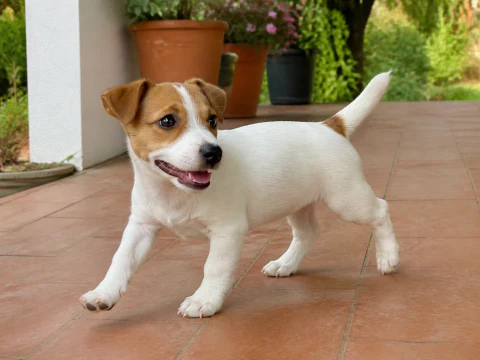
From curious puppy to athletic adult
A puppy is ready to learn recall foundations, calm handling, lead skills, appropriate play and how to disengage from exciting movement.
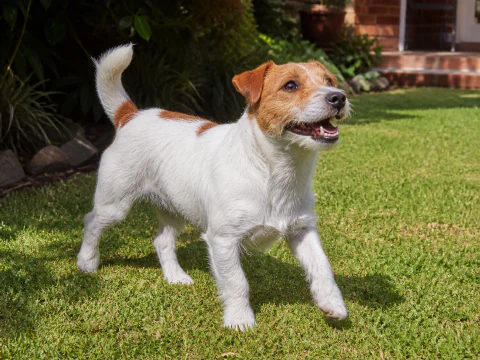
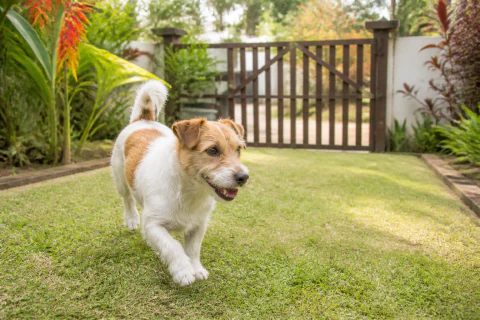
The adult dog shown here illustrates the compact but functional build. Maturity brings more stamina and confidence, so early training should prepare for the energetic adult rather than rely on easy puppy handling.
Exercise and mental stimulation
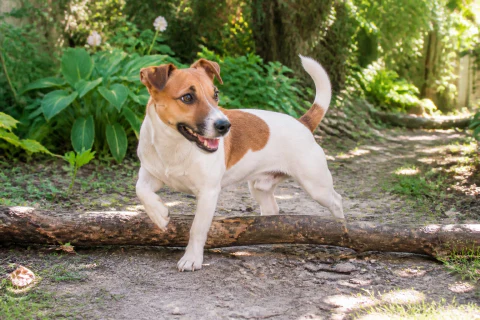
Adults often need more daily activity than buyers expect from a small dog. Brisk walks, sniffing, safe free movement, searching, games and terrier activities can all provide useful variety.
Endless ball throwing can create excitement without balance. Include problem solving, calm exploration and an ability to settle, with strenuous outdoor work moved away from Thailand’s hottest conditions.
Training considerations
Reward-based training should focus on recall practice, lead manners, leaving moving objects, releasing finds, waiting at exits and settling. A long line can provide safe exploration while skills develop.
Terrier independence means management remains important even when the dog knows a cue. Secure areas and realistic expectations protect the dog around traffic, wildlife and open gates.
Barking and independence
Jack Russells may alert readily and can use barking during excitement, frustration or pursuit. Teach quiet recovery and reduce repeated access to corridor, window or fence triggers.
They often enjoy company but can learn sensible time alone when it is introduced gradually after appropriate activity. Boredom is likely to find a noisy or destructive outlet.
Grooming, shedding and smell
The FCI recognises smooth, rough and broken coats. All shed to some degree and need regular brushing, while rougher coats may need additional maintenance to keep their practical texture and shape.
Check feet, nails, teeth and ears, particularly after energetic outdoor exploration. Dry the coat fully after rain or bathing in Thailand’s humidity.
Children and other animals
A well-matched Jack Russell can be a lively family companion, particularly with children old enough to follow calm handling rules. Adults should supervise play and protect rest and meals.
Chase instinct can be significant around cats, rodents and other small animals. Compatibility is individual and should be assessed honestly rather than assumed from the puppy’s size.
Condos, gardens and time alone
A condo can work only when activity, barking, lifts and toileting are well managed. A garden is helpful but should be securely fenced and may still become a digging or patrol area without engagement.
Open gates, balcony gaps and weak fencing deserve attention. A small terrier can move quickly through spaces that would not concern the owner of a larger dog.
Heat and humidity
Use cooler mornings and evenings for active walks, carry water and provide shade and a cool indoor recovery space. Short coats do not make vigorous midday activity safe in Thailand’s humidity.
Reduce distance and intensity when conditions are unsuitable. Indoor searching, tug, training and food puzzles can provide useful work without exposing the dog to hot surfaces or prolonged sun.
Health and everyday care
Useful everyday care includes maintaining an athletic body condition, balancing activity with rest, caring for teeth and nails, checking ears, feet and skin, and providing appropriate outlets for digging, chasing and chewing.
This guide provides general ownership information, not veterinary advice. Changes in movement, appetite, energy, skin, digestion or behaviour should be discussed promptly with a veterinarian.
How Perfect Pedigree sources Jack Russell Terriers
Perfect Pedigree has helped families find Jack Russell Terrier puppies in Thailand since 2014. We consider temperament, upbringing, known parent information and whether the household wants the activity and independence of a working terrier.
We explain the veterinary care, documentation and other information available for the individual puppy before reservation. We also discuss coat, children, other animals, secure space, training and time alone. A person remains involved before reservation.
Typical availability in Thailand
Jack Russell Terriers are seen regularly in Thailand, but local use of the name can cover dogs with different proportions, coats and backgrounds. Customers should consider the actual parents and puppy rather than the label alone.
Available Jack Russell Terrier litters and enquiries
Current puppies appear by litter on Available Puppies. If none is shown, tell us about your activity, home, children, other animals, coat preference and timing so we can discuss a current or later Jack Russell Terrier enquiry.
Frequently asked questions
Is a Jack Russell Terrier suitable for a condo?
It can be for a genuinely active household that manages barking, toileting, secure access and daily mental and physical work. Small size alone does not make condo life easy.
Can a Jack Russell Terrier live with a cat?
Some do, particularly with careful early introductions, but terrier chase instinct varies and may remain significant. The individual dog and household management matter.
Is a Jack Russell Terrier suitable for a first-time owner?
It can be for an energetic, well-prepared person who enjoys training and accepts terrier independence. It is not an effortless small companion.
Sources and authorship
- Fédération Cynologique Internationale, Jack Russell Terrier Standard No. 345, used for recognised history, function, size, coat varieties and broad temperament characteristics.
- Dogs Australia, Jack Russell Terrier, used for the breed’s Australian development and functional working-terrier context.
- The Royal Kennel Club, Jack Russell Terrier, used selectively for activity, grooming, home and broad lifespan context.
- RSPCA, dogs die on hot walks, used for practical exercise, shade, water and hot-surface precautions relevant to Thailand.
- Perfect Pedigree’s first-hand experience helping families find and raise puppies in Thailand since 2014, including experience with Jack Russell Terriers.
Breed organisations and welfare sources are used selectively for neutral facts and practical context. Their registration, health-testing and purchasing recommendations are not presented as Perfect Pedigree policy.
Would this breed suit your family?
Browse current litters or tell us what you are looking for. We will review the enquiry personally and help you understand the next step.