
Thailand breed guide
Saint Bernard in Thailand: is this breed right for you?
The Saint Bernard is a giant, famously benevolent companion with either a short or long coat. Its character can be wonderful for family life, but Thailand ownership requires exceptional commitment to cooling, space, grooming, transport and the realities of a very heavy adult dog.
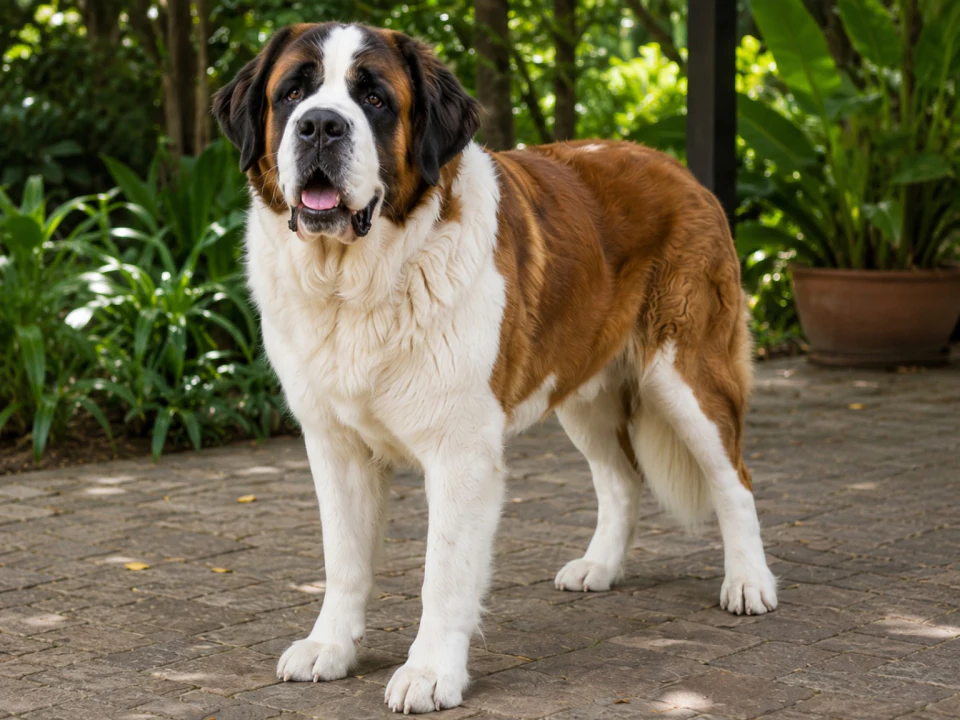
Is a Saint Bernard suitable for life in Thailand?
Only for a household that actively wants a giant dog and can provide a reliably cool indoor life. Saint Bernards are commonly steady, friendly and affectionate, but Thailand’s climate makes their comfort far more demanding than their calm expression suggests.
The home needs practical space, good floor traction, an appropriate vehicle, regular coat and drool management, and enough people capable of guiding the adult safely. This is not a breed for outdoor-only living in Thailand.
Quick facts
Recognised minimum height
About 65 cm for females and 70 cm for males
Adult build
Giant, powerful and substantial
Coat varieties
Short-haired and long-haired
Exercise
Regular moderate activity in cool conditions
Home
Spacious reliably cooled indoor home
Best suited to
Highly prepared households comfortable with giant-dog care
Calm presence, exceptionally large practical commitment
A mature Saint Bernard may be less restless than an athletic gundog and can bring a warm, steady presence to family life. Moderate activity needs are part of the breed’s appeal.
The adult’s weight, coat, drool, heat sensitivity, transport and equipment costs make ownership anything but low maintenance. A calm giant is still a giant.
Temperament and family suitability
Saint Bernards are commonly friendly, steady and benevolent, with a desire to be close to their people. A sound adult should feel composed rather than sharp or hectic.
Positive early experiences around visitors, children, other dogs, grooming and travel help the puppy grow into a confident companion. Full adult strength makes calm habits especially valuable.
Adult size and expected lifespan
The FCI standard gives minimum heights of 70 cm for males and 65 cm for females, with preferred upper limits of 90 cm and 80 cm. Weight varies, but the breed is always large and substantial.
Plan for wide resting space, strong equipment, good traction and a vehicle the dog can enter safely. Carrying an adult is unrealistic, so access during illness or an emergency needs advance thought.
From soft puppy to powerful adult
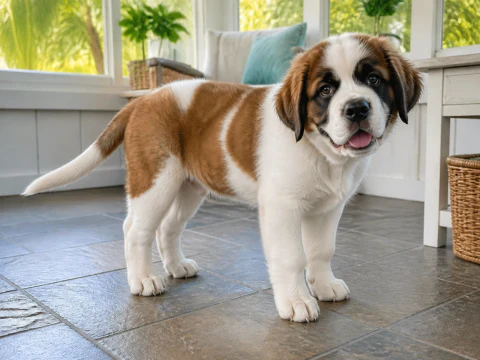
A puppy is still easy to redirect and lift. Puppyhood should establish gentle lead walking, calm greetings, body handling, grooming, vehicle confidence and resting happily in a cool indoor space.
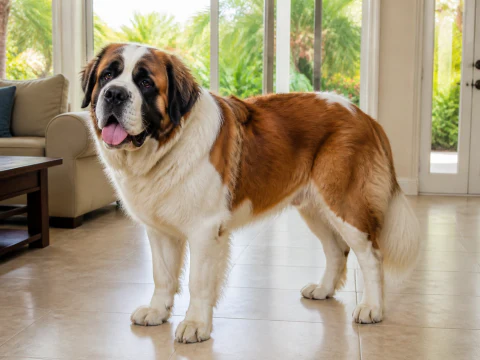
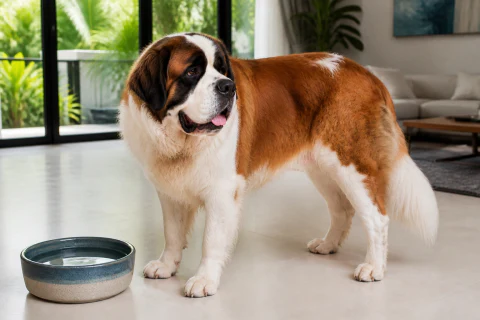
The long-haired adult shown here illustrates the volume of body and coat that develops. Short-haired adults carry less feathering but remain giant, double-coated dogs requiring the same serious planning for cooling, space and transport.
Exercise and mental stimulation
Adults benefit from regular moderate walks, sniffing and family activity rather than prolonged high-intensity work. Activity should suit age, fitness, temperature and the individual dog.
Growing puppies need free, age-suitable movement and training without forced distance or repetitive impact. Hot days call for short toileting trips and indoor enrichment, not persistence with the usual route.
Training considerations
Loose-lead walking, calm greetings, waiting at doors, recall practice, settling and cooperative handling should begin early. Reward-based methods build trust without physical confrontation.
Teach every family member the same cues and boundaries. Allowing pulling or jumping when the puppy is small creates an avoidable problem when the same behaviour is attached to a giant adult.
Barking and independence
Saint Bernards may alert to visitors but are not generally chosen as constant vocal dogs. Their deep voice carries, so barking still matters around close neighbours.
They tend to value family companionship. Build time alone gradually and provide a cool, secure indoor resting area rather than expecting an isolated outdoor guardian.
Grooming, shedding and smell
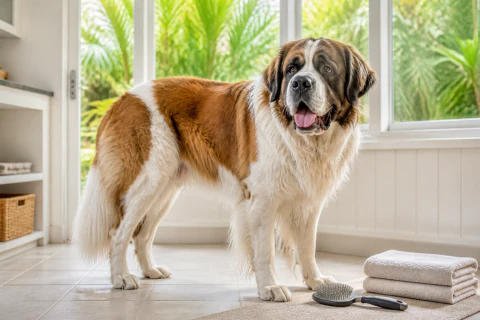
The FCI recognises short-haired and long-haired varieties. Both have a dense double coat and shed; the long-haired variety needs more frequent brushing through feathering and areas prone to tangling.
Regularly check and clean ears, eyes, mouth, feet and nails. Many drool, particularly around food and water, so washable bedding, clean bowls and an ordinary wiping routine make life easier.
Children and other animals
A well-matched Saint Bernard can be patient and affectionate with children. Its sheer weight, tail and enthusiastic greetings can knock a small child over, so adults should supervise every interaction.
Many live well with other animals after careful introductions. Protect resting places and resources, and consider the physical risk when a giant puppy plays with a much smaller pet.
Condos, gardens and time alone
The breed needs usable indoor space, reliable cooling, non-slip flooring and practical access. A small condo, narrow lift or repeated staircase is unlikely to suit many adults even if the dog is calm.
A secure garden helps with toileting and relaxed movement but cannot be the dog’s main living environment in Thailand. Shade alone does not replace a reliably cool indoor base.
Heat and humidity
Reliable indoor cooling is essential for a Saint Bernard in Thailand. The dense coat, giant body and limited opportunity for truly cold weather mean temperature management must shape every day.
Use the coolest suitable periods for short outdoor activity, provide water and shade, and allow full recovery indoors. Never leave the dog in a vehicle or warm enclosed area.
Health and everyday care
Useful everyday care includes maintaining a comfortable body condition, supporting mobility with good traction and bedding, brushing the coat, managing drool, caring for teeth and nails, and checking ears, eyes and feet.
This guide provides general ownership information, not veterinary advice. Persistent digestive upset, reduced movement, breathing difficulty, skin irritation or another marked change from the dog’s normal should be discussed promptly with a veterinarian.
How Perfect Pedigree sources Saint Bernards
Perfect Pedigree has helped families find Saint Bernard puppies in Thailand since 2014. We consider temperament, upbringing, known parent information and whether the household can genuinely provide giant-dog space, cooling, transport and lifelong care.
We explain the veterinary care, documentation and other information available for the individual puppy before reservation. We also discuss coat type, expected adult scale, family routine, drool, grooming and Thailand’s climate. A person remains involved before reservation.
Typical availability in Thailand
Saint Bernards are available in Thailand only from time to time. Customers should prioritise temperament, comfortable movement, upbringing and climate suitability over especially heavy coats, size or markings.
Available Saint Bernard litters and enquiries
Current puppies appear by litter on Available Puppies. If none is shown, tell us about your home, vehicle, indoor cooling, family and preferred timing so we can discuss a current or later Saint Bernard enquiry.
Frequently asked questions
Can a Saint Bernard live comfortably in Thailand?
Only with reliable indoor cooling, carefully timed outdoor activity, water and a household organised around a giant, dense-coated dog. Outdoor-only living is unsuitable.
Are there short-haired and long-haired Saint Bernards?
Yes. Both are recognised varieties with dense double coats. The long-haired variety has more feathering and generally needs more brushing.
Is a Saint Bernard suitable for children?
It can be a gentle family companion, but its weight and strength require adult supervision, calm training and enough space for safe interaction.
Sources and authorship
- Fédération Cynologique Internationale, St. Bernard Standard No. 61, used for recognised size, short-haired and long-haired varieties, build and broad temperament characteristics.
- The Royal Kennel Club, St. Bernard, used selectively for recognised giant build, coat varieties and temperament context.
- Saint Bernard Club of America, illustrated commentary on the standard, used for breed-specific temperament, structure and practical adult-scale context.
- PDSA, dogs die in hot cars and on hot walks, used for practical hot-weather, vehicle, shade and water precautions relevant to Thailand.
- Perfect Pedigree’s first-hand experience helping families find and raise puppies in Thailand since 2014, including experience with Saint Bernards.
Breed organisations and welfare sources are used selectively for neutral facts and practical context. Their registration, health-testing and purchasing recommendations are not presented as Perfect Pedigree policy.
Would this breed suit your family?
Browse current litters or tell us what you are looking for. We will review the enquiry personally and help you understand the next step.