
Thailand breed guide
Weimaraner in Thailand: is this breed right for you?
The Weimaraner is a large, athletic gundog known for close human attachment, intelligence and sustained energy. It can be a devoted partner for an active household, but it is rarely a good choice for people seeking an undemanding dog that spends long days alone.
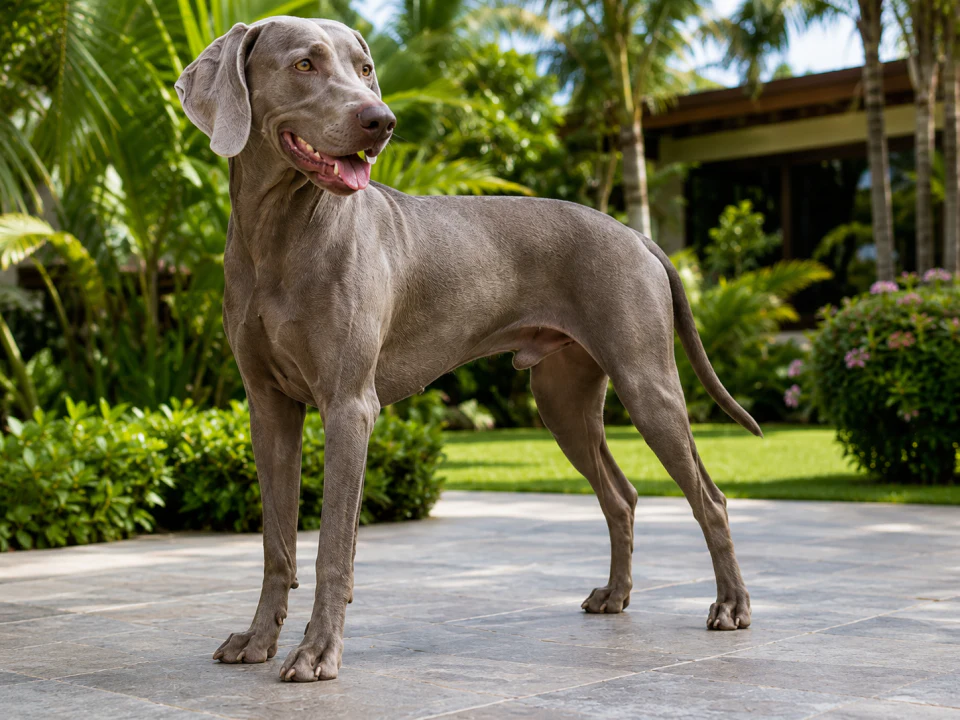
Is a Weimaraner suitable for life in Thailand?
Yes, for people who want the dog to be an active part of everyday life and enjoy training, walking, exploring and shared activity. Weimaraners commonly form a very close bond and thrive on useful involvement.
The breed needs more than access to a garden. A realistic Thailand plan combines substantial activity during cooler conditions, indoor training and enrichment, progressive time-alone skills and a calm ability to settle after work.
Quick facts
Recognised height
About 57 to 65 cm for females and 59 to 70 cm for males
Adult build
Large, lean, strong and athletic
Coat varieties
Short-haired and long-haired
Exercise
High daily physical and mental commitment
Home
Active, involved home with secure outdoor access
Best suited to
Experienced or well-prepared active households
A close companion with a working-dog engine
Weimaraners are often affectionate and highly people-focused, which can create a strong sense of partnership. They may be happy relaxing at home after their needs are met.
That relaxed period is earned through appropriate exercise, training and engagement. Close attachment without independence training can also make abrupt, long absences particularly difficult.
Temperament and family suitability
Weimaraners are commonly intelligent, energetic and devoted to their people. Many are expressive, physically affectionate and eager to participate in whatever the household is doing.
Their enthusiasm can become jumping, grabbing or restless attention-seeking without guidance. Positive early experience and a predictable routine help confidence develop without encouraging constant dependence.
Adult size and expected lifespan
The FCI standard gives heights of 59 to 70 cm for males and 57 to 65 cm for females, with broad weights of 30 to 40 kg and 25 to 35 kg respectively.
This is a strong large dog. Vehicle space, lead control, safe doors and gates, and the ability of household members to manage an excited adult all deserve consideration.
From soft grey puppy to powerful athlete
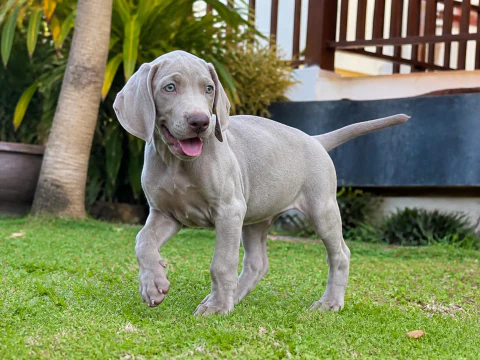
A puppy is at the ideal stage for recall games, lead foundations, calm handling, confidence in new settings, short periods alone and learning that excitement is followed by rest.
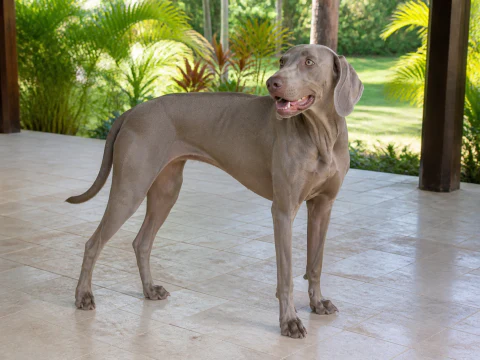
The adult dog shown here illustrates the lean, muscular frame and long stride that develop. Adult plans should include safe outlets for movement and scent work, not simply a larger food bowl and occasional weekend walk.
Exercise and mental stimulation
Adults need a substantial daily combination of purposeful walking, free movement where safe, scent work, play and training. A brief toilet walk is not an adequate routine for most individuals.
Puppies need varied age-suitable activity rather than forced long-distance running. In Thailand, move strenuous outdoor exercise to the coolest suitable times and use indoor learning when weather closes that window.
Training considerations
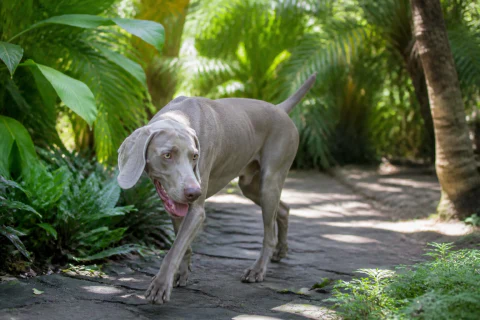
Reward-based training can use food, toys, searching and access to movement. Recall, loose-lead walking, releasing objects, settling, waiting at exits and comfortable handling are useful priorities.
The gundog background can bring persistence, scent interest and chase. Practise around gradually increasing distractions and use secure areas or a long line until recall is genuinely dependable.
Barking and independence
Some Weimaraners alert or vocalise when excited, frustrated or left alone, while others are quieter. Condo suitability depends on activity, independence training and the individual dog.
Build time alone in small, successful steps from puppyhood. An energetic young dog should not move suddenly from constant company to an entire working day without preparation and support.
Grooming, shedding and smell
The FCI recognises short-haired and long-haired varieties. The short coat needs simple weekly care, while the long coat requires more brushing around feathering and areas that collect debris.
Both shed. Check ears, teeth, feet, skin and nails regularly, and dry the dog well after swimming, rain or bathing in humid conditions.
Children and other animals
A well-matched Weimaraner can be affectionate and playful with children. Its speed, size and excitement can overwhelm small children, so adults should supervise and teach calm greetings.
Compatibility with dogs and smaller animals varies. Hunting heritage makes careful introductions, management and a realistic view of the individual dog more reliable than assumptions.
Condos, gardens and time alone
A house with secure outdoor access is often easier, but a garden does not replace structured activity. A condo is demanding and only realistic where exercise, lifts, noise and time alone are exceptionally well managed.
Secure fencing and doors matter for a curious athletic dog. Indoors, teach a clear resting routine so activity does not turn into endless pacing and attention-seeking.
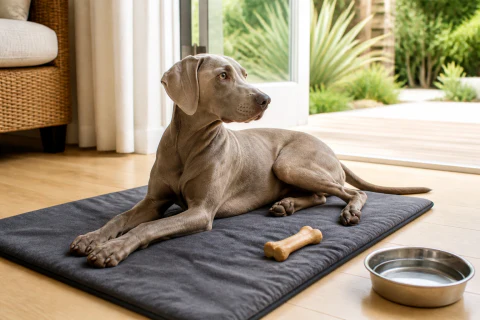
Heat and humidity
Schedule sustained activity for the coolest suitable periods, provide water and shade, and allow recovery in a cool indoor space. Reduce duration and intensity when humidity limits effective cooling.
Never leave the dog in a vehicle or warm enclosed area. On unsuitable days, scent games, searching, training and controlled indoor play can replace some outdoor mileage.
Health and everyday care
Useful everyday care includes maintaining a lean, comfortable body condition, balancing activity with taught rest, caring for teeth and nails, checking ears and feet, and providing safe mental outlets.
This guide provides general ownership information, not veterinary advice. Persistent digestive upset, ear irritation, pain, reduced movement or another marked change from the dog’s normal should be discussed promptly with a veterinarian.
How Perfect Pedigree sources Weimaraners
Perfect Pedigree has helped families find Weimaraner puppies in Thailand since 2014. We consider temperament, upbringing, known parent information and whether the household understands the breed’s activity, companionship, training and adult strength.
We explain the veterinary care, documentation and other information available for the individual puppy before reservation. We also discuss coat type, family routine, time alone, other animals and safe exercise in Thailand. A person remains involved before reservation.
Typical availability in Thailand
Weimaraners are available in Thailand from time to time. Customers may need flexibility on sex, shade, coat variety and timing while keeping temperament, upbringing and genuine lifestyle fit central.
Available Weimaraner litters and enquiries
Current puppies appear by litter on Available Puppies. If none is shown, tell us about your activity, home, work schedule, other animals and preferred timing so we can discuss a current or later Weimaraner enquiry.
Frequently asked questions
How much exercise does a Weimaraner need?
Most adults need a substantial daily combination of movement, training and mental activity. The routine should suit age, fitness, weather and the individual dog.
Can a Weimaraner be left alone during the working day?
Long abrupt absences are difficult for many. Independence should be built gradually, with the wider routine meeting the dog’s activity and companionship needs.
Are all Weimaraners short-haired?
No. The FCI recognises both short-haired and long-haired varieties, although the short-haired silver-grey dog is more commonly seen.
Sources and authorship
- Fédération Cynologique Internationale, Weimaraner Standard No. 99, used for recognised size, working background, coat varieties and broad temperament characteristics.
- The Royal Kennel Club, Weimaraner, used selectively for large size, high activity, grooming and home context.
- Weimaraner Club of America, Living with a Weimaraner, used for realistic companionship, stamina, activity and household-fit context.
- RSPCA, dogs die on hot walks, used for practical exercise, shade, water and hot-surface precautions relevant to Thailand.
- Perfect Pedigree’s first-hand experience helping families find and raise puppies in Thailand since 2014, including experience with Weimaraners.
Breed organisations and welfare sources are used selectively for neutral facts and practical context. Their registration, health-testing and purchasing recommendations are not presented as Perfect Pedigree policy.
Would this breed suit your family?
Browse current litters or tell us what you are looking for. We will review the enquiry personally and help you understand the next step.