
Thailand breed guide
Basset Hound in Thailand: is this breed right for you?
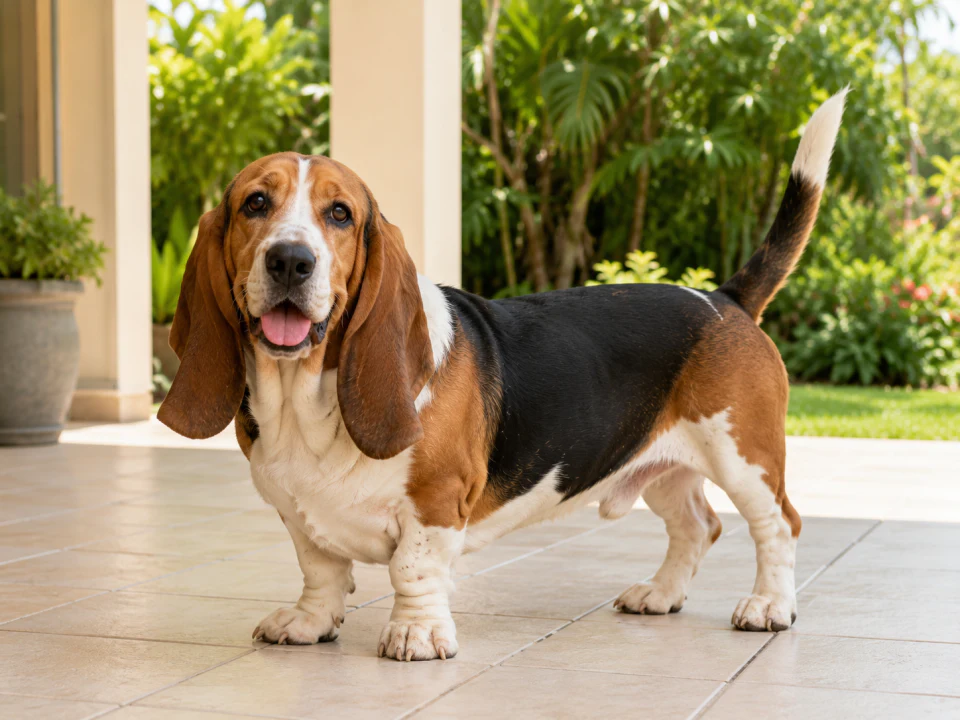
The Basset Hound is a substantial scent hound on very short legs, with an affectionate, sociable character and a wonderfully determined nose. Its low height can be misleading: this is not a light or effortless small dog, and everyday life needs to accommodate weight, long ears, stairs, heat and scent-led decisions.
Is a Basset Hound suitable for life in Thailand?
Yes, for a household wanting a calm, friendly hound and willing to manage a surprisingly heavy adult, an independent nose, regular ear and skin care, and daily moderate exercise. Many Basset Hounds enjoy family company and a comfortable indoor routine.
Short legs do not mean the dog should be carried through life or allowed to become inactive. Good body condition, sensible surfaces, secure walking and a realistic plan for stairs and transport all contribute to an easier daily life.
Quick facts
Recognised height
About 33 to 38 cm
Adult build
Low, long and substantially built
Exercise
Regular moderate walks led by pace and conditions
Grooming
Weekly coat care plus ears, folds and feet
Voice
Deep and melodious when used
Best suited to
Patient households who enjoy a sociable scent hound
Low does not mean small or light
A Basset Hound stands only about 33 to 38 cm high, but has substantial bone, a long body and far more weight than many dogs of similar height. Lifting an adult into a car or up stairs may be difficult.
The breed often moves at a measured pace, yet it remains an endurance scent hound rather than an ornamental sofa dog. Daily walking, sniffing and comfortable body condition matter throughout life.
Temperament and family suitability
Basset Hounds are commonly placid, affectionate and sociable, with a steady character that can suit family life. They often enjoy people and other dogs without being naturally eager to obey every request.
Their independent decision-making reflects scent-hound work. Patient teaching, food rewards and clear routines help turn a charming puppy into a manageable adult.
Adult size and expected lifespan
The recognised height is only 33 to 38 cm, but the adult is substantial and strong. The low outline should never be confused with the physical commitment of a toy breed.
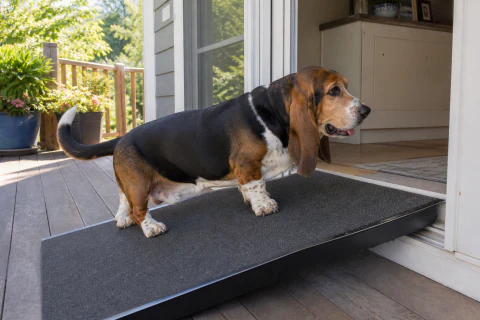
Choose a vehicle, bedding and household layout that do not depend on frequent awkward lifting. Non-slip floors and practical ramps or low access can be more useful than repeated steep stairs.
From soft-eared puppy to substantial adult
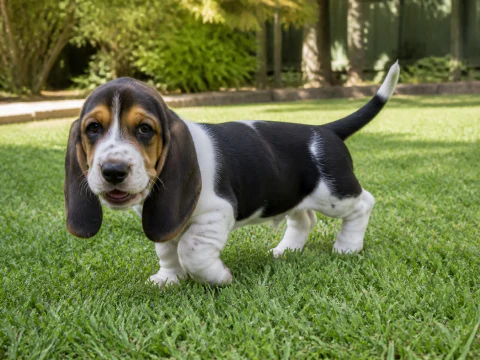
A puppy is compact and easy to lift. Puppyhood should establish calm lead walking, recall games, body handling, comfortable ear and foot checks, and household rules around food.
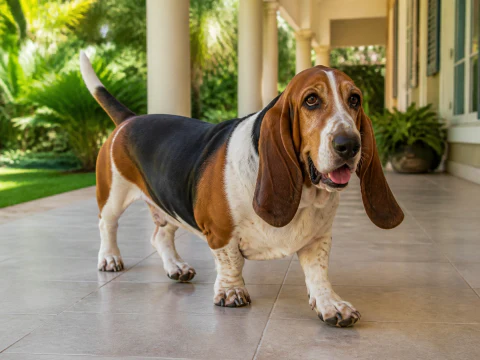
The adult shown here demonstrates how much body develops above those short legs. Plan steps, slippery floors, vehicle access, sleeping space and handling for the adult rather than relying on the puppy’s current portability.
Exercise and mental stimulation
Adults benefit from daily moderate walks with time to sniff, plus play and simple training. A garden alone rarely provides enough purposeful movement or environmental interest.
Use age-suitable activity for growing puppies and build fitness gradually. In Thailand, walk during cooler periods, avoid hot surfaces and let the dog’s pace and comfort shape the distance.
Training considerations
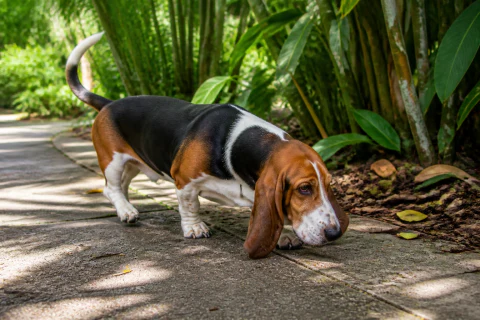
Scent can be more compelling than a handler, so recall practice, loose-lead walking, waiting at doors and exchanging found objects are useful priorities. A secure lead routine remains sensible near roads and open ground.
Keep sessions short and rewarding. Repeating a cue more loudly rarely makes it more valuable than an interesting smell, while good rewards and thoughtful practice can build genuine cooperation.
Barking and independence
The breed’s voice is famously deep and melodious. Some Basset Hounds bay when excited, left alone or following an interesting scent, which can carry far in a condo or close neighbourhood.
Build time alone gradually, reduce repeated corridor or gate triggers and provide a settled indoor routine. A calm appearance does not guarantee a silent dog.
Grooming, shedding and smell
The short coat is simple to brush but sheds. Long ears, facial folds, eyes, mouth, feet and nails benefit from regular gentle observation and cleaning appropriate to the individual dog.
Keep ears and folds clean and dry without harsh products or aggressive rubbing. Early cooperative handling makes these ordinary routines easier for the dog and family.
Children and other animals
A well-matched Basset Hound can be affectionate and patient with children. Adults should supervise, prevent children climbing on the long back and ensure the dog can rest undisturbed.
Many enjoy other dogs. Introduce cats and smaller animals thoughtfully, and remember that a scent hound may follow an outdoor trail even when it lives peacefully with familiar pets indoors.
Condos, gardens and time alone
A Basset Hound can live in a condo where lifts, toileting, voice and exercise are manageable. Repeated steep stairs, slippery floors and an owner unable to lift or assist the adult can make the setting impractical.
A garden should be securely enclosed because an interesting scent can lead the dog away. Gates, drainage gaps and low fencing deserve attention even when the dog usually appears unhurried.
Heat and humidity
Use cooler parts of the day for walks and provide water, shade and a cool indoor resting place. Low height places the body near hot pavement, so surface temperature matters as well as the air.
Never leave the dog in a parked vehicle or warm enclosed space. Shorten the route when the individual dog is uncomfortable and use indoor scent games when outdoor conditions are unsuitable.
Health and everyday care
Useful everyday care includes maintaining a comfortable body condition, providing good floor traction, brushing the coat, tooth and nail care, checking ears, folds and feet, and preserving regular moderate movement.
This guide provides general ownership information, not veterinary advice. Persistent changes in appetite, movement, breathing, ears, skin, eyes, digestion or behaviour should be discussed with a veterinarian.
How Perfect Pedigree sources Basset Hounds
Perfect Pedigree has helped families find puppies in Thailand since 2014. For a Basset Hound enquiry, we consider temperament, upbringing, known parent information, comfortable movement and whether the household understands adult weight, scent behaviour and practical access.
We explain the veterinary care, documentation and other information available for the individual puppy before reservation. We also discuss children, other animals, stairs, transport, grooming and daily routine. A person remains involved before reservation.
Typical availability in Thailand
Basset Hounds are available in Thailand from time to time. Very heavy wrinkles, unusually low height or exaggerated ears should not displace comfortable movement, temperament, upbringing and household fit.
Available Basset Hound litters and enquiries
Current puppies appear by litter on Available Puppies. If none is shown, tell us about your home, stairs, transport, family, other animals and timing so we can discuss a current or later Basset Hound enquiry.
Frequently asked questions
Is a Basset Hound a small dog?
It is short in height but substantial in weight and body. Equipment, lifting, stairs and transport should be planned for a medium-to-large commitment rather than a toy breed.
Does a Basset Hound need much exercise?
It needs regular moderate walks, sniffing and activity to support comfortable movement and body condition, even though it is not usually a high-speed exercise partner.
Can a Basset Hound live in a condo?
Yes, where lifts, toileting, barking and daily walks are practical. Repeated stairs and an inability to assist the adult dog can make some condos unsuitable.
Sources and authorship
- Fédération Cynologique Internationale, Basset Hound Standard No. 163, used for recognised origin, purpose, size, build, movement and broad temperament characteristics.
- The Royal Kennel Club, Basset Hound breed information, used selectively for exercise, grooming, lifespan and substantial scent-hound context.
- Basset Hound Club of America, Is a Basset Hound the right dog for you?, used for practical context on adult weight, sociability, scent-led independence, secure space and daily walking.
- PDSA, dogs die in hot cars and on hot walks, used for practical hot-weather, vehicle, shade and water precautions relevant to Thailand.
- Perfect Pedigree’s first-hand experience helping families find and raise puppies in Thailand since 2014, including experience with Basset Hounds.
Breed organisations and welfare sources are used selectively for neutral facts and practical context. Their registration, health-testing and purchasing recommendations are not presented as Perfect Pedigree policy.
Would this breed suit your family?
Browse current litters or tell us what you are looking for. We will review the enquiry personally and help you understand the next step.