
Training and behaviour
Toilet Training Your Puppy, One Good Habit at a Time
A simple home routine that helps your puppy find the right place and gives you more successes to celebrate.
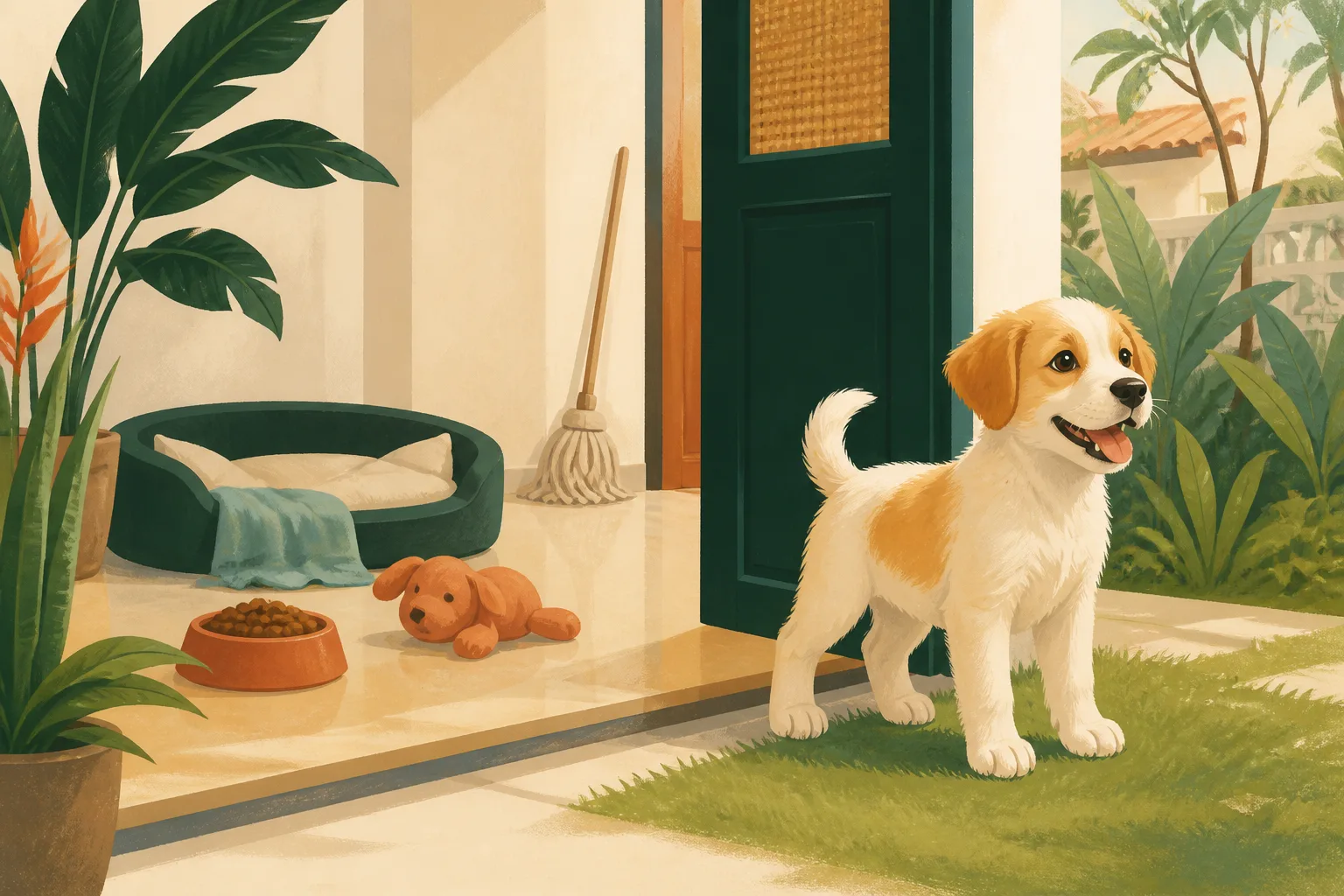
Toilet training becomes much easier when you stop waiting for your puppy to remember and start making success wonderfully predictable. Take them to the same suitable place after the moments that naturally prompt a toilet trip, reward them there, and use the occasional accident to adjust your timing. Your puppy is learning a household habit, not sitting an exam.
The secret is being one trip early
Most puppy toilet trips follow a useful rhythm: waking, eating, drinking, play, excitement and the quiet sniff-and-circle that says something is imminent. Take your puppy out after each of these moments and frequently in between while they are very young.
Use the same easy route and stand quietly in the chosen area. A short note of successful times for the first few days often reveals the puppy's real pattern faster than guesswork.
Make the right place worth finding
Reward your puppy as soon as they finish, while you are still standing in the toilet area. That clear timing helps them understand exactly what earned the treat and your delighted approval.
Stay outside for another minute of sniffing or a little play when you can. If every success ends the garden visit immediately, an enterprising puppy may learn to postpone the main event.
Let accidents improve the timetable
If you catch an accident beginning, interrupt gently and take your puppy outside. If you find it later, simply clean every affected layer with a suitable enzymatic cleaner and shorten the interval before the next trip.
There is no useful lesson in scolding a puppy after the fact. Calm cleaning protects trust; better timing teaches the habit. Full access to the home can grow gradually as the successful pattern becomes reliable.
Make rainy days part of the plan
Rain, a new surface, visitors, night-time and a sudden increase in freedom can briefly disrupt progress. Make the toilet place easy to reach, accompany your puppy and return to the familiar rhythm for a few days.
A sudden change in a previously reliable puppy, or urination that is unusually frequent, painful or difficult, deserves a veterinary conversation. Most ordinary setbacks, however, are solved with the reassuringly unglamorous combination of timing, supervision and praise.
A few questions families often ask
How long does toilet training take?
There is no fixed deadline. Age, previous routine, health and consistency all matter. Look for a steadily improving pattern rather than one perfect week.
Should I use puppy pads?
Pads can be useful when outdoor access is temporarily difficult, but they teach an indoor surface. If outdoor toileting is the goal, keep the setup consistent and plan a clear transition.
Does my puppy need to go out during the night?
Many young puppies do at first. Keep the trip quiet and businesslike, then return to bed. The interval usually lengthens as the puppy matures.