Training and behaviour
Puppy Training That Fits Real Life
Short, cheerful lessons for the useful manners your puppy will practise with you every day.
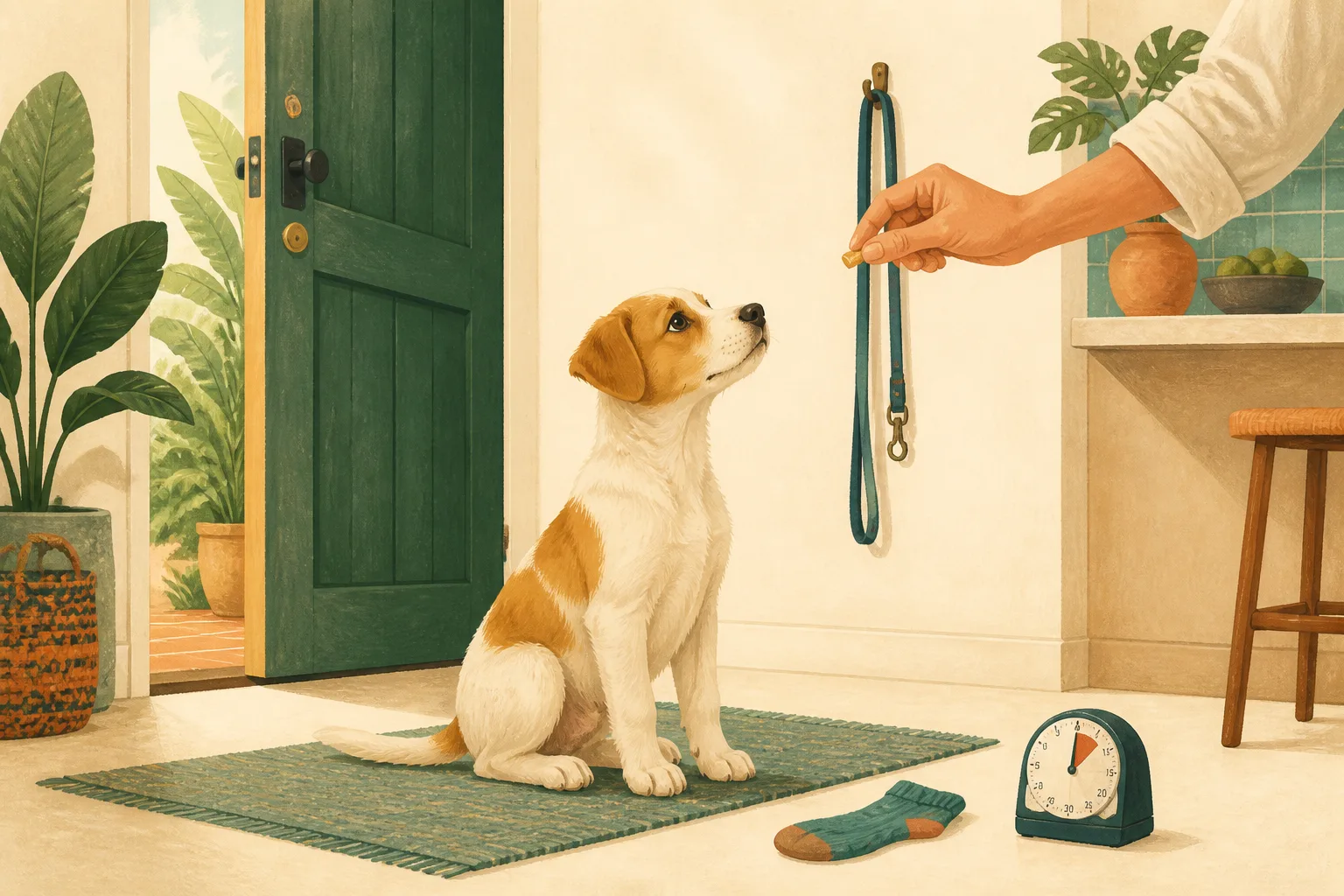
The most useful puppy training rarely looks like a formal class. It happens at the front door, beside the food bowl, on a mat while you make coffee and when a sock makes an exciting bid for freedom. Reward the choices you would like to see again, keep lessons short and make each new step easy enough for your puppy to win.
Teach the skills your family will actually use
A cheerful response to their name, coming when called, settling on a mat, swapping an object and being comfortable with gentle handling make ordinary life easier. Begin somewhere quiet and teach one small piece at a time.
A puppy does not need an hour-long lesson. One or two useful minutes while the kettle boils can be plenty; concentration sometimes expires halfway through our magnificent human lesson plan.
Rewards are useful information
Food is wonderfully precise, but toys, praise, sniffing and access to something enjoyable can all reward good choices. Deliver the reward promptly so your puppy can connect it with what they just did.
Notice quiet successes too: four paws on the floor, choosing their bed, looking back at you or waiting for a door to open. Calm manners grow quickly when they receive as much attention as the acrobatics.
The kitchen is only the beginning
A recall that sparkles indoors may apparently vanish in the garden. The puppy has not forgotten; the world simply became more interesting. Add distance, duration and distraction separately, use a better reward and make the next repetition easier.
Practise in several places and keep coming back to you worthwhile. Recall should not always mean the end of play. Sometimes reward your puppy and release them to continue the fun.
Set up the home to help
Gates, pens, a lead by the door, covered bins and good chew toys prevent unwanted habits while new skills are growing. Thoughtful management is part of training, and it gives everyone fewer reasons to say no.
If you want professional help, choose someone who teaches with rewards and can explain their methods clearly. Training should leave a puppy feeling safe, interested and keen to try again.
A few questions families often ask
How long should a training session be?
Often one or two useful minutes is enough. Several tiny sessions woven into the day are usually easier for a young puppy than one long lesson.
Should everyone use the same words?
Consistency helps, but timing and outcomes matter more than a perfect vocabulary. Agree on a few simple cues and household rules.
What if my puppy gets distracted?
Reduce the difficulty. Move farther from the distraction, use a reward your puppy values and ask for an easier version before building back up.