
Training and behaviour
Why Does My Puppy Bite Everything?
How to guide busy puppy teeth towards better choices while keeping hands, hems and chair legs out of the negotiations.
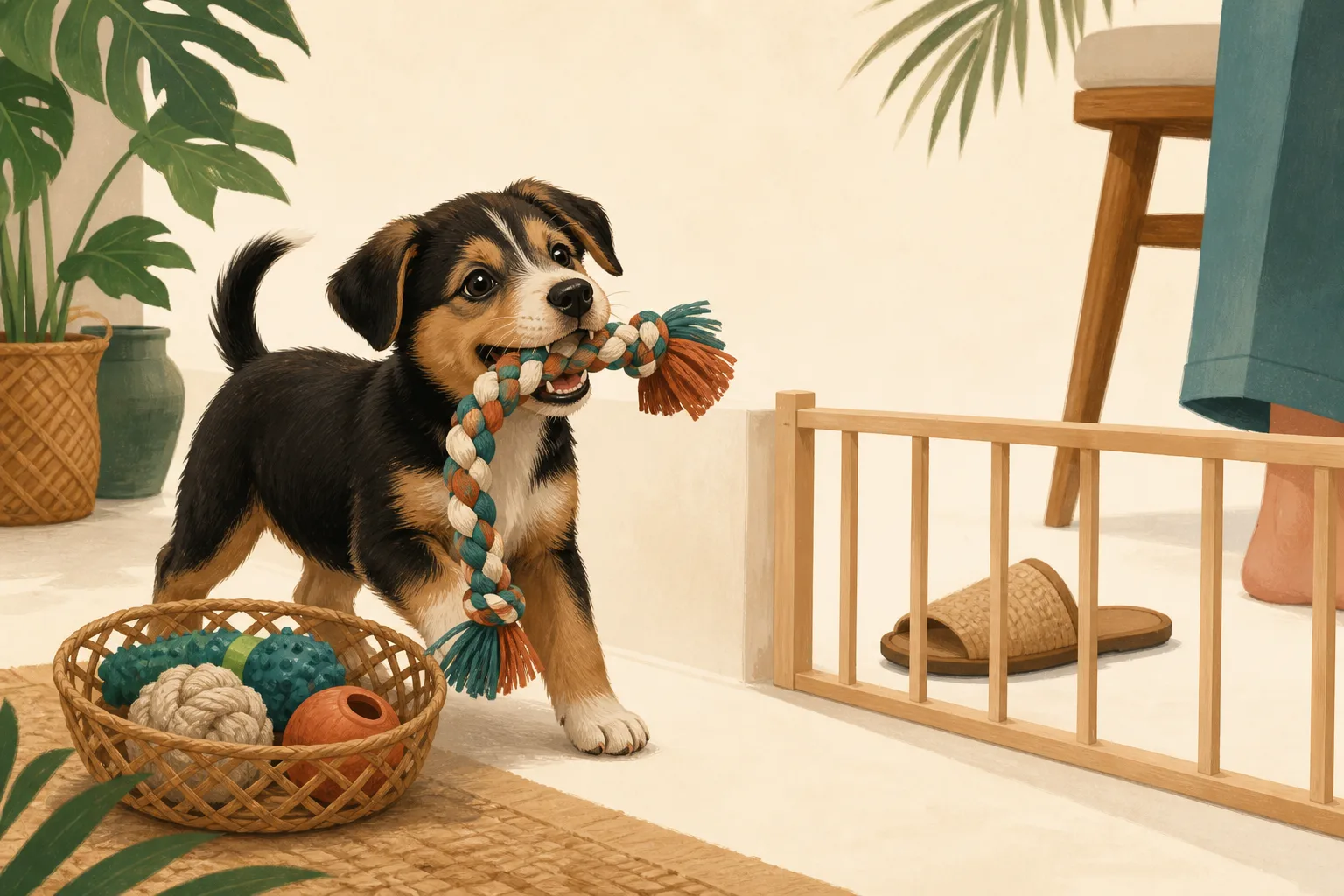
Puppies explore with their mouths, play with their mouths and soothe teething gums with their mouths. It is normal, lively puppy behaviour rather than a character flaw. Give those teeth an appealing job, notice when tiredness is turning your puppy into a tiny shark, and respond to nipping in a calm, predictable way.
Spot the bitey hour
Mouthing often rises when a puppy is tired, overexcited, hungry or in need of a toilet trip. If the evening always ends with flying teeth attached to a trouser leg, bring rest, food, a toilet break or a quieter activity forward.
Regular sleep is an underrated training tool. A puppy who has had enough excitement may not need another game; they may need a calm chew and permission to clock off.
Give the mouth a better job
Keep suitable puppy chews and light toys within reach in the rooms where family life happens. Rotate them so an old toy can return several days later with the mystery and status of a new acquisition.
Use a toy for energetic play and trade stolen objects for something worthwhile instead of beginning a thrilling chase. Put unsafe or precious items away while your puppy is learning. A closed cupboard is excellent training equipment.
When teeth meet people or clothes
Freeze rather than pulling away, because a moving sleeve can become the finest tug toy in Thailand. Offer a suitable toy once. If your puppy returns immediately to skin or clothes, calmly end access for a brief moment and reset.
Keep hands gentle and greetings low-key. Children can play through an adult with a longer toy or rolling game, which lets everyone enjoy the puppy without putting small fingers in the busiest part of the action.
Look for the changing pattern
Ordinary puppy mouthing becomes softer and less frequent with development, practice and well-managed days. Reward gentle contact, four paws on the floor and choosing a toy, not only the moments when you need the teeth to stop.
If biting is causing significant injury, appears with stiff guarding or suddenly changes around touch, food or handling, pause close interaction and arrange individual veterinary or reward-led behaviour support. That is a specific exception, not the story of most cheerful mouthy puppies.
A few questions families often ask
Will my puppy grow out of biting?
Mouthing usually changes with development, but puppies also learn from what happens next. Good chewing options and consistent calm responses help that change along.
Should I yelp when my puppy bites?
Some puppies pause, while others become more excited or worried. If sound intensifies the game, quietly stop movement and interaction instead.
What helps with teething?
Suitable puppy chews with different safe textures can help. Choose the right size, supervise their use and replace anything that begins to break up.