
Training and behaviour
Puppy Socialisation: A Confident Start
Help your puppy discover people, places, sounds and everyday life at a pace that builds genuine confidence.
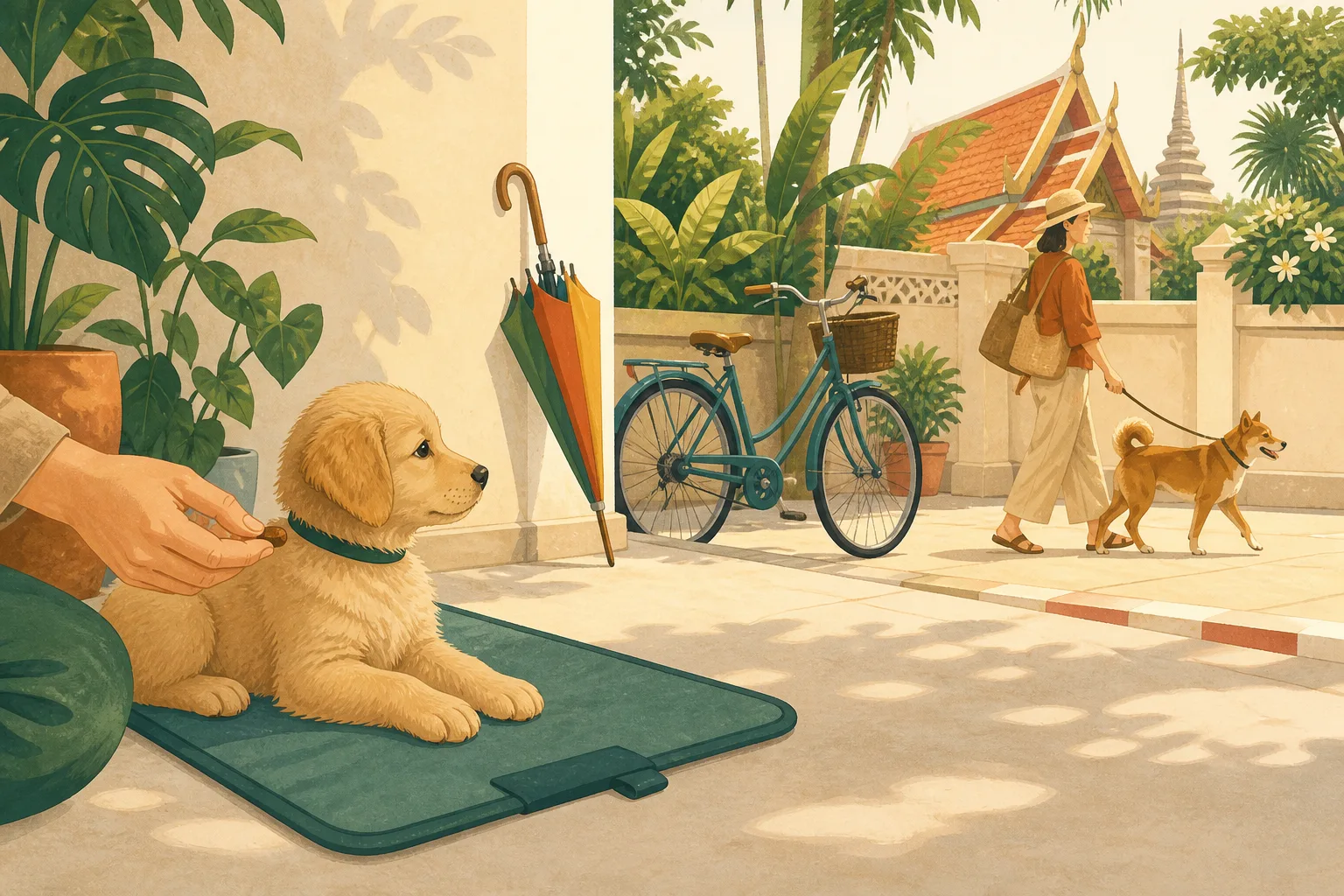
Good puppy socialisation is not a race to meet one hundred strangers before Friday. It is a collection of small, positive experiences that teach your puppy the world is interesting and that you will help when something feels new. Calm observation counts, choosing not to greet counts, and a puppy who can look, think and recover is learning beautifully.
Show the world at puppy pace
Useful experiences include friendly people of different appearances, household sounds, vehicles, umbrellas, lifts, grooming, car journeys, varied surfaces and calm, compatible dogs. Introduce one or two things at a time rather than organising a puppy festival.
Start far enough away for your puppy to notice without becoming overwhelmed. A treat, a little play or simply moving away again can make the experience feel safe and manageable.
Use the early weeks thoughtfully
Important social learning begins early, before many puppies have completed every vaccination. Ask your veterinarian about local disease risk and safe options so your puppy can learn without careless exposure.
Being carried, watching from a clean mat or vehicle and meeting known healthy vaccinated dogs can all be useful. The aim is sensible, controlled experience, not complete isolation and not a crowded dog park.
Let calm curiosity lead
A puppy who can eat, explore and return attention to you is usually coping well. If they freeze, hide or try to leave, create more distance and make the next experience smaller.
Do not coax a worried puppy closer for the sake of completing a checklist. The ability to opt out builds trust, and trust is what lets curiosity return. Neutrality is a success too; your puppy does not need to greet every dog, person or delivery trolley.
Keep confidence growing
Socialisation continues through adolescence and into adult life. Revisit travel, visitors, handling and busy places gently, particularly after a break or when your puppy seems newly uncertain.
Choose repetitions that finish well and allow plenty of sleep afterwards. If fear is intense or steadily worsening, individual reward-led help can restore the gentle pace your puppy needs.
A few questions families often ask
Does socialisation mean playing with every dog?
No. Calmly passing dogs and checking in with you are valuable skills. Choose known, compatible play partners rather than uncontrolled greetings.
What if my puppy is already unsure?
Increase distance, reduce intensity and let the puppy choose whether to approach. Repeat an easier version and seek individual help if fear persists.
Can socialisation happen at home?
Absolutely. Visitors, household sounds, grooming, different surfaces and watching the street from a safe place can all form part of a thoughtful plan.