
Thailand breed guide
Toy Poodle in Thailand: is this breed right for you?
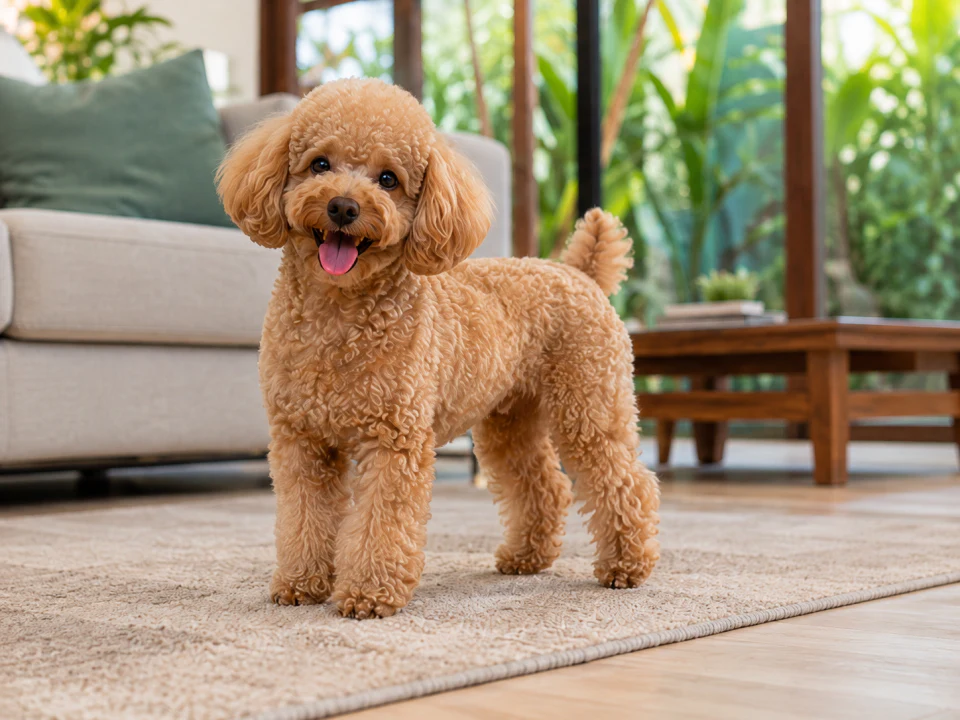
A Toy Poodle can suit condo life and people who want a close, clever companion. The best fit is a home that can provide company, training, purposeful activity and regular coat care.
Start here
Is a Toy Poodle suitable for life in Thailand?
For many households, yes. Toy Poodles are small enough for a condo, generally keen to learn and closely involved with their people. Indoor play and training can supplement walks when Thailand is too hot or wet for a longer outing.
Small does not mean effortless. The coat needs brushing and clipping, the mind needs work, and an alert dog in a busy building may need patient help with barking. Children and larger dogs must interact carefully. This is usually a poor fit when the dog will be alone for most of each day.
Quick facts
Recognised height
Over 24 cm to 28 cm at the withers under the FCI standard, with a 1 cm lower tolerance
Expected lifespan
Over 12 years is a broad guide, not a promise
Exercise
Daily physical activity plus training and problem-solving
Grooming
Frequent brushing and regular professional clipping for most homes
Home
Can suit a condo if exercise, barking and toileting are managed
Best suited to
People who want an involved companion and enjoy training
Temperament and family suitability
The FCI describes the Poodle as loyal, capable of learning and pleasant as a companion. Toy Poodles are often attentive, quick to notice changes and eager to participate. That can make them rewarding to train, but a bright dog without enough engagement will find its own ways to stay busy.
Breed tendencies cannot predict an individual puppy. Temperament in the parents, early experiences, socialisation and the home all matter. Ask what the puppy has already experienced and how it responds to people, everyday sounds and unfamiliar situations.
Adult size and expected lifespan
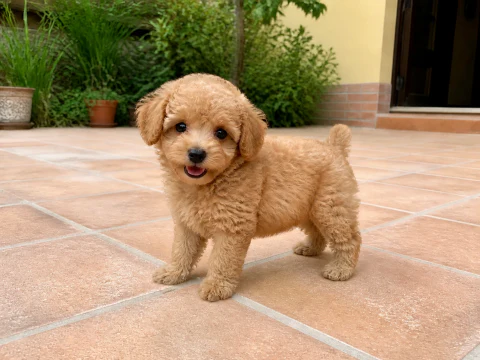
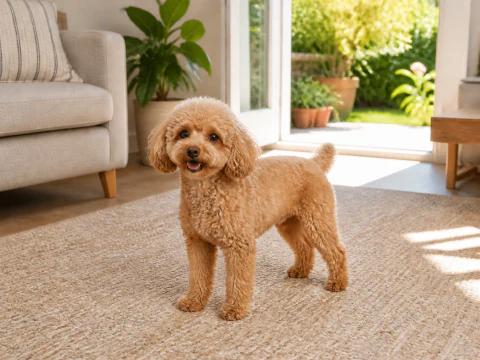
The current FCI standard places Toy Poodles over 24 cm and up to 28 cm at the withers, with an ideal around 25 cm and a 1 cm lower tolerance. Other kennel organisations use slightly different boundaries, so a label such as toy or teacup is not enough information by itself.
Toy Poodles are generally considered a long-lived breed, but no lifespan can be predicted for an individual dog. Think of this as a long commitment rather than a guaranteed number of years.
From puppy to adult
Exercise and mental stimulation
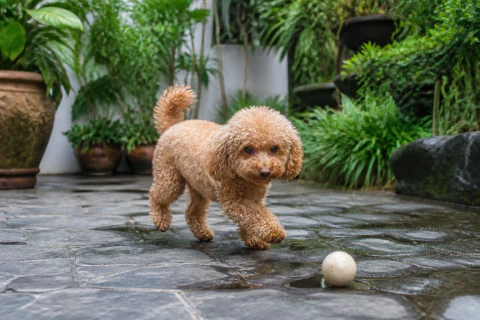
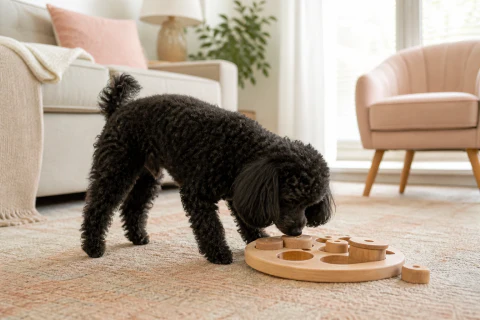
Small does not mean inactive. Poodles were developed from water-retrieving dogs and retain an active, trainable character. A Toy Poodle usually benefits from several shorter activities across the day: sniffing walks, play, food puzzles, retrieval games and brief training sessions.
The amount and pace should suit the dog’s age, energy and the weather. Puppies need activity and rest rather than forced distance. In Thailand, replace a hot walk with indoor games or training instead of trying to complete a fixed exercise target.
Training considerations
Toy Poodles tend to learn patterns quickly, including patterns you did not intend to teach. Use short, consistent sessions and reward the behaviour you want. Early priorities include toileting, comfortable handling, calm time alone, coming when called, walking without pulling and settling when everyday sounds occur.
Intelligence is not the same as automatic obedience. Repetition without variety can become frustrating, while inconsistent rules make it hard for a puppy to understand what works. Training should be kind, clear and appropriate for a small dog.
Barking and independence
Poodles can be vigilant and may alert to people, lifts, corridor sounds or other dogs. In a condo, reward quiet observation and teach a reliable settle early. Blocking an exciting view and adding predictable enrichment may help, but persistent barking can also signal fear, frustration or unmet needs.
Many Toy Poodles prefer to be close to people. Build comfortable separation gradually from puppyhood. A dog that will routinely be alone for most of the working day is unlikely to receive the company and activity this people-focused breed usually needs.
Grooming, shedding and smell
The curly coat sheds relatively little into the home, but loose hair remains in the coat and can mat. Low shedding does not mean low maintenance. A longer coat may need careful daily brushing down to the skin. Many families keep a shorter pet trim and use a professional groomer every four to six weeks, adjusting the schedule to the dog and clip.
Toy Poodles tend to shed relatively little into the home, but Perfect Pedigree does not describe any dog as hypoallergenic. Individual reactions vary, so anyone concerned about allergies should spend time around adult Poodles before committing.
Regular brushing, bathing when needed and keeping the ears, face and feet clean usually matter more than heavy use of fragranced products. Grooming needs vary with coat length and lifestyle.
Children and other animals
Toy Poodles can live happily with considerate children, but their small frame is vulnerable to falls, squeezing and rough play. An adult should supervise, teach children to let the dog move away and provide an undisturbed quiet area. A larger, more robust breed may be easier for a very young or highly energetic household to manage safely.
Early, controlled introductions help with other dogs and household animals. Size matters: even friendly play with a much larger dog can injure a Toy Poodle. Judge the individual animals and supervise rather than relying on breed labels.
Condos, gardens and time alone
A garden is convenient but not essential. The Royal Kennel Club lists the Toy Poodle as suitable for a flat or apartment. Success still depends on daily exercise, mental stimulation, toileting arrangements, lift and corridor manners, and a plan for noise.
A balcony is not a substitute for walks and must be physically safe. Keep gaps, climbable furniture, toxic plants and intense sun in mind. Indoors, non-slip surfaces and safe access to beds or sofas can reduce avoidable jumps for a small puppy.
Heat and humidity
Thailand’s heat and humidity change how families plan outdoor activity. A Toy Poodle’s small size does not make the hottest part of the day a sensible time for energetic exercise.
Choose cooler times, shade and comfortable walking surfaces, carry water and use indoor play or training when conditions are unpleasant. If you are concerned about how an individual dog is coping, stop the activity and contact a veterinarian.
Health and everyday care
A Toy Poodle needs more hands-on care than its small size may suggest. The curly coat tangles if neglected, so frequent brushing and regular clipping need to be part of the household routine. Introduce brushing, face cleaning, paw handling and nail care gently from puppyhood rather than waiting until the dog is uncomfortable.
Make tooth brushing and mouth handling familiar early. The coat can also make changes in body shape less obvious, so use your hands as well as your eyes and ask your veterinarian what a suitable body condition looks like for the individual dog. Take care around high furniture, slippery floors, larger dogs and young children because a Toy Poodle has a small frame.
Keep routine vaccinations, parasite prevention, dental care and check-ups on the schedule agreed with your veterinarian. A marked change from the dog’s normal appetite, energy, movement or behaviour deserves professional advice rather than an online diagnosis.
Before reservation, Perfect Pedigree explains the checks completed for the particular puppy and the documents that will accompany it. These details can vary, so they are confirmed for the puppy rather than assumed from the breed.
How Perfect Pedigree sources Toy Poodles
Perfect Pedigree has helped families find puppies in Thailand since 2014. We use long-standing relationships with breeders and breed enthusiasts, together with first-hand experience of what customers in Thailand need, to consider each Toy Poodle puppy and its fit with the intended home.
We consider the people responsible for the puppy, its early environment, age, condition, confidence and the information available about its parents. We also consider the intended home because a puppy that suits one household may be the wrong match for another.
Some puppies have kennel-club pedigree documents and some do not. Registration can be useful for customers who need it, but a certificate is not our only measure of a puppy or source. We explain what is known, what documents are available and what is included for the particular puppy before the customer commits.
Our role continues through selection, reservation, the agreed pre-delivery checks, documentation and delivery arrangements. Customers can ask questions throughout instead of having to judge a puppy from a listing alone.
Typical availability in Thailand
Toy Poodles are one of the breeds families ask Perfect Pedigree about regularly. Availability still changes as puppies are reserved and new litters complete public review, so check the live page rather than assuming a puppy is available.
Available Toy Poodle litters and enquiries
View current litters and individual puppies. If no Toy Poodle is available, tell us about your home, timing and what matters most to you. We will explain what is currently available and what is realistic.
Frequently asked questions
Can a Toy Poodle live happily in a Bangkok condo?
Yes, provided its exercise, mental stimulation, toileting, barking and time alone are managed. A small body helps with space, but does not remove the need for training and daily activity.
Are Toy Poodles hypoallergenic?
Perfect Pedigree does not describe any dog as hypoallergenic. Toy Poodles tend to shed relatively little into the home, but individual reactions vary.
How often does a Toy Poodle need grooming?
The coat needs frequent brushing, and many pet homes arrange professional clipping roughly every four to six weeks. Coat length, lifestyle and the individual dog affect the practical schedule.
Is a Toy Poodle a good first dog?
It can be, especially for someone who wants to train and spend time with their dog. First-time owners must still be ready for grooming, careful socialisation, barking management and a long commitment.
Do Toy Poodles always come with pedigree papers?
No. Registration and pedigree documentation vary between puppies. We explain what is available for the particular puppy before reservation, and customers who need registration for a specific purpose should tell us during their enquiry.
Sources and authorship
- Fédération Cynologique Internationale, Poodle Standard No. 172, used for the recognised Toy Poodle height and broad breed characteristics.
- The Royal Kennel Club, Poodle (Toy) breed information, used as one reference for general ownership characteristics.
- Perfect Pedigree’s first-hand experience helping families find and raise puppies in Thailand since 2014.
Kennel-club material is used as a source for neutral breed information. Its registration rules and screening recommendations are not presented as Perfect Pedigree policy.
Author: The Perfect Pedigree team, drawing on first-hand experience helping families find and raise puppies in Thailand since 2014.
This page provides general breed and ownership information, not veterinary advice. Health information and documents vary between individual puppies and will be explained before reservation.