
Thailand breed guide
German Shepherd in Thailand: is this breed right for you?
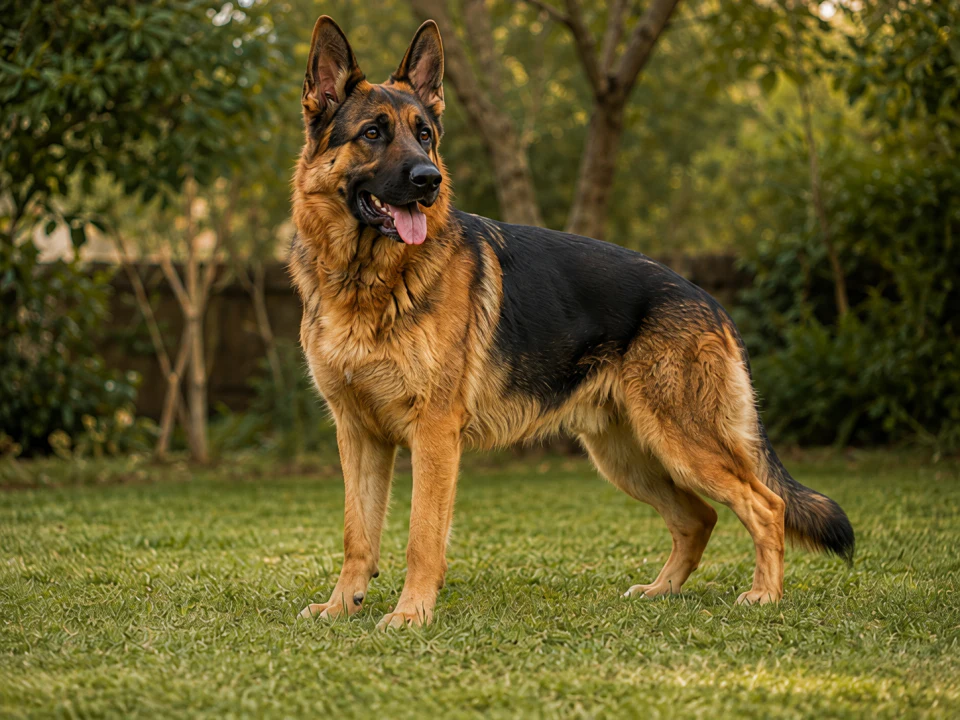
A German Shepherd can be a loyal, highly trainable family companion. The right home is ready for a large working dog that needs purposeful activity, thoughtful socialisation, consistent training, close involvement and a sensible routine in Thailand’s heat.
Start here
Is a German Shepherd suitable for life in Thailand?
Yes, for a household that actively wants the responsibility as well as the intelligence of a working breed. German Shepherds can form strong family bonds, learn complex routines and adapt to life in Thailand when they have a cool indoor resting place, carefully timed exercise, useful training and regular involvement with their people.
This is not usually a low-effort choice. A German Shepherd becomes a powerful adult, notices changes around the home and may respond strongly when uncertain or under-stimulated. It is usually a poor fit when the dog will be left without company or meaningful activity for most of each day, or when the household does not have time for training and calm exposure to everyday life.
Quick facts
Recognised size
Males 60 to 65 cm and 30 to 40 kg; females 55 to 60 cm and 22 to 32 kg under the FCI standard
Expected lifespan
Over 10 years is a broad guide, not a promise
Exercise
Substantial daily activity plus purposeful training and mental work
Grooming
Thorough brushing several times a week, with heavier seasonal shedding
Home
Space and secure boundaries help, but routine and involvement matter more than a garden alone
Best suited to
Committed people who enjoy training and want an attentive, active companion
Temperament and family suitability
The FCI describes the German Shepherd as well-balanced, self-assured, attentive and willing to please. The Royal Kennel Club standard adds steady nerves, loyalty, courage and tractability. At their best, German Shepherds combine close attachment to their people with the ability to think, learn and work.
That does not mean every German Shepherd should behave identically or greet every stranger enthusiastically. Temperament in the parents, early experiences, socialisation, training and the home all matter. A suitable family companion should be able to observe ordinary life without being pushed into fear, constant excitement or defensive behaviour.
Adult size and expected lifespan
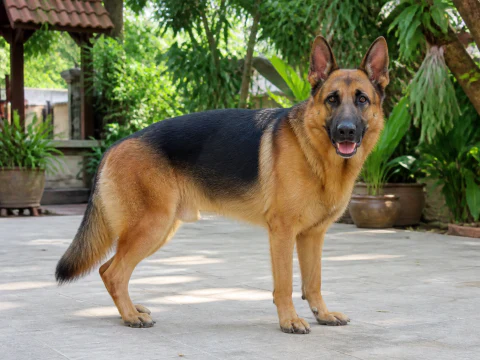
The FCI standard gives males a height of 60 to 65 cm and weight of 30 to 40 kg. Females are 55 to 60 cm and 22 to 32 kg. Individual dogs vary, but even a smaller adult is strong enough that loose-lead walking, calm greetings and comfortable handling need to begin while the puppy is manageable.
The Royal Kennel Club gives over 10 years as a broad lifespan guide. No number can be promised for an individual dog. Plan for the time, training, care, transport and cost of a large companion across every stage of life.
From puppy to powerful adult
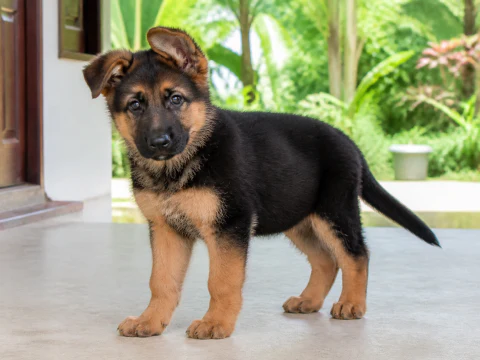
A puppy will become a substantial working dog. Judge the commitment by the adult: secure handling, suitable transport, confident visitors, safe introductions and enough purposeful activity every day.
Early effort is repaid later. Everyday skills taught before adolescence make family life calmer when the dog has adult strength, speed and awareness of its surroundings.
Exercise and mental stimulation
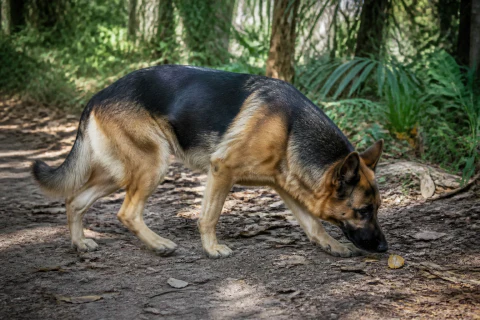
The German Shepherd was developed as a versatile herding, working and service dog. Physical exercise alone does not use the full range of abilities that people value in the breed. Many benefit from a varied week that includes sniffing, searching, learning, controlled play, retrieving, tracking-style games and practising useful skills in different environments.
The Royal Kennel Club uses more than two hours a day as a broad adult exercise guide, but a fixed target should not override age, condition, weather or the individual dog. Puppies need exploration, training and rest rather than adult distances. In Thailand, use cooler times and replace an unsuitable outdoor session with indoor scent work or training.
Training considerations
German Shepherds tend to notice patterns quickly. Start with coming when called, walking without pulling, settling, leaving or releasing an item, waiting at doors, greeting calmly and accepting routine handling. Use short, reward-based sessions and practise in gradually more distracting places.
Socialisation means helping a puppy feel composed around the people, animals, sounds, surfaces and situations it will meet. It does not require uncontrolled greetings with everyone. Calm observation, choice and positive experiences are often more valuable than repeatedly pushing a puppy into busy situations.
Barking and independence
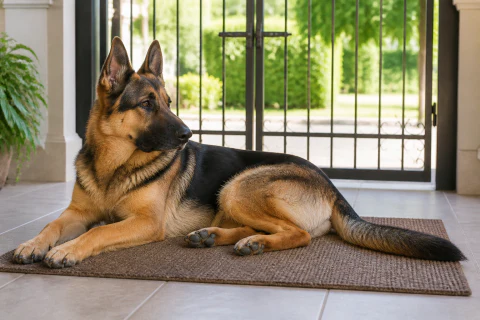
Alertness is part of the breed’s working character. A German Shepherd may notice visitors, corridor sounds, movement beyond a fence or changes in the household before its owners do. Teach a predictable response to arrivals and a reliable settle rather than encouraging indiscriminate barking.
Many form close bonds and prefer to have a role in family life. Build comfortable time alone gradually, while still providing enough company and activity. A German Shepherd left outside or alone for long periods may practise guarding, pacing, barking or destructive behaviour instead of learning how to live calmly with the household.
Grooming, shedding and smell
The FCI recognises double-coat and long double-coat varieties, both with an undercoat. Expect visible shedding and periods when a large amount of undercoat is released. Brush thoroughly several times a week, increasing the frequency when shedding is heavy. Long-coated dogs need extra attention around the ears, legs, tail and areas where damp hair can tangle.
After rain, swimming or muddy exercise, rinse when needed and dry the coat, feet and ears carefully. Regular brushing and proper drying usually matter more than heavily fragranced products. This is not a lower-shedding or allergy-friendly breed.
Children and other animals
A well-matched German Shepherd can be deeply involved in family life. Size, speed and alertness still require adult supervision. Teach children not to climb on, corner or disturb the dog, provide a quiet resting place and train calm behaviour before an adolescent dog becomes strong enough to knock someone over.
Individual German Shepherds vary around dogs, cats and smaller animals. Controlled introductions, secure management and early training matter. Chasing, herding-style movement or overexcited play should not be dismissed simply because the dog is young or friendly.
Condos, gardens and time alone
Condo life is possible but demanding. The household needs a dependable plan for substantial daily activity, toileting, lift and corridor manners, visitors, barking and safe movement through shared spaces. Building rules may also affect what is practical.
A secure garden is useful, but it does not train or occupy the dog by itself. Indoors, provide a cool resting place, non-slip footing and enough room for the dog to settle away from constant traffic. Routine, training and company matter more than the housing label alone.
Heat and humidity
A large, active dog with a double coat needs a heat-aware routine in Thailand. Plan energetic exercise for cooler parts of the day, choose shade and comfortable surfaces, carry water and make indoor training or rest available when outdoor conditions are difficult.
Do not make a fixed distance or timetable more important than the dog in front of you. If you are concerned about how an individual dog is coping, stop the activity and contact a veterinarian.
Health and everyday care
Everyday care is easier when a German Shepherd learns to participate calmly from puppyhood. Make brushing, tooth brushing, ear and paw checks, nail care and standing for inspection familiar and rewarding. Check the feet after rough ground and dry the dense coat thoroughly after rain or bathing.
Use your hands as well as your eyes to notice gradual changes in body shape under the coat. Measure food, account for training rewards and ask your veterinarian what a suitable body condition and activity plan look like for your individual dog, especially while a puppy is growing. Non-slip surfaces and age-appropriate activity also make everyday movement easier to manage.
Keep routine vaccinations, parasite prevention, dental care and check-ups on the schedule agreed with your veterinarian. A marked change from the dog’s normal appetite, energy, movement or behaviour deserves professional advice rather than an online diagnosis.
Before reservation, Perfect Pedigree explains the checks completed for the particular puppy and the documents that will accompany it. These details can vary, so they are confirmed for the puppy rather than assumed from the breed.
How Perfect Pedigree sources German Shepherds
Perfect Pedigree has helped families find German Shepherd puppies in Thailand since 2014. We use long-standing relationships with breeders and breed enthusiasts, together with first-hand knowledge of the homes and practical questions our customers bring, to consider each puppy and its fit with the intended home.
We consider the people responsible for the puppy, its early environment, age, condition, confidence and the information available about its parents. For this breed, we pay particular attention to how the puppy engages with people and responds to ordinary handling and new situations. We also consider the intended home, its experience, children or animals, and the plan for training an attentive adult dog.
Some puppies have kennel-club pedigree documents and some do not. Registration can matter when a customer has a specific need for it, but a certificate is not our only measure of a puppy or source. A stable, suitable companion is more important than choosing only for the most imposing appearance. We explain what is known, what documents are available and what is included before the customer commits.
Our role continues through selection, reservation, the agreed pre-delivery checks, documentation and delivery arrangements. You can discuss the individual puppy, your experience and your home with us before deciding, rather than relying on a listing alone.
Typical availability in Thailand
German Shepherds are a well-established breed in Thailand and one that families have asked Perfect Pedigree about over many years. Availability still changes as puppies are reserved and new litters complete public review, so check the live page or send an enquiry rather than assuming a puppy is available.
Available German Shepherd litters and enquiries
View current litters and individual puppies. If no German Shepherd is available, tell us about your home, experience, timing and what matters most to you. We will explain what is currently available and what is realistic.
Frequently asked questions
Is a German Shepherd a good family dog?
It can be an excellent family companion when the household is ready for training, activity, close involvement and the management required by a large, attentive working breed. Supervision and calm household manners still matter.
Is a German Shepherd suitable for a first-time owner?
It can work for a committed first-time owner who actively seeks guidance, enjoys training and has enough time for socialisation and purposeful activity. It is not usually the simplest first dog for someone wanting an easy or largely independent companion.
Can a German Shepherd live in a condo?
It is possible, but demanding. The household needs a reliable plan for exercise, training, shared-space manners, visitors, barking, toileting and time alone, and must check the building’s rules.
Are long-coated German Shepherds a separate breed?
No. The FCI recognises double-coat and long double-coat varieties of the German Shepherd Dog. Both have an undercoat, and the longer coat generally needs more attention where hair can tangle or remain damp.
Will a German Shepherd naturally protect the home?
Many are alert and notice changes around the home, but responsible ownership should focus on composure, control and safe household behaviour rather than encouraging indiscriminate suspicion or aggression.
Do German Shepherds always come with pedigree papers?
No. Registration and pedigree documentation vary between puppies. We explain what is available for the particular puppy before reservation, and customers who need registration for a specific purpose should tell us during their enquiry.
Sources and authorship
- Fédération Cynologique Internationale, German Shepherd Dog Standard No. 166, used for recognised size, coat varieties and broad breed characteristics.
- The Royal Kennel Club, German Shepherd Dog breed information, used as one reference for general ownership characteristics.
- Perfect Pedigree’s first-hand experience helping families find and raise puppies in Thailand since 2014.
Kennel-club material is used as a source for neutral breed information. Its registration rules and screening recommendations are not presented as Perfect Pedigree policy.
Author: The Perfect Pedigree team, drawing on first-hand experience helping families find and raise puppies in Thailand since 2014.
This page provides general breed and ownership information, not veterinary advice. Health information and documents vary between individual puppies and will be explained before reservation.