
Thailand breed guide
Alaskan Malamute in Thailand: is this breed right for you?
The Alaskan Malamute is a powerful Arctic working dog with an affectionate family side, independent judgement and enormous physical presence. Thailand ownership requires exceptional preparation for heat, secure management and the needs of a strong adult.
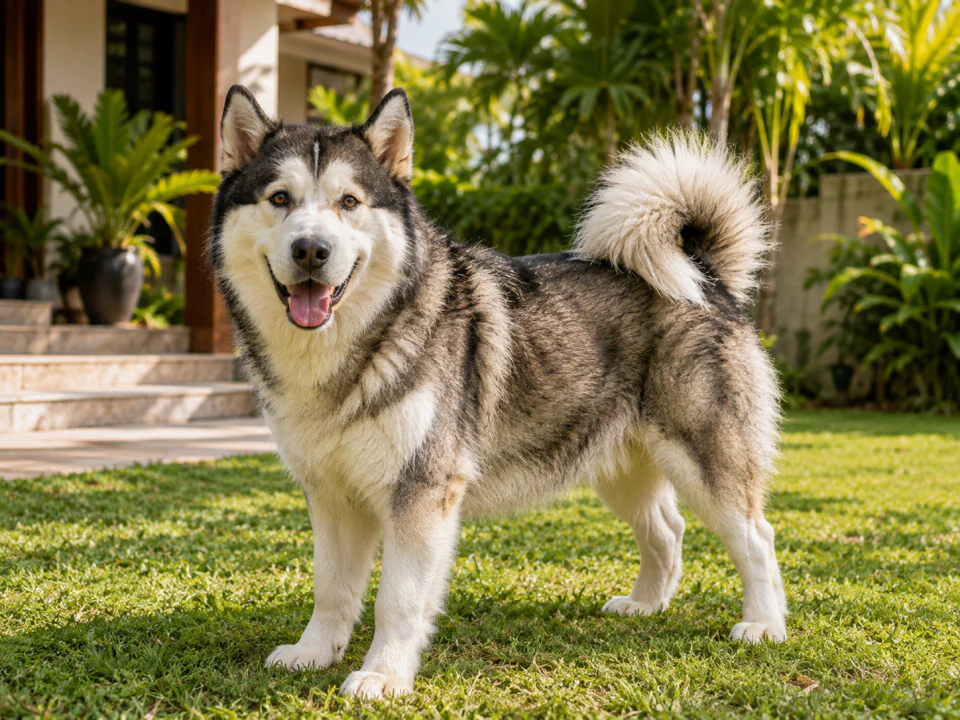
Is an Alaskan Malamute suitable for life in Thailand?
Yes, for an experienced household with reliable indoor cooling, secure space and the ability to train and handle a large independent dog. Many Malamutes are affectionate, playful and deeply involved with their family.
This is not simply an oversized Siberian Husky. The Malamute was developed for strength and heavy work, and its adult power, dense coat and potential selectivity with other dogs deserve careful consideration.
Quick facts
Recognised size
Around 58.5 to 63.5 cm at desirable working size
Adult build
Large, heavy-boned and powerful
Exercise
Purposeful daily activity in cool conditions
Grooming
Frequent brushing with very heavy shedding periods
Home
Secure space and dependable indoor cooling
Best suited to
Experienced homes comfortable with strength and independence
Built for strength rather than racing speed
The Alaskan Malamute was developed to move heavy loads over distance. It is larger and more substantial than the Siberian Husky, and everyday handling should be planned around that strength.
Many are friendly with people and devoted to family, but they can also be self-confident, strong-willed and selective with other dogs. Affection does not remove the need for training, secure boundaries and adult supervision.
Temperament and family suitability
Alaskan Malamutes are often affectionate, playful and friendly with people. Many enjoy family contact and shared activity rather than being left outside as impressive-looking property dogs.
They may be independent and can be intolerant of some other dogs, particularly as maturity develops. Individual temperament, early experience and careful introductions matter.
Adult size and expected lifespan
The FCI standard describes desirable freighting sizes around 63.5 cm and 38 kg for males and 58.5 cm and 34 kg for females, while recognising a natural range. Functional balance matters more than claims of extreme size.
The Alaskan Malamute Club of America gives approximately ten years as a broad average. No lifespan can be promised, and the practical costs of a large dog continue through later life.
From appealing puppy to powerful adult
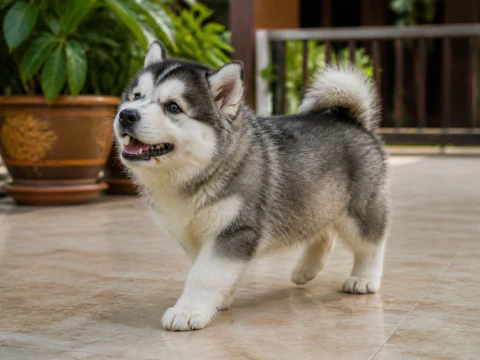
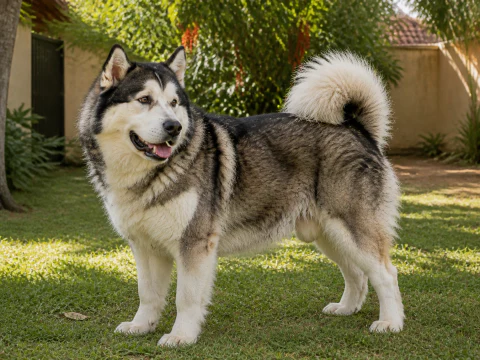
A puppy can still be lifted and redirected easily. This is the best stage to build lead manners, handling, calm greetings, gate routines and comfort with grooming.
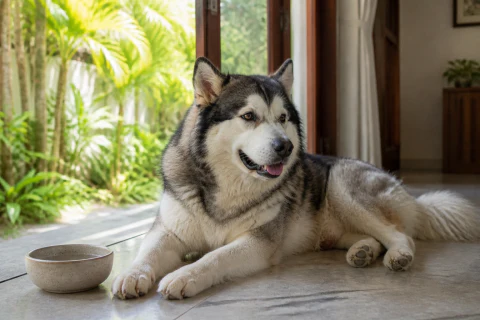
The adult dog shown here illustrates the heavy bone, dense coat and physical presence that arrive later. Training and home arrangements must work for that adult, not only for the manageable puppy.
Exercise and mental stimulation
Adults benefit from daily walks, hiking, controlled pulling activities, training and opportunities to use their strength with purpose. A garden alone does not provide enough engagement.
Exercise in Thailand must be limited to suitable conditions. Young dogs need gradual development, and adults need alternatives such as indoor training when heat or humidity makes strenuous work unsafe.
Training considerations
Reward-based teaching should cover lead manners, recall practice, waiting at doors, releasing objects, settling and cooperative handling. Consistent household rules prevent strength from becoming the deciding factor.
Independent does not mean untrainable. Clear motivation and sensible management are more effective than confrontation, which can damage trust without producing reliable behaviour.
Barking and independence
Malamutes may use howls and expressive vocal sounds as well as barking. Noise should be considered where homes are close together.
They often want company and activity. Time alone should be built gradually, because boredom can contribute to digging, chewing, vocalisation or attempts to escape.
Grooming, shedding and smell
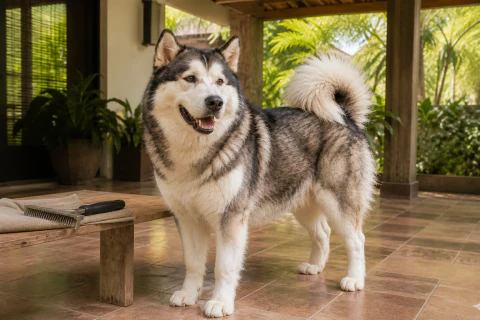
The thick double coat sheds heavily and needs regular, thorough brushing. Loose undercoat may release in large quantities, and compacted coat should not be left close to the skin.
Dry the coat fully after bathing or rain, check skin, ears, feet and nails, and plan enough space and equipment for grooming a large dog. Shaving is not a substitute for coat care or cooling.
Children and other animals
A well-matched Malamute can be affectionate and playful with a family. Its size and strength require adult supervision around children, especially during excited greetings or games.
Compatibility with other dogs and smaller animals varies. Introductions should be controlled, and the household should be prepared to manage relationships rather than assuming every sociable puppy remains universally tolerant.
Condos, gardens and time alone
A securely fenced home with room to move is usually more practical than a condo. Gates, digging points and climbing opportunities should be reviewed carefully.
The dog needs a cool indoor base and close family involvement. Outdoor space does not make a hot outdoor-only arrangement appropriate, and a garden does not replace walks or training.
Heat and humidity
An Arctic coat and powerful body make Thailand’s heat a central welfare consideration. Reliable indoor cooling, shade, water and cool recovery are essential, with activity restricted to the coolest suitable periods.
Avoid hot vehicles and surfaces. Watch the individual dog and stop before it becomes distressed rather than expecting a fixed distance or working routine in unsuitable conditions.
Health and everyday care
Useful everyday care includes an appropriate body condition, age-suitable exercise, dental care, nail trimming, coat and paw checks, clean dry bedding and routine vaccinations and parasite prevention agreed with the family’s vet.
This guide provides general ownership information, not veterinary advice. Changes in breathing, movement, appetite, energy, skin, digestion or behaviour should be discussed promptly with a veterinarian.
How Perfect Pedigree sources Alaskan Malamutes
Perfect Pedigree has helped families find Alaskan Malamute puppies in Thailand since 2014. We consider temperament, upbringing, known parent information and whether the household can manage adult strength, cooling, grooming and secure space.
We explain the veterinary care, documentation and other information available for the individual puppy before reservation. We also discuss other animals, activity, handling and the practical cost of a large dog. A person remains involved before reservation.
Typical availability in Thailand
Alaskan Malamutes are available in Thailand from time to time. A very large claim or unusual marking should not outweigh temperament, condition, upbringing and the household’s preparation for the adult dog.
Available Alaskan Malamute litters and enquiries
Current puppies appear by litter on Available Puppies. If none is shown, tell us about your experience, home, cooling, secure space, other animals and preferred timing so we can discuss a current or later Alaskan Malamute enquiry.
Frequently asked questions
What is the difference between an Alaskan Malamute and a Siberian Husky?
The Malamute is generally larger, heavier and built for strength and heavy freighting, while the Siberian Husky is lighter and developed to carry a lighter load at speed over distance.
Can an Alaskan Malamute live in Thailand?
Only with serious preparation, including reliable indoor cooling, careful exercise timing, constant water, grooming and close observation. An outdoor-only life is unsuitable.
Is an Alaskan Malamute suitable for a first-time owner?
Usually not the easiest choice. Its strength, independence, coat, climate needs and possible selectivity with other dogs favour an experienced and well-prepared household.
Sources and authorship
- Fédération Cynologique Internationale, Alaskan Malamute Standard No. 243, used for recognised function, size, coat and broad temperament characteristics.
- Alaskan Malamute Club of America, about Malamutes, used selectively for family character, independence, coat and broad lifespan context.
- Alaskan Malamute Club of America, working, used for the distinction between heavy freighting work and lighter, faster sled work.
- RSPCA, keeping dogs safe in summer, used for practical shade, water, exercise and hot-weather precautions relevant to Thailand.
- Perfect Pedigree’s first-hand experience helping families find and raise puppies in Thailand since 2014, including experience with Alaskan Malamutes.
Breed organisations and welfare sources are used selectively for neutral facts and practical context. Their registration, health-testing and purchasing recommendations are not presented as Perfect Pedigree policy.
Would this breed suit your family?
Browse current litters or tell us what you are looking for. We will review the enquiry personally and help you understand the next step.