
Thailand breed guide
Bull Terrier in Thailand: is this breed right for you?
The Bull Terrier is a muscular, affectionate and famously comic companion with determination to match its personality. The right Thailand home enjoys active involvement, patient training and sensible management of a strong, enthusiastic dog.
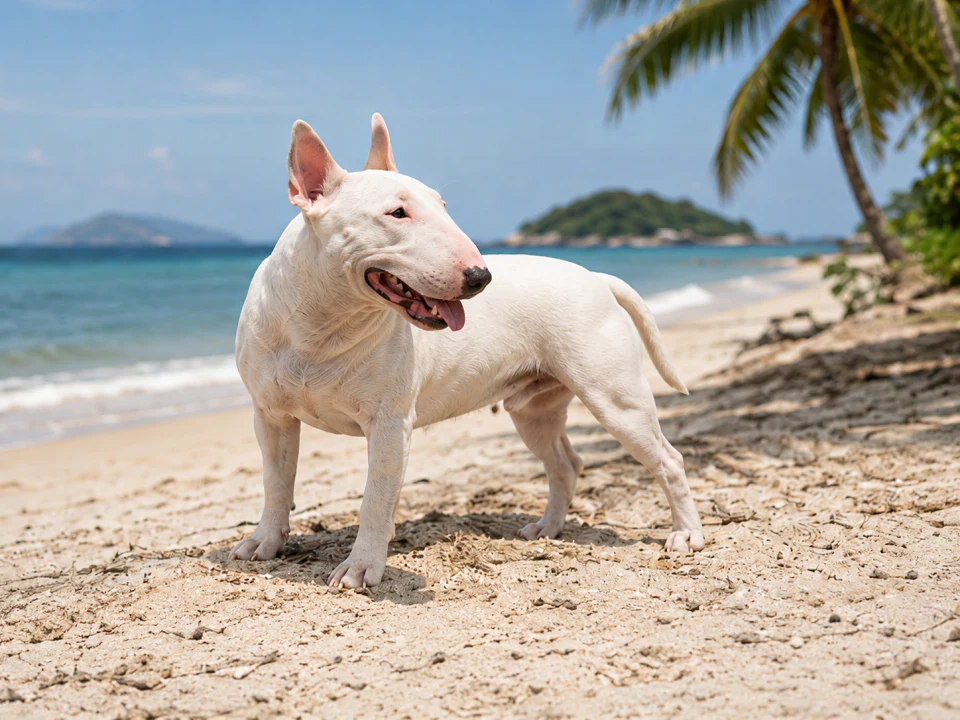
Is a Bull Terrier suitable for life in Thailand?
Yes, for people who want a playful, people-focused dog and will provide consistent training, daily activity and close companionship. A well-matched Bull Terrier can bring enormous affection and entertainment to family life.
This is a powerful terrier, not an easy decorative companion. Impulse control, polite lead walking, calm interaction with other animals and management of chewing or rough play should begin while the puppy is small.
Quick facts
Recognised size
No fixed height or weight limit for the standard Bull Terrier
Adult build
Medium, muscular and substantial
Exercise
Daily activity, play and mental engagement
Grooming
Straightforward short-coat care with regular checks
Home
Secure home with people available for training and company
Best suited to
Committed owners comfortable with strength and terrier character
Standard and Miniature are separate breeds, not age labels
A Bull Terrier puppy does not become a Miniature Bull Terrier because it remains relatively small. The FCI recognises the standard Bull Terrier and Miniature Bull Terrier separately.
Their broad character and appearance are related, but adult size changes handling, transport and household impact. Customers should confirm which breed is being discussed rather than relying on the word Bull Terrier alone.
Temperament and family suitability
Bull Terriers are often playful, devoted and full of personality. Many actively seek family involvement and can be comical companions when their need for activity and guidance is met.
Determination and exuberance are genuine breed features. Individual temperament varies, and early positive experiences should include calm people, controlled dog meetings, household handling and different environments.
Adult size and expected lifespan
The FCI standard sets no fixed height or weight limit for the standard Bull Terrier, asking instead for balance and maximum substance appropriate to the individual. Most customers should think of a solid medium dog rather than choose by a claimed number.
The Royal Kennel Club gives over ten years as a broad lifespan guide. A dog’s life cannot be predicted, so plan for continuing exercise, training and care through maturity and later life.
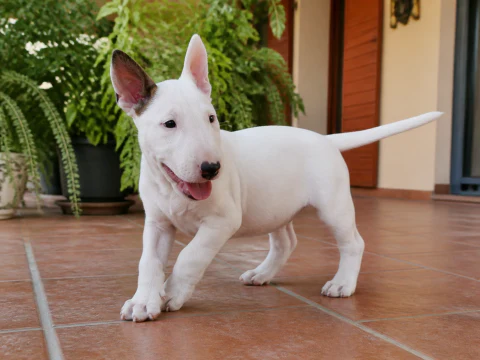
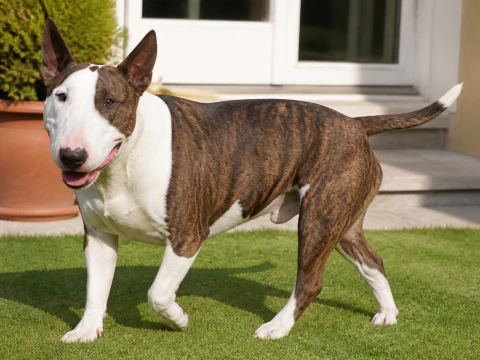
From mischievous puppy to muscular adult
Puppies show the sociable, curious stage that attracts families. This is the time to establish gentle handling, bite inhibition, lead skills, calm greetings and appropriate things to chew.
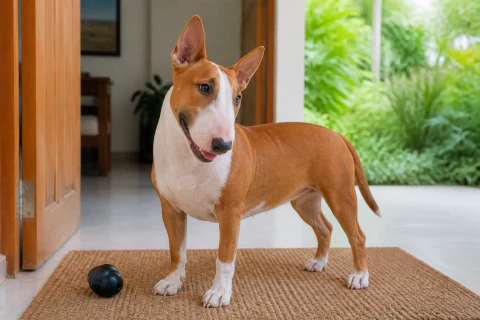
The adult dog shown here illustrates the substance and strength that develop later. Training should be reliable before physical power makes pulling, jumping or overexcited play difficult to manage.
Exercise and mental stimulation
Adults need daily walks, sniffing, play and mental work. Tug, searching, controlled retrieving and short training sessions can provide useful outlets without relying only on repetitive running.
Young dogs need gradual physical development and practice settling after activity. In Thailand, vigorous outdoor exercise belongs in cooler conditions, with indoor alternatives on hot days.
Training considerations
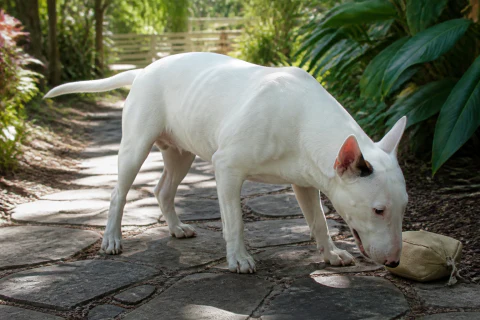
Reward-based training should prioritise lead manners, recall practice, releasing objects, waiting at exits, calm greetings and settling. Make the wanted behaviour clear and worth repeating.
Bull Terriers can be persistent and easily bored by repetition. Short, varied sessions and consistent boundaries are more effective than harsh confrontation, which may increase conflict without teaching cooperation.
Barking and independence
Many Bull Terriers are not constant barkers, but individuals may alert, vocalise during excitement or make noise when bored. Condo neighbours experience impact rather than breed averages.
They commonly value company and can find long periods alone difficult. Build independence gradually and provide robust, appropriate activities in a secure space.
Grooming, shedding and smell
The short, flat coat sheds and usually needs weekly brushing. White and lightly coated areas can show dirt or skin irritation quickly, so ordinary visual checks are useful.
Keep nails, teeth, ears and feet comfortable and dry the dog after bathing or rain. Grooming sessions are also an opportunity to notice a change from the individual dog’s normal condition.
Children and other animals
A well-matched Bull Terrier can be affectionate with a family, but its strength and enthusiastic play require adult supervision around children. Teasing and body-slamming games should not be encouraged.
Relationships with other dogs and smaller animals vary. Controlled introductions, thoughtful household matching and management of food and toys are more reliable than assuming every puppy will remain universally sociable.
Condos, gardens and time alone
A secure house or carefully managed condo can work when exercise, noise, lifts and close neighbours are considered. A garden helps with play but does not replace walking, training or company.
Bull Terriers can be inventive chewers and physically persistent. Puppy-proofing, strong boundaries and supervision protect both the dog and the home while appropriate habits are learned.
Heat and humidity
Thailand’s heat requires activity during cooler periods, ready access to shade and water, and a cool indoor recovery space. White dogs also need sensible protection from prolonged intense sun.
Do not leave the dog in a vehicle or demand vigorous play through heat and humidity. Shorter activity, slower pacing and indoor enrichment are responsible adjustments, not missed exercise.
Health and everyday care
Useful everyday care includes an appropriate body condition, regular activity with enough rest, tooth and nail care, checks of skin, ears and feet, and access to safe items that satisfy chewing needs.
This guide provides general ownership information, not veterinary advice. Persistent skin or ear irritation, changes in hearing response, movement, appetite, energy or behaviour should be discussed promptly with a veterinarian.
How Perfect Pedigree sources Bull Terriers
Perfect Pedigree has helped families find Bull Terrier puppies in Thailand since 2014. We consider individual temperament, upbringing, known parent information and whether the household understands adult strength, terrier character and the need for continuing training.
We explain the veterinary care, documentation and other information available for the individual puppy before reservation. We also discuss children, other animals, chewing, activity and the practical home arrangement. A person remains involved before reservation.
Typical availability in Thailand
Bull Terriers are available in Thailand from time to time. Head shape, colour and markings attract attention, but temperament, comfortable movement, upbringing and fit with the household matter more.
Available Bull Terrier litters and enquiries
Current puppies appear by litter on Available Puppies. If none is shown, tell us about your experience, household, children, other animals and preferred timing so we can discuss a current or later Bull Terrier enquiry.
Frequently asked questions
Is a Bull Terrier suitable for a first-time owner?
It can be, but it is not the easiest first breed. The owner should be prepared for strength, persistence, energetic play, training and careful management around other animals.
Is a Bull Terrier the same as a Miniature Bull Terrier?
No. They are separate recognised breeds. The Miniature has a maximum recognised height, while the standard Bull Terrier has no fixed height or weight limit.
Can a Bull Terrier live with children?
Yes, in a suitable household with adult supervision, calm rules and thoughtful matching. Its strength and enthusiastic play need active management.
Sources and authorship
- Fédération Cynologique Internationale, Bull Terrier Standard No. 11, used for recognised history, build, coat and broad temperament characteristics.
- The Royal Kennel Club, Bull Terrier, used selectively for size context, activity, grooming and broad lifespan guidance.
- American Kennel Club, Bull Terrier, used for realistic socialisation, training, exercise and family-companion context.
- RSPCA, dogs die on hot walks, used for practical exercise, shade, water and hot-surface precautions relevant to Thailand.
- Perfect Pedigree’s first-hand experience helping families find and raise puppies in Thailand since 2014, including experience with Bull Terriers.
Breed organisations and welfare sources are used selectively for neutral facts and practical context. Their registration, health-testing and purchasing recommendations are not presented as Perfect Pedigree policy.
Would this breed suit your family?
Browse current litters or tell us what you are looking for. We will review the enquiry personally and help you understand the next step.