
Thailand breed guide
Cockapoo in Thailand: is this breed right for you?
A Cockapoo combines Cocker Spaniel and Poodle parentage in a bright, people-focused companion. The appealing name does not describe one fixed outcome: adult size, coat, shedding, activity and character depend on the actual parents, generation and individual puppy.

Is a Cockapoo suitable for life in Thailand?
Yes, for a household wanting an affectionate, trainable companion and prepared for daily activity, close family involvement and substantial coat care. Many Cockapoos are cheerful and sociable, but a crossbreed label cannot guarantee a particular personality.
Cockapoos may have English or American Cocker Spaniel ancestry and different Poodle sizes in their background. Ask about the actual parents and puppy rather than choosing from an assumed miniature size, coat type or promise of low shedding.
Quick facts
Parentage
Cocker Spaniel and Poodle
Adult size
Variable according to the actual parents
Exercise
Daily walks, play, training and mental activity
Grooming
Regular brushing and professional coat care
Shedding
Variable and never an allergy guarantee
Best suited to
Involved households comfortable with coat care
One popular name, many possible outcomes
Cockapoo describes Cocker Spaniel and Poodle parentage, not one breed with a single recognised standard. The Poodle parent’s size and the type of Cocker ancestry can materially affect the adult dog.
Generation labels may describe the family tree, but do not guarantee coat, size or temperament. Photographs of the parents, accurate parent information and the puppy’s own development are more useful than relying on the label alone.
Temperament and family suitability
Many Cockapoos are affectionate, bright and keen to be involved with people, reflecting qualities often valued in both parent breeds. Individual confidence, sensitivity and activity still vary.
Early positive experiences with people, friendly dogs, household sounds, grooming and time alone help the puppy develop useful life skills rather than depending on the crossbreed name.
Adult size and expected lifespan
There is no single recognised Cockapoo size. A puppy with Toy or Miniature Poodle ancestry may mature very differently from one with a larger Poodle parent, and English and American Cocker ancestry also differ.
Ask for the parents’ actual size and build, then allow for natural variation. Choose equipment and housing with a realistic range in mind rather than an exact early promise.
From fluffy puppy to individual adult
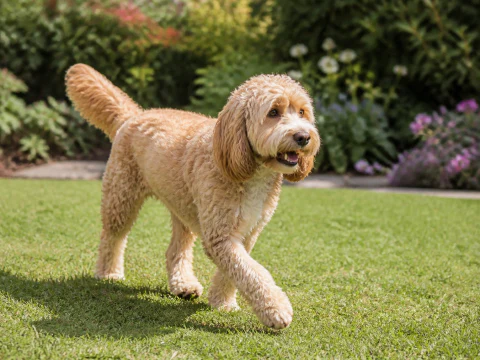
A puppy shows one possible Cockapoo appearance. Puppy coats can change in texture, colour and grooming demand as the adult coat develops.
The adult shown here is another individual, not a promise of the puppy’s final appearance. Adult size, curl, shedding and facial furnishings should be discussed from the actual parents and revisited as the puppy grows.

Exercise and mental stimulation
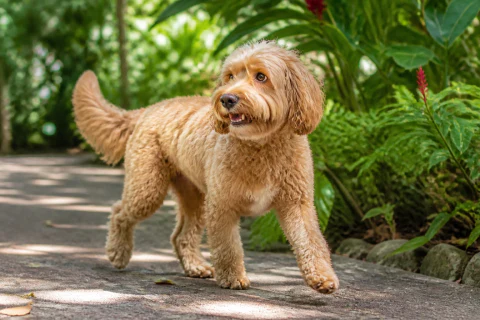
Most Cockapoos benefit from daily walks, play, sniffing and short training sessions. Some inherit a particularly active gundog outlook and need more purposeful exercise and mental work than their fluffy appearance suggests.
Growing puppies need age-suitable movement and rest. Use cooler periods for outdoor activity in Thailand and add indoor searching, training and puzzle games when midday conditions are unsuitable.
Training considerations
Cockapoos are often quick learners and responsive to rewards, which makes calm greetings, lead walking, recall, settling and grooming cooperation useful early projects.
Intelligence does not teach household manners automatically. Consistent routines, prevention of rehearsed jumping or barking, and gradual practice around distractions help enthusiasm become manageable.
Barking and independence
Some Cockapoos alert to visitors, corridor sounds or exciting activity. Others vocalise when seeking contact or struggling with time alone.
Reward calm behaviour, manage repeated triggers and build independence in small steps. Condo suitability depends on the individual dog and daily routine, not size alone.
Grooming, shedding and smell
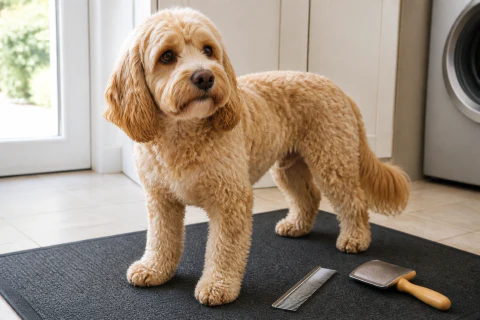
Straight, wavy and curly coats can all occur, often with significant variation even within one litter. Regular brushing and combing through the full coat, plus professional grooming, are usually part of ownership.
Pay particular attention to areas that rub or stay damp, including behind the ears, feet and furnishings. Low shedding is possible but not guaranteed, and no Cockapoo can be promised as allergy safe.
Children and other animals
A well-matched Cockapoo can be a playful family companion. Adults should supervise, teach children respectful handling and protect the dog’s quiet rest, food and chewing time.
Many live successfully with other animals after thoughtful introductions. Activity, confidence and chase interest vary, so use the actual puppy and household rather than assuming universal sociability.
Condos, gardens and time alone
Cockapoos can adapt to condos when daily exercise, grooming, toileting, barking and time alone are managed. A garden is convenient but does not replace walks, training or family contact.
The home should include a cool resting area and safe storage for objects a curious young dog might carry or chew. Build a predictable routine without expecting constant company every minute.
Heat and humidity
Use the coolest suitable periods for active walks, provide water and shade, and keep a comfortable indoor resting area. Coat length and density affect comfort, so grooming and activity timing work together.
Never leave the dog in a parked vehicle or warm enclosed space. Shorten the plan when the individual is uncomfortable and dry the coat thoroughly after rain or swimming.
Health and everyday care
Useful everyday care includes thorough coat maintenance, tooth brushing, nail care, checking ears, eyes, skin and feet, maintaining a comfortable body condition, varied daily activity and enough undisturbed rest.
This guide provides general ownership information, not veterinary advice. Persistent changes in appetite, energy, breathing, movement, ears, eyes, skin, digestion or behaviour should be discussed with a veterinarian.
How Perfect Pedigree sources Cockapoos
Perfect Pedigree has helped families find puppies in Thailand since 2014. A Cockapoo enquiry begins with the household’s needs and the actual puppy’s temperament, upbringing, parents, likely adult size and coat commitment rather than treating the crossbreed name as a guarantee.
Current availability requires individual research. We explain the veterinary care, documentation and other information available for any puppy before reservation, and we confirm what is known about the parents and generation. A person remains involved before reservation.
Typical availability in Thailand
Cockapoos are less consistently available in Thailand than several established companion breeds. Suitable parentage, individual temperament and realistic coat expectations should matter more than colour or a fashionable label.
Available Cockapoo litters and enquiries
Current puppies appear by litter on Available Puppies. If none is shown, tell us about your home, preferred adult size, grooming expectations, family and timing so we can assess whether a Cockapoo enquiry is realistic.
Frequently asked questions
Is a Cockapoo a recognised breed?
Cockapoo describes Cocker Spaniel and Poodle parentage. It does not have one fixed FCI breed standard, so size, coat and temperament can vary.
Is a Cockapoo hypoallergenic?
No dog can be guaranteed hypoallergenic or allergy safe. Cockapoo coats and shedding vary, and even a low-shedding individual needs regular grooming.
How large will a Cockapoo grow?
Adult size depends on the actual Cocker Spaniel and Poodle parents, their sizes and the puppy’s own development. Ask for parent information rather than an exact early promise.
Sources and authorship
- Fédération Cynologique Internationale, Poodle Standard No. 172, used for the Poodle parent’s recognised sizes, coat and broad companion characteristics.
- Fédération Cynologique Internationale, English Cocker Spaniel Standard No. 5, used for one common Cocker parent’s recognised size, working background, coat and broad temperament characteristics.
- PetMD, Cockapoo, used selectively for veterinarian-reviewed cross-specific size, coat, grooming, activity and household context.
- British Cockapoo Society, Thinking of getting a Cockapoo?, used for practical cross-specific variation, parentage, grooming and ownership context.
- Perfect Pedigree’s first-hand experience helping families find and raise puppies in Thailand since 2014, used for practical Thailand context and enquiry support.
Breed organisations and welfare sources are used selectively for neutral facts and practical context. Their registration, health-testing and purchasing recommendations are not presented as Perfect Pedigree policy.
Would this breed suit your family?
Browse current litters or tell us what you are looking for. We will review the enquiry personally and help you understand the next step.