
Thailand breed guide
Dalmatian in Thailand: is this breed right for you?
The Dalmatian is a distinctive, outgoing and athletic dog developed for endurance beside carriages. It can be an engaging family companion for people who enjoy training and substantial daily activity, but its famous spots should never be the main reason for choosing it.
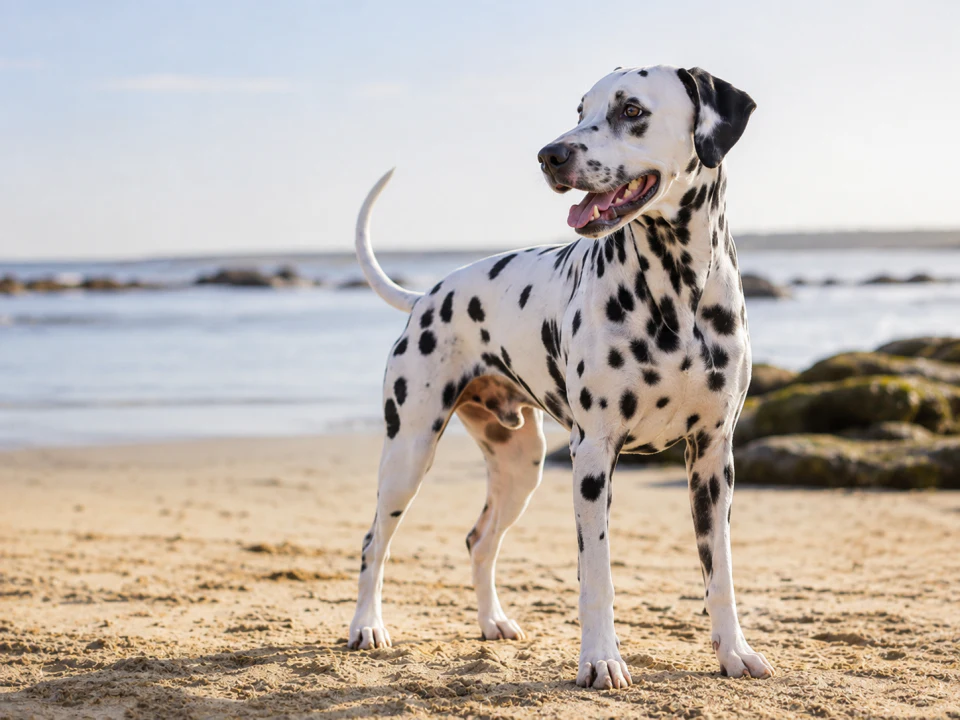
Is a Dalmatian suitable for life in Thailand?
Yes, for an active household that wants a sociable, intelligent dog and has time for movement, training and family involvement. A well-settled Dalmatian can be affectionate, entertaining and impressively capable.
Its carriage-dog history matters. Most adults need more than a short neighbourhood circuit, and young dogs can be exuberant. Thailand ownership requires careful timing of activity, a cool indoor base and useful mental work when the weather restricts outdoor exercise.
Quick facts
Recognised height
About 54 to 60 cm for females and 56 to 62 cm for males
Adult build
Medium-large, strong, lean and athletic
Exercise
High daily physical and mental commitment
Grooming
Simple short coat but regular shedding
Home
Active family home with secure access and cooling
Best suited to
Engaged households that enjoy an energetic companion
Beautiful markings on a genuine endurance dog
The Dalmatian’s crisp outline and spotted coat make it immediately appealing. Many are also friendly, playful and deeply involved with their family.
Appearance can obscure the working background. This is not a decorative dog that becomes settled through admiration alone; exercise, training, companionship and a taught ability to rest are part of the everyday commitment.
Temperament and family suitability
Dalmatians are commonly outgoing, intelligent and dignified, with plenty of playfulness among people they know. Many form close family bonds and enjoy learning through shared activity.
Individual confidence varies. Positive early exposure to visitors, children, dogs, traffic, handling and new environments helps prevent a naturally alert dog from becoming overwhelmed or reactive.
Adult size and expected lifespan
The FCI standard gives heights of 56 to 62 cm for males and 54 to 60 cm for females, with broad weights around 27 to 32 kg and 24 to 29 kg respectively.
The breed is athletic rather than bulky but still strong enough to pull or jump with force. Lead manners, vehicle space and secure gates should suit the adult.
From lightly spotted puppy to athletic adult
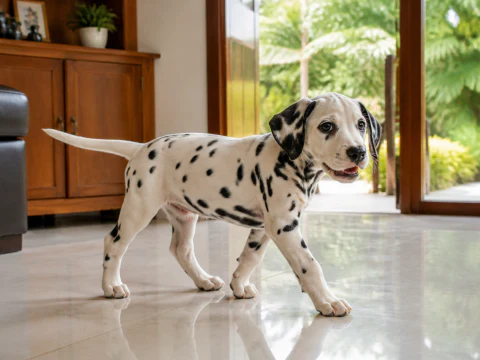
A puppy shows how markings continue to develop after birth. This stage should build recall games, lead skills, comfortable handling, calm greetings and confidence around ordinary home and city life.
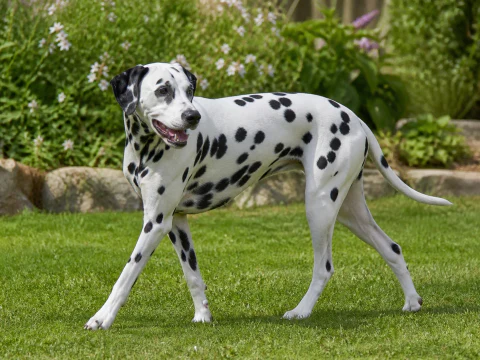
The adult dog shown here illustrates the lean, balanced frame built for efficient movement. Adult plans should provide safe physical outlets and mental engagement while protecting the dog from Thailand’s hottest conditions.
Exercise and mental stimulation
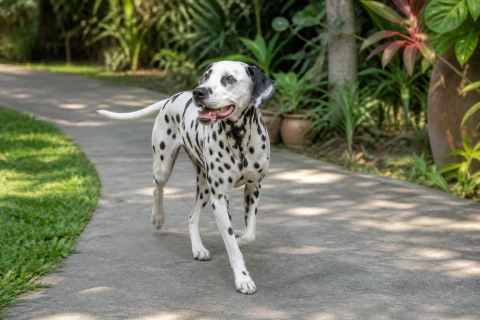
The Dalmatian was developed to move with carriages and most adults need substantial daily physical and mental activity. Walking, running when mature and conditioned, scent work, play and varied training can all contribute.
Puppies should develop coordination and confidence through age-suitable movement rather than forced endurance. In hot weather, shift activity to cooler periods and use indoor work instead of allowing frustration to build.
Training considerations
Positive reinforcement and consistent boundaries suit an intelligent dog that may become bored by unrewarding repetition. Recall, loose-lead walking, settling, releasing objects and calm greetings are useful priorities.
Make training part of walks and daily life. A dog that can switch between activity and rest is easier to live with than one whose only outlet is increasingly intense exercise.
Barking and independence
Some Dalmatians alert readily to visitors or unusual sounds, while others are quieter. Excitement, boredom and abrupt long periods alone can increase vocal behaviour.
They commonly value companionship and household involvement. Build time alone progressively and provide a secure resting routine after the dog’s needs are met.
Grooming, shedding and smell
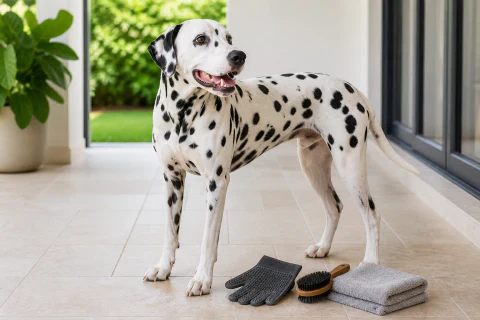
The short, dense coat is straightforward to brush but sheds more than many first-time owners expect. Regular brushing helps remove loose hair and keeps skin and coat easy to inspect.
Check ears, feet, nails and teeth routinely, and dry the dog after swimming, rain or bathing. White areas of coat should not be left through prolonged intense sun without shade.
Children and other animals
A well-matched Dalmatian can be an enthusiastic family companion. Young dogs may jump, mouth or play physically, so adults should supervise around small children and reward calmer choices.
Many live successfully with dogs and other animals after suitable introductions. Individual chase, play style and history matter more than a simple breed promise.
Condos, gardens and time alone
A house with secure outdoor access is often easiest, though the dog still needs organised activity beyond the garden. Condo living is demanding because exercise, corridor noise, lifts and time alone all require careful management.
Secure fencing matters for an athletic, curious dog. Indoors, provide a comfortable resting place and teach settling rather than expecting constant movement.
Heat and humidity
Plan sustained exercise for the coolest suitable periods, provide water and shade, and allow recovery in a cool indoor space. Thailand’s humidity can make the same route much harder than it looks.
Never leave the dog in a vehicle or warm enclosed area. Short toileting trips combined with indoor scent games and training are appropriate when outdoor conditions are unsafe.
Health and everyday care
Useful everyday care includes maintaining a lean body condition, balancing activity with rest, brushing loose coat, caring for teeth and nails, checking ears and feet, and providing clean water and bedding.
This guide provides general ownership information, not veterinary advice. Changes in hearing response, urinary habits, skin, movement, appetite or another marked difference from the dog’s normal should be discussed promptly with a veterinarian.
How Perfect Pedigree sources Dalmatians
Perfect Pedigree has helped families find Dalmatian puppies in Thailand since 2014. We consider temperament, upbringing, known parent information and whether the household understands the activity, shedding, training and companionship beyond the spotted coat.
We explain the veterinary care, documentation and other information available for the individual puppy before reservation. We also discuss family routine, other animals, adult size, time alone and exercise in Thailand. A person remains involved before reservation.
Typical availability in Thailand
Dalmatians are available in Thailand from time to time. Spot size and distribution should not outweigh temperament, comfortable movement, upbringing and fit with the household’s real activity level.
Available Dalmatian litters and enquiries
Current puppies appear by litter on Available Puppies. If none is shown, tell us about your home, activity, work schedule, family and preferred timing so we can discuss a current or later Dalmatian enquiry.
Frequently asked questions
Are Dalmatians very active?
Generally yes. Their carriage-dog background supports substantial adult stamina, so most need a meaningful daily combination of physical and mental activity.
Do Dalmatians shed?
Yes. The short coat is easy to brush but sheds regularly, so people wanting an almost hair-free home should not choose by coat length alone.
Is a Dalmatian suitable for a first-time owner?
It can be for a well-prepared active person who commits to training, companionship and routine. Someone wanting an effortless decorative dog should choose differently.
Sources and authorship
- Fédération Cynologique Internationale, Dalmatian Standard No. 153, used for recognised size, carriage-dog history, coat and broad temperament characteristics.
- The Royal Kennel Club, Dalmatian, used selectively for recognised build, endurance, coat and outgoing temperament context.
- Dalmatian Club of America, frequently asked questions, used for breed-specific energy, positive training, shedding and realistic household context.
- RSPCA, dogs die on hot walks, used for practical exercise, shade, water and hot-surface precautions relevant to Thailand.
- Perfect Pedigree’s first-hand experience helping families find and raise puppies in Thailand since 2014, including experience with Dalmatians.
Breed organisations and welfare sources are used selectively for neutral facts and practical context. Their registration, health-testing and purchasing recommendations are not presented as Perfect Pedigree policy.
Would this breed suit your family?
Browse current litters or tell us what you are looking for. We will review the enquiry personally and help you understand the next step.