
Thailand breed guide
Japanese Spitz in Thailand: is this breed right for you?
The Japanese Spitz is a bright white companion with an alert expression, a playful nature and a substantial double coat. It can adapt to city life, but Thailand’s heat, seasonal shedding and the breed’s tendency to notice what is happening around it all need practical planning.
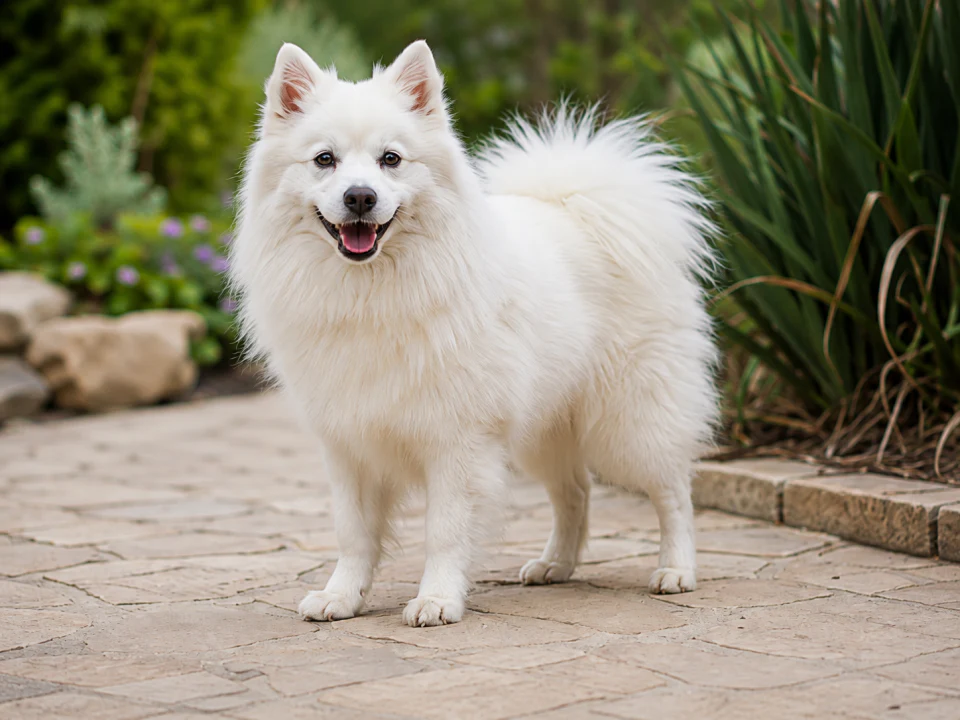
Is a Japanese Spitz suitable for life in Thailand?
Yes, for a family wanting an engaged, trainable companion and able to provide a reliably cool indoor base. Japanese Spitz are generally lively and people-oriented, with enough energy for daily walks, games and learning.
The white double coat sheds and needs regular brushing, particularly during heavier coat changes. A family expecting a decorative dog with little exercise, training or cleaning will underestimate the breed.
Quick facts
Recognised height
About 30 to 38 cm for males, with females slightly smaller
Coat
Profuse, pure white double coat
Exercise
Daily walks, play and training in cooler conditions
Grooming
Regular brushing with heavier seasonal shedding
Home
Adaptable indoors when cooling, activity and barking are managed
Best suited to
Interactive households wanting a cheerful, alert companion
Japanese Spitz, Pomeranian or Samoyed?
These breeds share a Spitz outline, but they are separate breeds with different recognised sizes and histories. The Japanese Spitz is larger than a Pomeranian and much smaller than a Samoyed.
Choose according to the actual breed, adult scale, coat commitment and temperament rather than asking for a generic white fluffy dog. Photographs can also make size differences difficult to judge.
Temperament and family suitability
The FCI standard describes the Japanese Spitz as intelligent, cheerful and keen. Many are affectionate family companions that enjoy learning and taking part in everyday activity.
They can be watchful and expressive. Calm early exposure to visitors, traffic, lifts, grooming and other dogs helps the puppy respond thoughtfully rather than treating every novelty as an alarm.
Adult size and expected lifespan
The FCI gives males a height of about 30 to 38 cm, with females slightly smaller. This places the breed between many toy Spitz dogs and the larger northern breeds, although individual build varies.
No lifespan can be guaranteed. Plan for a long household commitment and for exercise, coat care and support to change across life stages.
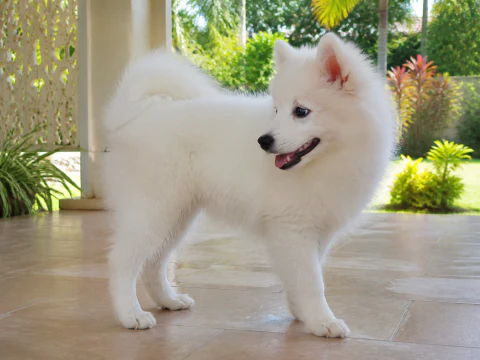
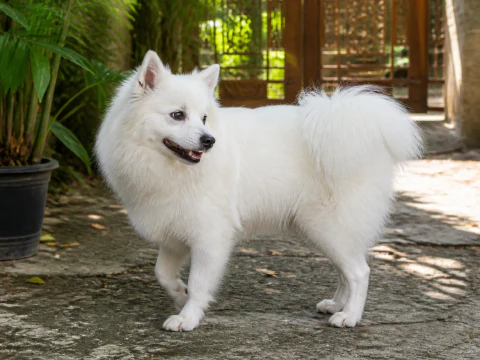
From soft white youngster to full-coated adult
A young Japanese Spitz already shows the upright ears, curled tail and white coat associated with the breed. Puppy coat gradually changes as the adult double coat develops.
The adult dog shown here has a fuller ruff and outline. Coat volume, body size and expression vary, while regular brushing and sensible trimming preserve a practical companion appearance.
Exercise and mental stimulation
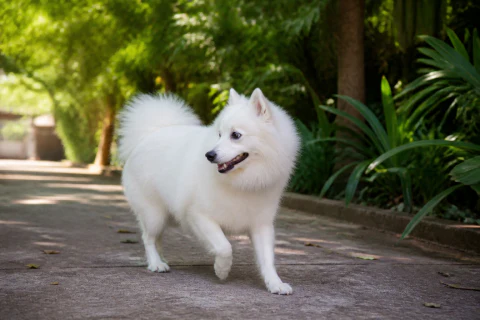
Daily walks, sniffing, games and short training sessions provide useful physical and mental activity. Many Japanese Spitz enjoy learning tricks and accompanying their family on manageable outings.
In Thailand, shift outdoor activity to cooler periods and use indoor games when heat or heavy rain makes a normal walk uncomfortable. A full coat and enthusiasm do not make midday exercise sensible.
Training considerations
Reward-based training suits an attentive dog that enjoys interaction. Recall, lead walking, calm greetings, settling, leaving found objects and comfortable grooming are useful priorities.
Keep sessions varied and practical. Consistency matters more than repetition, and desired quiet behaviour should be rewarded before barking becomes the dog’s default response.
Barking and independence
An alert Spitz may announce visitors, corridor sounds or activity outside. Early sound exposure, visual management and a reliable settle help protect neighbourly condo living.
Many form close bonds and prefer company. Introduce time alone gradually and arrange realistic support if the household is away for extended periods.
Grooming, shedding and smell
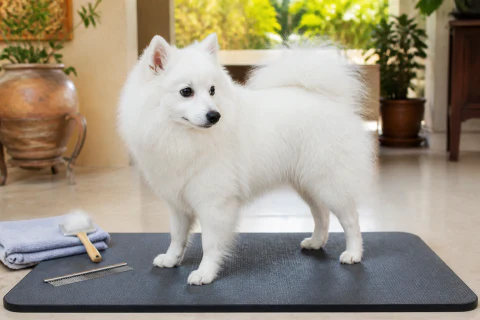
Brush through the coat regularly, paying attention behind the ears, around the collar area and through the trousers and tail. Expect heavier shedding when the undercoat changes.
Dirt often brushes from a dry coat more easily than expected. Bathing followed by thorough drying, short nails, clean teeth and routine ear and skin observation keep care manageable.
Children and other animals
A well-socialised Japanese Spitz can be a playful family companion. Children should respect sleep and meals, avoid pulling the coat or tail and take part in calm games and training.
Introductions to other animals should be gradual. A friendly breed reputation does not replace supervision or assessment of the individual dog’s comfort and play style.
Condos, gardens and time alone
The breed can live in a condo when daily activity, barking and shedding are accepted and managed. Reliable indoor cooling and a quiet resting place are more important than a large property.
A secure garden is useful but not essential. Outdoor access does not replace walks, training or involvement with the household, and the dog should not live outside in the heat.
Heat and humidity
Thailand requires deliberate heat management for a full-coated breed. Provide a cool indoor base, fresh water, shade and walks at the coolest practical times, avoiding hot vehicles and exposed surfaces.
Do not treat close shaving as the solution to climate. Maintain a clean, unmatted coat and manage the environment, while observing the individual dog’s pace, breathing and willingness to continue.
Health and everyday care
Useful everyday care includes coat and skin checks, brushing teeth, trimming nails, keeping the dog lean and active, and arranging routine vaccinations and parasite prevention with the family’s vet.
This guide provides general ownership information, not veterinary advice. Changes in breathing, energy, appetite, movement, eyes, skin, coat or behaviour should be discussed with a veterinarian.
How Perfect Pedigree sources Japanese Spitz
Perfect Pedigree has helped families find puppies in Thailand since 2014. A Japanese Spitz enquiry begins with the intended home, climate management, coat expectations and the temperament and upbringing of the individual puppy.
Current availability requires specific research. We explain the veterinary care, documentation and other information available for any individual puppy before reservation. A person remains involved before reservation.
Typical availability in Thailand
Japanese Spitz are less commonly encountered than some small companion breeds in Thailand, and suitable puppies may require patience. Availability should be confirmed for the individual enquiry rather than inferred from this informational guide.
Available Japanese Spitz litters and enquiries
Current puppies appear by litter on Available Puppies. If none is shown, tell us about your home, cooling, grooming expectations and timing so we can assess whether a Japanese Spitz enquiry is realistic.
Frequently asked questions
Is a Japanese Spitz the same as a white Pomeranian?
No. They are separate recognised breeds. The Japanese Spitz is generally larger, with its own standard, history and adult proportions.
Can a Japanese Spitz live in a condo?
Yes, when barking, shedding, daily activity and indoor cooling are properly managed. The dog still needs walks, training and involvement with the family.
Should a Japanese Spitz be shaved in Thailand?
Close shaving is not a substitute for heat management. Keep the coat clean and free of mats, use a cool indoor environment and ask an experienced groomer about a practical care routine.
Sources and authorship
- Fédération Cynologique Internationale, Japanese Spitz Standard No. 262, used for recognised size, coat, purpose and broad temperament characteristics.
- Japan Kennel Club, Japanese Spitz breed information, used selectively for Japanese breed history, recognised appearance and temperament context.
- The Royal Kennel Club, Japanese Spitz breed information, used selectively for general breed background and ownership context.
- Blue Cross, how to keep pets cool in summer, used for practical hot-weather precautions relevant to life in Thailand.
- Perfect Pedigree’s first-hand experience helping families find and raise puppies in Thailand since 2014, used for practical Thailand context and enquiry support.
Breed organisations and welfare sources are used selectively for neutral facts and practical context. Their registration, health-testing and purchasing recommendations are not presented as Perfect Pedigree policy.
Would this breed suit your family?
Browse current litters or tell us what you are looking for. We will review the enquiry personally and help you understand the next step.