
Thailand breed guide
Maltese in Thailand: is this breed right for you?
The Maltese is a bright, affectionate small companion whose portable size suits city life. The famous white coat needs real upkeep, so the right home wants a people-focused dog and is happy to make brushing, cleaning and regular trimming part of the routine.

Is a Maltese suitable for life in Thailand?
Yes, for people wanting a small companion that can share everyday indoor life and receive plenty of contact. Maltese are often lively, observant and affectionate rather than fragile ornaments.
The breed can fit a condo and travel easily, but the coat, toileting routine, barking and time alone still require planning. A practical family trim can reduce coat work without turning the dog into a maintenance-free choice.
Quick facts
Recognised height
About 20 to 25 cm under the FCI standard
Recognised weight
About 3 to 4 kg under the FCI standard
Exercise
Daily short walks, play and training
Grooming
Frequent brushing and regular trimming for most family homes
Home
Well suited to condos when toileting and barking are managed
Best suited to
People wanting a cheerful, close small companion
Long show coat or practical family trim?
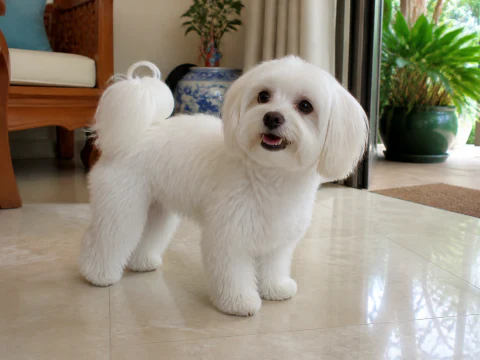
The FCI describes a long, straight, silky white coat. Maintaining that finish takes frequent brushing, careful bathing and thorough drying. Most family dogs can wear a shorter practical trim that is easier to keep clean in Thailand.
A short trim still needs brushing, face and eye-area cleaning, bathing and regular appointments. Coat length should suit the family’s real routine rather than an image of how the breed is expected to look.
Temperament and family suitability
The FCI describes the Maltese as lively, affectionate, very gentle and intelligent. Many are playful companions that enjoy attention, training and being included in ordinary household routines.
A very small dog still needs choice and respectful handling. Calm social experience can build confidence, while repeatedly carrying or forcing greetings may limit useful independence.
Adult size and expected lifespan
The FCI gives a height of 21 to 25 cm for males and 20 to 23 cm for females, with a weight of 3 to 4 kg. Puppies vary, so an exact adult weight should not be promised from an early photograph.
Small size makes transport convenient but requires care around steps, balconies, elevated furniture and larger animals. Plan for a long relationship rather than choosing only for puppy appearance.
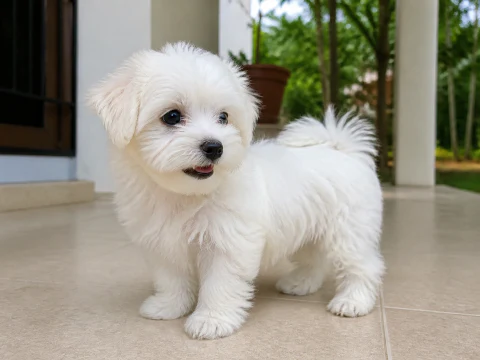
From fluffy puppy to silky adult coat
A puppy has a soft coat that will change as it matures. Calm introduction to brushing, face cleaning, feet handling and drying should begin early.
The adult shown here illustrates a manageable companion trim. Individual coat density, texture and maintenance needs vary, and white coats make everyday dirt and staining more visible.
Exercise and mental stimulation
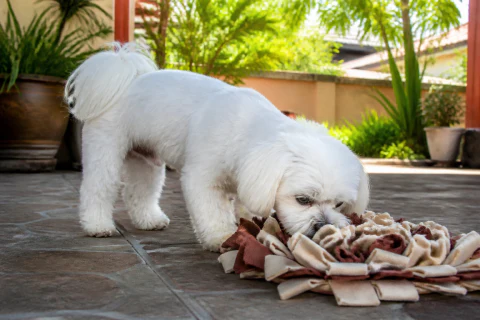
Short daily walks, indoor play, sniffing and training can meet the needs of many Maltese. Carrying the dog everywhere does not replace opportunities to move, explore and learn.
Use cooler periods for walks and keep the white coat clean and dry after wet ground. Indoor searches and simple games are useful during strong sun or heavy rain.
Training considerations
Reward-based training suits this responsive companion. Priorities include toileting, recall, calm greetings, walking on a light lead, settling and accepting grooming without a struggle.
Frequent toileting opportunities are important for a young small-breed puppy. Consistency and supervision work better than expecting long gaps or punishing accidents.
Barking and independence
Some Maltese alert readily to visitors, lifts, corridor sounds or other dogs. Teach quiet observation, create distance from repeated triggers and reward a reliable settle.
They often prefer company. Build relaxed time alone gradually so affection does not become an assumption that the dog can never cope without constant contact.
Grooming, shedding and smell
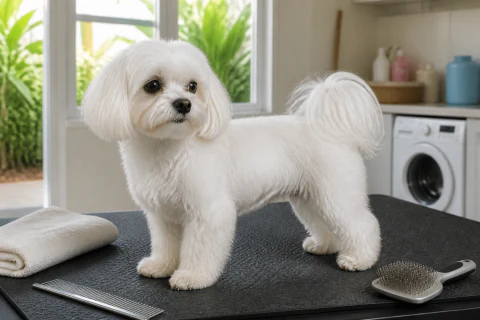
Long coat tangles quickly around the ears, armpits, legs and where a harness rubs. Brush to the skin without pulling, remove debris, and dry the coat completely after bathing or rain.
Routine face cleaning, tooth brushing, nail care and clean bedding help the dog look and smell fresh. A shorter trim reduces tangles but does not remove coat care.
Children and other animals
Maltese can be affectionate family dogs when children understand gentle contact and leave a sleeping or eating dog alone. Very young children need close supervision around such a small body.
Introduce other dogs carefully, especially much larger ones. Compatibility depends on individual behaviour and management, not size or breed label alone.
Condos, gardens and time alone
A condo can suit the breed well. The practical questions are toileting access, barking, grooming space, safe balconies and how much company the dog receives on an ordinary weekday.
A garden is optional and does not replace walks or family involvement. Outdoor access should be supervised because of heat, escape gaps and larger animals.
Heat and humidity
Plan walks for cooler mornings and evenings, provide water, shade and a cool indoor resting area, and avoid hot surfaces. A white coat does not make direct tropical sun harmless.
Keep air moving around a full coat and dry the dog thoroughly after rain or bathing. Adjust activity to the individual rather than assuming every small dog handles heat in the same way.
Health and everyday care
Useful everyday care includes brushing, face and eye-area cleaning, tooth brushing, nail trimming, maintaining a healthy body condition and arranging routine vaccinations and parasite prevention with the family’s vet.
This guide provides general ownership information, not veterinary advice. A meaningful change in appetite, energy, movement, breathing, mouth comfort, eyes, skin or toileting belongs with a veterinarian.
How Perfect Pedigree sources Maltese
Perfect Pedigree has helped families find puppies in Thailand since 2014. For a Maltese enquiry, we discuss the intended home, realistic grooming routine, expected adult scale and the puppy’s temperament and upbringing.
We explain the information available about the parents, veterinary care and documentation before reservation. Details vary and are confirmed for the individual puppy rather than assumed from appearance or a kennel-club model. A person remains involved before reservation.
Typical availability in Thailand
Maltese are familiar in Thailand, but current litters, individual puppies and timing change. Coat quality, temperament, upbringing and household fit matter more than choosing only the smallest or whitest photograph.
Available Maltese litters and enquiries
Current puppies appear by litter on Available Puppies. If none is shown, tell us about your home, grooming expectations and preferred timing so we can discuss realistic options.
Frequently asked questions
Is a Maltese suitable for a condo?
Yes. The size is convenient, provided the family manages toileting, alert barking, daily activity, grooming and time alone.
Does a Maltese need professional grooming?
Most family homes find regular professional trimming useful. Brushing, face cleaning, drying and small maintenance tasks continue between appointments.
Is a Maltese hypoallergenic?
No dog can be guaranteed not to trigger allergies. The Maltese sheds differently from many breeds, but anyone with allergies should spend time around dogs and seek appropriate professional advice before committing.
Sources and authorship
- Fédération Cynologique Internationale, Maltese Standard No. 65, used for recognised size, coat and broad temperament characteristics.
- The Royal Kennel Club, Maltese breed information, used selectively for breed background and general companion context.
- American Maltese Association, Maltese grooming, used selectively for practical brushing, bathing and coat-maintenance context.
- Blue Cross, keeping pets cool in summer, used for practical hot-weather precautions relevant to life in Thailand.
- Perfect Pedigree’s first-hand experience helping families find and raise puppies in Thailand since 2014, including experience with Maltese.
Breed organisations and welfare sources are used selectively for neutral facts and practical context. Their registration, health-testing and purchasing recommendations are not presented as Perfect Pedigree policy.
Would this breed suit your family?
Browse current litters or tell us what you are looking for. We will review the enquiry personally and help you understand the next step.