
Thailand breed guide
Morkie in Thailand: is this breed right for you?
A Morkie combines Maltese and Yorkshire Terrier parentage in a very small companion with plenty of personality. Adult size, coat, shedding and character vary, so the name should begin a conversation about the actual parents and puppy rather than act as a guarantee.
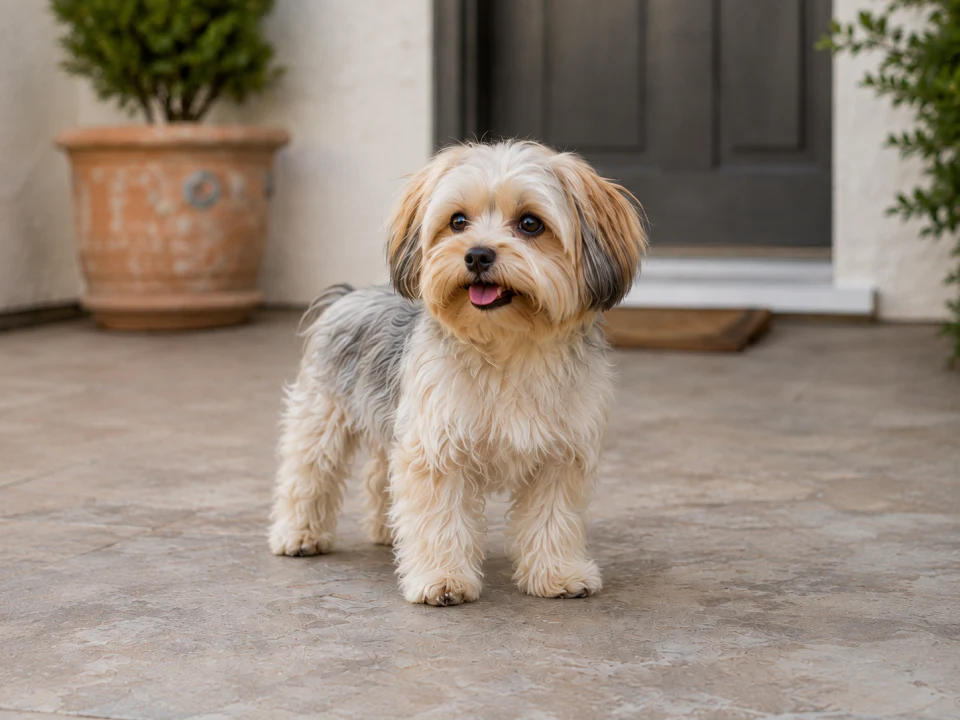
Is a Morkie suitable for life in Thailand?
Yes, for a household wanting a portable, affectionate companion and prepared for daily grooming, patient training, alert barking and the physical care required by a tiny dog. Morkies can be lively and confident rather than passive lapdogs.
Very small size makes gentle handling, secure gaps and supervision around young children or much larger animals especially important. It does not remove the need for walking, learning and ordinary dog experiences.
Quick facts
Parentage
Maltese and Yorkshire Terrier
Adult size
Very small but variable
Exercise
Short daily walks, play and mental activity
Grooming
Frequent brushing and regular trimming
Shedding
Often low but variable and not an allergy guarantee
Best suited to
Gentle households wanting a small involved companion
Tiny body, genuine terrier and companion character
The Maltese parent contributes a long companion history, while the Yorkshire Terrier remains a lively, alert terrier despite its tiny size. A Morkie may show a different balance of those traits from another puppy with the same label.
There is no single recognised Morkie standard. Adult weight, muzzle, ear carriage, coat texture and confidence should be understood from the actual parents and individual development, not from an extreme size label.
Temperament and family suitability
Morkies are often affectionate, lively and closely attached to their people. Yorkshire Terrier confidence can appear in a very small body, while the Maltese influence may add a strongly companion-focused outlook.
Temperament is not fixed by the crossbreed name. Positive exposure to visitors, friendly dogs, household sounds, handling and short periods of independence helps the puppy become more adaptable.
Adult size and expected lifespan
Both parent breeds are very small, but there is no single recognised Morkie size. Ask about the actual parents and puppy’s development rather than relying on “teacup” or another marketing label.
Tiny dogs need secure balcony gaps, careful doors, safe furniture access and protection from falls or accidental steps. Use equipment that fits properly without adding unnecessary weight.
From tiny puppy to individual adult
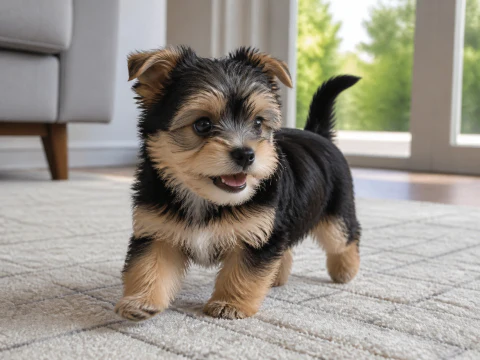
A puppy is bright and appealing, but still physically delicate. Puppyhood should include gentle handling, safe floor-level exploration, toileting routines, grooming practice and calm exposure to the wider world.
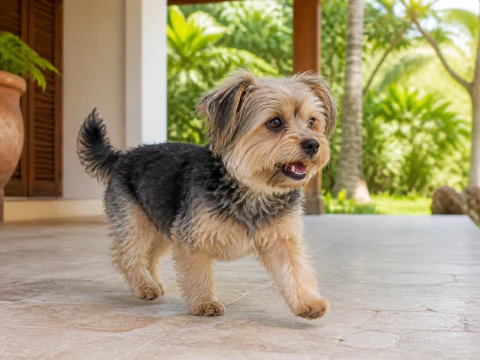
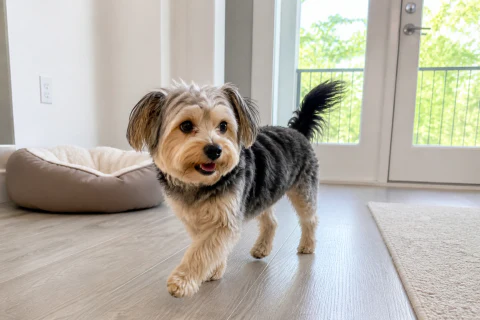
The adult shown here demonstrates one possible size and coat. The puppy may mature differently, and coat texture, colour and grooming demand can change considerably during the first year.
Exercise and mental stimulation
Short daily walks, sniffing, play and training provide useful activity and normal experience. Carrying a Morkie everywhere can prevent the puppy learning to move confidently and engage with the environment.
Avoid long hot routes and activity designed for a much larger dog. In Thailand, use cooler periods outdoors and add indoor searching, play and short training sessions.
Training considerations
Small dogs benefit from the same clear, reward-based teaching as larger ones. Toileting, recall, lead walking, waiting at doors, settling and comfortable handling are practical priorities.
Do not excuse jumping, barking or guarding because the dog is easy to pick up. Teach an alternative behaviour while also recognising that physical force is unnecessary and intimidating for such a small companion.
Barking and independence
A Morkie may inherit alert terrier barking and can react to visitors, corridor sounds or activity beyond a window. Small size does not guarantee quiet condo living.
Reward calm observation, manage repeated triggers and build time alone gradually. Constant carrying or attention can make independence harder if the puppy never practises settling safely nearby.
Grooming, shedding and smell
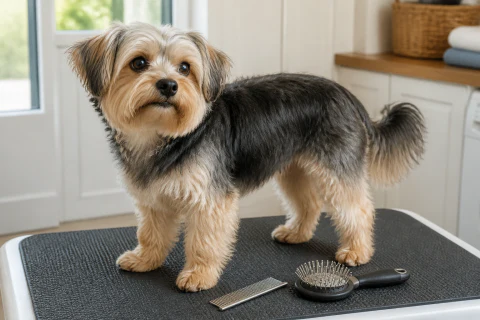
Coats can be silky, fluffy, straight or slightly wavy and often need frequent brushing and regular professional trimming. Areas around the face, ears, legs and harness can tangle quickly.
Low shedding is possible but not guaranteed, and no Morkie can be promised as allergy safe. Gentle face care, tooth brushing, nail care and early cooperation make routine maintenance easier.
Children and other animals
A Morkie can be affectionate with considerate older children. Very young children may accidentally drop, squeeze or step on a tiny puppy, so close adult supervision and floor-level interaction are important.
Introduce larger dogs carefully and prevent rough play or unsupervised chasing. Confidence does not protect a small dog from the physical effect of a much larger animal.
Condos, gardens and time alone
The breed’s size suits many condos, provided toileting, barking, exercise, grooming and time alone are managed. Check balcony rails, furniture jumps, reclining chairs and doors for small-dog hazards.
A garden is not required, but daily safe opportunities to walk, sniff and learn are. Provide a quiet bed and predictable routine rather than treating the dog as a portable accessory.
Heat and humidity
Use cooler periods for walks, provide water and shade, and keep a comfortable indoor resting area. A long coat may be kept in a practical trim, but shaving or coat style alone does not replace sensible timing.
Never leave the dog in a parked vehicle or warm enclosed space. Hot pavement can affect a small dog close to the ground, so check conditions and shorten activity when needed.
Health and everyday care
Useful everyday care includes frequent coat maintenance, tooth brushing, nail care, checking eyes, ears, skin and feet, maintaining a comfortable body condition, using well-fitted equipment and providing safe daily movement.
This guide provides general ownership information, not veterinary advice. Persistent changes in appetite, energy, breathing, movement, mouth comfort, eyes, skin, digestion or behaviour should be discussed with a veterinarian.
How Perfect Pedigree sources Morkies
Perfect Pedigree has helped families find puppies in Thailand since 2014. A Morkie enquiry begins with the household’s needs and the actual puppy’s temperament, upbringing, parents, development and coat commitment rather than an extreme size promise.
Current availability requires individual research. We explain the veterinary care, documentation and other information available for any puppy before reservation, and we confirm what is known about the parents. A person remains involved before reservation.
Typical availability in Thailand
Morkies are less consistently available in Thailand than Maltese or Yorkshire Terriers. Suitable parentage, temperament, robustness and household fit should matter more than colour, fashionable styling or the smallest photograph.
Available Morkie litters and enquiries
Current puppies appear by litter on Available Puppies. If none is shown, tell us about your home, children, other animals, grooming expectations and timing so we can assess whether a Morkie enquiry is realistic.
Frequently asked questions
Is a Morkie a recognised breed?
Morkie describes Maltese and Yorkshire Terrier parentage. It does not have one fixed FCI breed standard, so adult size, coat and temperament can vary.
Is a Morkie suitable for young children?
Its very small size makes accidental injury a concern. A gentle older child may be a good companion, but young children need close adult supervision and floor-level interaction.
Is a Morkie hypoallergenic?
No dog can be guaranteed hypoallergenic or allergy safe. Morkie coats and shedding vary, and every coat still requires regular care.
Sources and authorship
- Fédération Cynologique Internationale, Maltese Standard No. 65, used for the Maltese parent’s recognised size, coat and broad companion characteristics.
- Fédération Cynologique Internationale, Yorkshire Terrier Standard No. 86, used for the Yorkshire Terrier parent’s recognised weight, coat and broad temperament characteristics.
- PetMD, Morkie, used selectively for veterinarian-reviewed cross-specific size, coat, grooming, activity and household context.
- PDSA, dogs die in hot cars and on hot walks, used for practical hot-weather, vehicle, shade and water precautions relevant to Thailand.
- Perfect Pedigree’s first-hand experience helping families find and raise puppies in Thailand since 2014, used for practical Thailand context and enquiry support.
Breed organisations and welfare sources are used selectively for neutral facts and practical context. Their registration, health-testing and purchasing recommendations are not presented as Perfect Pedigree policy.
Would this breed suit your family?
Browse current litters or tell us what you are looking for. We will review the enquiry personally and help you understand the next step.