
Thailand breed guide
Siberian Husky in Thailand: is this breed right for you?
The Siberian Husky is an athletic, sociable northern working dog with striking looks and an independent sense of adventure. Life in Thailand is possible only when the household can provide a reliably cool indoor base, careful exercise timing and secure management.
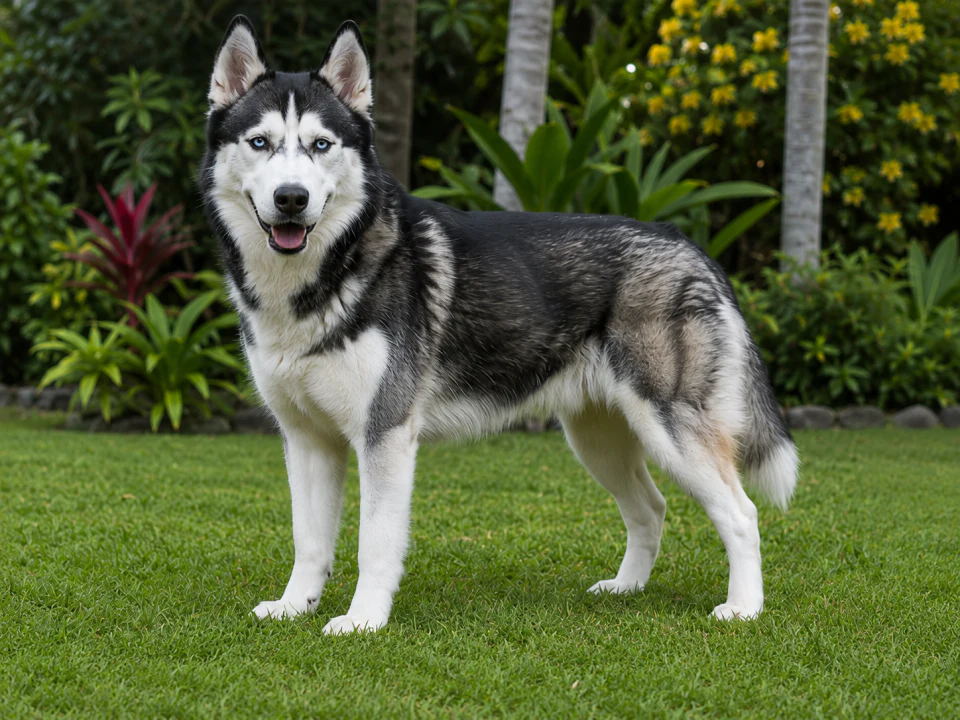
Is a Siberian Husky suitable for life in Thailand?
Yes, for a household that understands the breed’s energy, independence and Arctic coat, and can organise daily life around Thailand’s climate. Many Huskies are friendly, playful and engaging companions that enjoy people and other dogs.
Their beauty can hide a demanding practical commitment. Secure boundaries, thoughtful recall management, heavy shedding and access to a cool indoor environment are central requirements, not optional extras.
Quick facts
Recognised height
About 50.5 to 60 cm, depending on sex
Adult build
Medium, athletic and built for endurance
Exercise
Substantial daily activity in cool conditions
Grooming
Regular brushing with periods of very heavy shedding
Home
Secure boundaries and reliable indoor cooling
Best suited to
Active homes comfortable with an independent northern breed
Friendly does not mean easy to control
The Siberian Husky is generally described as friendly and outgoing rather than a natural guard dog. That social character can be delightful, but it does not remove the breed’s independent decision making or desire to explore.
Recall should never be assumed around wildlife, traffic or an open route. A securely fenced space, careful door and gate routines, and appropriate lead or long-line use are ordinary parts of responsible ownership.
Temperament and family suitability
Siberian Huskies are often friendly, gentle and outgoing. Many enjoy social contact, playful interaction and life with other compatible dogs, although every individual has its own confidence and preferences.
They are not usually dependable property guardians. A household wanting intimidation or automatic protection is choosing against the breed’s recognised character.
Adult size and expected lifespan
The FCI standard gives approximately 53.5 to 60 cm and 20.5 to 28 kg for males, and 50.5 to 56 cm and 15.5 to 23 kg for females. The body should look athletic rather than heavy.
Plan for a decade or more of care without treating any lifespan estimate as a promise. Transport, exercise, coat management and temperature control remain significant throughout adulthood.
From sociable puppy to athletic adult
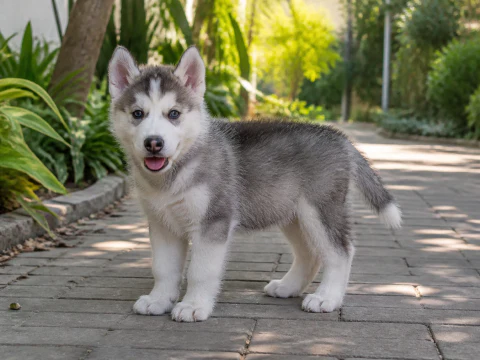
Puppies show the engaging expression that attracts many families. Puppyhood is the time to build handling, lead skills, calm greetings, short periods alone and comfort with grooming.
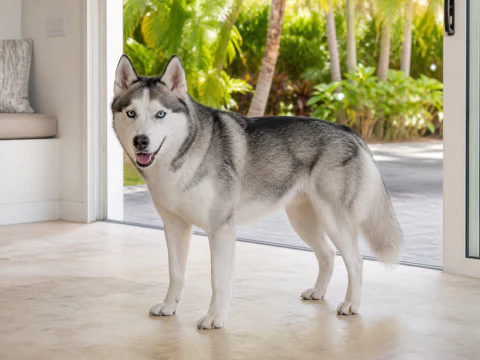
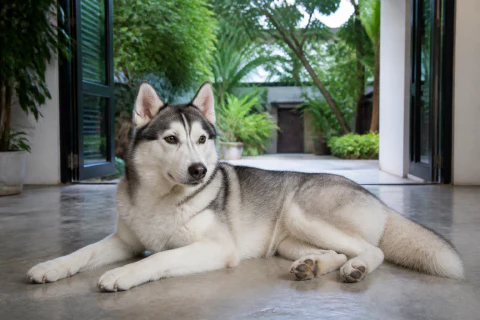
The adult dog shown here illustrates the functional double coat and balanced athletic build. Adult exercise capacity is substantial, but Thailand’s weather determines when that capacity can be used safely.
Exercise and mental stimulation
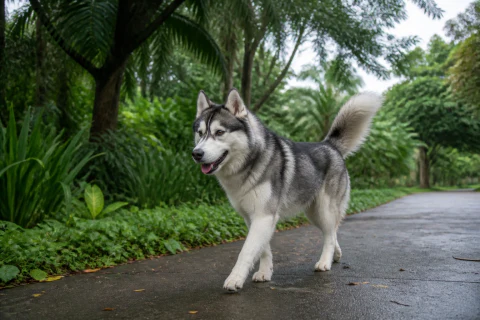
Adults need substantial daily movement and often enjoy brisk walking, controlled running, hiking, pulling activities and games that let them move with purpose. Exercise must be adjusted to age, fitness and climate.
In Thailand, the longest or fastest activity belongs in the coolest part of the day. Indoor training, searching and food-based enrichment can replace strenuous outdoor work when conditions are unsuitable.
Training considerations
Reward-based training should begin early, with special attention to lead walking, recall practice, waiting at exits, leaving objects, settling and comfortable handling.
A Husky can understand a cue and still choose exploration when the environment is more rewarding. Management and realistic expectations work alongside training; they are not evidence that training has failed.
Barking and independence
Huskies may bark less than some watchdog breeds but can be highly vocal through howls, whines and conversational sounds. Condo neighbours may not find that distinction important.
Many value company. Time alone should be introduced gradually, with secure containment and suitable activities, because boredom or frustration can lead to noise, digging or escape attempts.
Grooming, shedding and smell
The medium-length double coat sheds and can release large amounts of undercoat during seasonal changes. Brush thoroughly and regularly, paying attention to compacted hair rather than only smoothing the surface.
Dry the coat well after bathing or rain and check skin, ears, feet and nails. Clipping the coat short is not a substitute for grooming or temperature management.
Children and other animals
A sociable Husky can be a cheerful family companion. Its enthusiasm and speed can overwhelm a small child, so adults should supervise play and teach calm greetings and protected rest.
Many enjoy other dogs, but compatibility is individual. Chase interest around cats and small animals requires careful assessment, introductions and continuing management.
Condos, gardens and time alone
A secure home matters more than a decorative garden. Fences, gates, balcony access and front doors should be reviewed for climbing, digging and small escape routes.
Condo life is difficult but not impossible when cooling, exercise, vocalisation, lifts and toileting are properly planned. Long periods alone in a warm room are unsuitable.
Heat and humidity
A Siberian Husky’s coat and working history demand serious respect for Thailand’s heat and humidity. Provide reliable indoor cooling, constant water, shade and cool recovery, and avoid strenuous activity during warm periods.
Do not leave the dog in a vehicle or expect it to complete a fixed route when uncomfortable. Heavy panting, unusual slowing, poor coordination or collapse require urgent action and veterinary help.
Health and everyday care
Useful everyday care includes an appropriate body condition, age-suitable exercise, dental care, nail trimming, coat and paw checks, clean dry bedding and routine vaccinations and parasite prevention agreed with the family’s vet.
This guide provides general ownership information, not veterinary advice. Changes in breathing, movement, appetite, energy, skin, digestion or behaviour should be discussed promptly with a veterinarian.
How Perfect Pedigree sources Siberian Huskies
Perfect Pedigree has helped families find Siberian Husky puppies in Thailand since 2014. We consider temperament, upbringing, known parent information and whether the intended home has secure boundaries, reliable cooling and a realistic activity plan.
We explain the veterinary care, documentation and other information available for the individual puppy before reservation. We also discuss coat care, vocalisation, other animals and the adult commitment beyond the puppy’s appearance. A person remains involved before reservation.
Typical availability in Thailand
Siberian Huskies are seen regularly in Thailand, but availability does not make every puppy suitable for the climate or household. Temperament, condition, early care and the practical home plan should guide the decision.
Available Siberian Husky litters and enquiries
Current puppies appear by litter on Available Puppies. If none is shown, tell us about your home, cooling, secure space, activity, other animals and preferred timing so we can discuss a current or later Siberian Husky enquiry.
Frequently asked questions
Can a Siberian Husky live comfortably in Thailand?
Yes, with reliable indoor cooling, careful exercise timing, constant water and close attention to the individual dog. It is not suitable for a hot outdoor-only life.
Can a Siberian Husky be trusted off lead?
Recall can be trained, but the breed’s interest in running and exploring makes secure areas and appropriate lead management the safer ordinary choice.
Is a Siberian Husky a good guard dog?
Usually not. The recognised temperament is friendly and outgoing rather than possessive or suspicious, so choose this breed for companionship and activity rather than protection.
Sources and authorship
- Fédération Cynologique Internationale, Siberian Husky Standard No. 270, used for recognised purpose, size, coat and broad temperament characteristics.
- Siberian Husky Club of America, illustrated temperament standard, used for friendly, outgoing character and the distinction from a guard dog.
- American Kennel Club, Siberian Husky breed information, used selectively for activity, grooming and training context.
- PDSA, heatstroke in dogs, used for practical hot-weather risk and prevention context relevant to Thailand.
- Perfect Pedigree’s first-hand experience helping families find and raise puppies in Thailand since 2014, including experience with Siberian Huskies.
Breed organisations and welfare sources are used selectively for neutral facts and practical context. Their registration, health-testing and purchasing recommendations are not presented as Perfect Pedigree policy.
Would this breed suit your family?
Browse current litters or tell us what you are looking for. We will review the enquiry personally and help you understand the next step.