
Thailand breed guide
Yorkshire Terrier in Thailand: is this breed right for you?
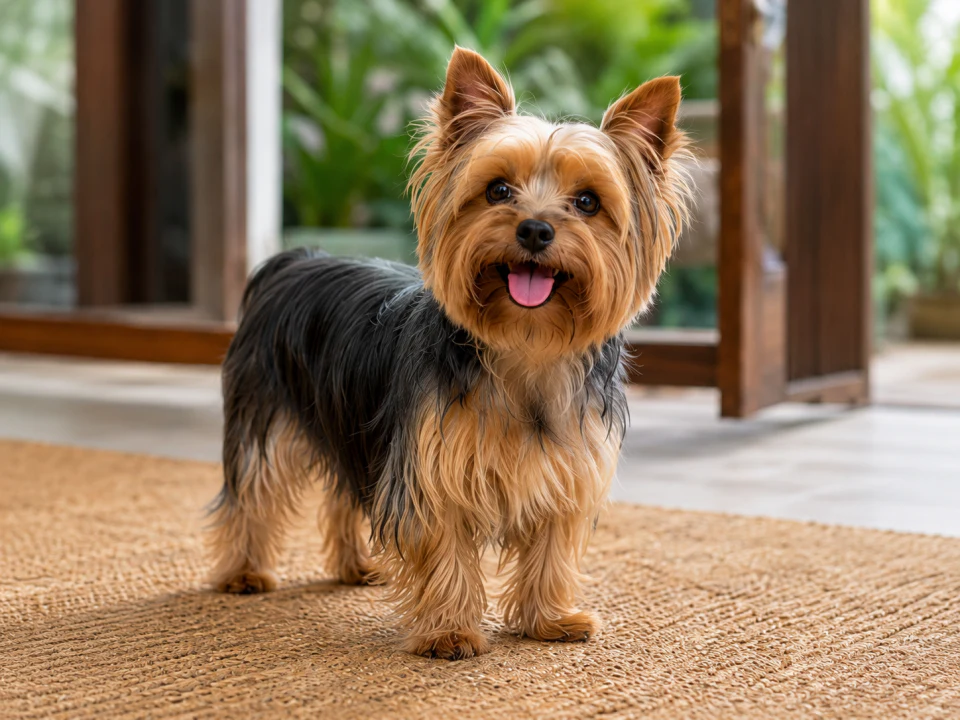
The Yorkshire Terrier is a tiny companion with genuine terrier spirit, an alert expression and a long silky coat that is often kept in a practical trim. It can fit city life very well, but small size does not remove the need for training, activity and careful handling.
Is a Yorkshire Terrier suitable for life in Thailand?
Yes, for people wanting a portable, affectionate dog and willing to treat it as an intelligent terrier rather than an accessory. Yorkshire Terriers can be lively, curious and confident, with enough personality to surprise anyone expecting a passive lapdog.
Their small bodies need protection from falls, rough handling and much larger animals. Coat care ranges from frequent maintenance of a long finish to regular professional trimming for a shorter everyday style.
Quick facts
Recognised weight
Up to about 3.2 kg under the FCI standard
Coat
Fine, straight and silky when grown long
Exercise
Daily short walks, play, sniffing and training
Grooming
Frequent brushing or a maintained practical trim
Home
Very manageable in condos with barking and safety considered
Best suited to
Attentive homes wanting a tiny dog with an active character
Yorkshire Terrier size and the teacup label
The recognised Yorkshire Terrier is already a very small breed. “Teacup” is not a separate recognised variety and does not provide a dependable explanation of adult development or everyday needs.
Ask about the individual puppy, its actual parents and its development. Selecting for an extreme label can distract from temperament, physical robustness and suitability for the household.
Temperament and family suitability
The FCI describes the Yorkshire Terrier as alert, intelligent, lively and even in temperament. Many are affectionate with their people while retaining a confident, inquisitive terrier outlook.
Tiny size can cause people to overlook discomfort or fear. Give the dog choice, use calm introductions and build confidence without forcing interaction with every person or animal.
Adult size and expected lifespan
The FCI standard specifies a maximum weight of about 3.2 kg rather than a fixed adult height. Individual puppies develop differently, so exact adult-size promises should be treated cautiously.
No lifespan can be promised. Plan for a long commitment and for dental, grooming, activity and support needs to change throughout the dog’s life.
From small puppy to silky-coated adult
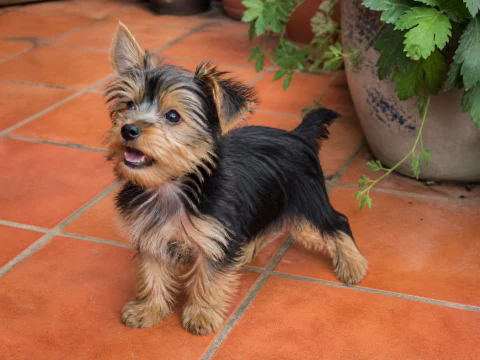
A puppy is enjoying close family contact. Early habits around safe handling, toileting, brushing and calm independence are particularly useful for a very small companion.
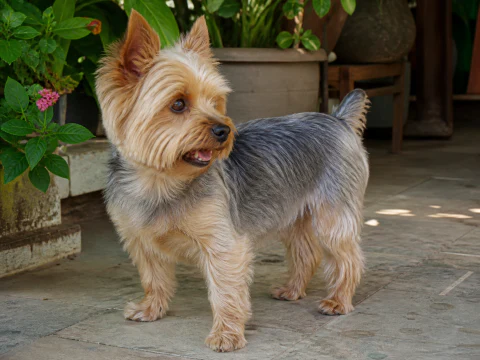
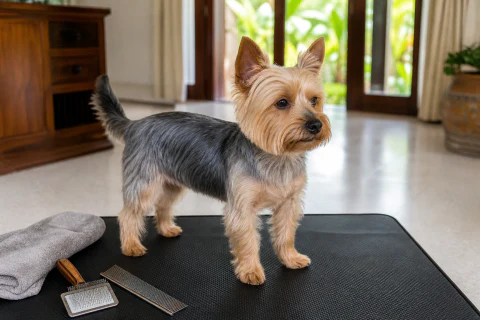
The adult dog shown here has a shorter practical coat than the formal floor-length presentation often associated with the breed. Colour and coat texture develop with maturity and vary between individuals.
Exercise and mental stimulation
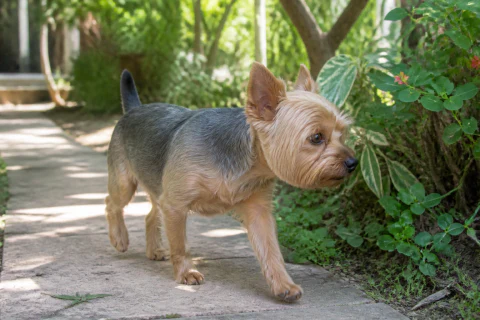
Short daily walks, sniffing, play and training give the dog opportunities to move and explore. Carrying a Yorkshire Terrier everywhere can remove valuable chances to build confidence and normal movement.
Choose cooler outdoor periods in Thailand and check hot surfaces. Indoor games help during heavy rain or heat, but they do not remove the value of safe outdoor experience.
Training considerations
Teach toileting, recall, lead walking, calm greetings, settling and comfortable handling from puppyhood. Consistency matters just as much for a tiny dog as for a large one.
Frequent toileting opportunities and close supervision help a small puppy succeed. Reward the right behaviour promptly rather than punishing an accident afterward.
Barking and independence
Yorkshire Terriers may alert to visitors, corridor sounds or larger dogs. Rewarding calm observation and limiting repeated access to triggers are useful in condos.
Many enjoy close company. Introduce short absences gradually so attachment does not become an expectation that someone will always be present.
Grooming, shedding and smell
A long coat needs frequent careful brushing and protection from tangles. Many families choose a shorter trim that is easier to keep clean and comfortable while retaining the dog’s recognisable character.
Regular face care, tooth brushing, nail trimming and ear observation belong in the routine. Gentle grooming practice from puppyhood makes professional appointments and home care less stressful.
Children and other animals
A Yorkshire Terrier can live happily with considerate children. Close supervision is essential with very young children because a drop, squeeze or accidental step can injure such a small dog.
Introduce larger dogs cautiously. A bold Yorkshire Terrier may approach without appreciating the size difference, so adults must manage the setting.
Condos, gardens and time alone
A condo can suit the breed well. Secure balcony gaps, supervise high furniture, provide safe footing and organise toileting, sound management and daily activity.
A garden is not required and should not be treated as unsupervised exercise. Heat, escape gaps and larger animals are practical outdoor risks for a tiny dog.
Heat and humidity
Use shade, fresh water, cool indoor rest and walks at cooler times. Although the dog is small, heat and hot surfaces can still make an outing unsafe or uncomfortable.
Air conditioning can create cold draughts close to floor level. Offer a comfortable bed away from direct airflow and allow the individual dog to choose between warmer and cooler resting places.
Health and everyday care
Useful everyday care includes tooth brushing, coat and face care, nail trimming, secure handling, an appropriate body condition and routine vaccinations and parasite prevention agreed with the family’s vet.
This guide provides general ownership information, not veterinary advice. Changes in appetite, energy, breathing, movement, toileting, mouth comfort, skin or behaviour should be discussed with a veterinarian.
How Perfect Pedigree sources Yorkshire Terriers
Perfect Pedigree has helped families find puppies in Thailand since 2014. For a Yorkshire Terrier enquiry, we consider the puppy’s temperament, upbringing, actual parents and development rather than using an extreme size label as the main selection point.
We explain the veterinary care, documentation and other information available for the individual puppy before reservation. These details are confirmed rather than assumed. A person remains involved before reservation.
Typical availability in Thailand
Yorkshire Terriers are known in Thailand, but suitable individual puppies are not continuously available. Coat appearance and a very small size should not displace temperament, robustness and fit with the household.
Available Yorkshire Terrier litters and enquiries
Current puppies appear by litter on Available Puppies. If none is shown, tell us about your household, preferred coat routine and timing so we can discuss a current or later Yorkshire Terrier enquiry.
Frequently asked questions
Is a teacup Yorkshire Terrier a separate breed?
No. The recognised Yorkshire Terrier is already very small, and “teacup” is not a separate recognised variety. Ask about the actual parents and puppy’s development.
Can a Yorkshire Terrier live in a condo?
Yes, when barking, toileting, daily activity and small-dog safety are managed. A condo still needs secure gaps, safe footing and a calm place to rest.
Does a Yorkshire Terrier need a floor-length coat?
No. Many companion dogs have a shorter practical trim. Whatever the style, regular brushing, face care and professional grooming remain part of ownership.
Sources and authorship
- Fédération Cynologique Internationale, Yorkshire Terrier Standard No. 86, used for recognised weight, coat and broad temperament characteristics.
- The Royal Kennel Club, Yorkshire Terrier breed information, used selectively for breed background, size and general ownership context.
- American Kennel Club, Yorkshire Terrier breed information, used selectively for terrier character, activity and coat-care context.
- Blue Cross, how to keep pets cool in summer, used for practical hot-weather precautions relevant to life in Thailand.
- Perfect Pedigree’s first-hand experience helping families find and raise puppies in Thailand since 2014, including experience with Yorkshire Terriers.
Breed organisations and welfare sources are used selectively for neutral facts and practical context. Their registration, health-testing and purchasing recommendations are not presented as Perfect Pedigree policy.
Would this breed suit your family?
Browse current litters or tell us what you are looking for. We will review the enquiry personally and help you understand the next step.