
Family and other pets
Introducing a Puppy to an Older Dog
Help the resident expert and the enthusiastic newcomer get acquainted with space, choice and an easy first routine.
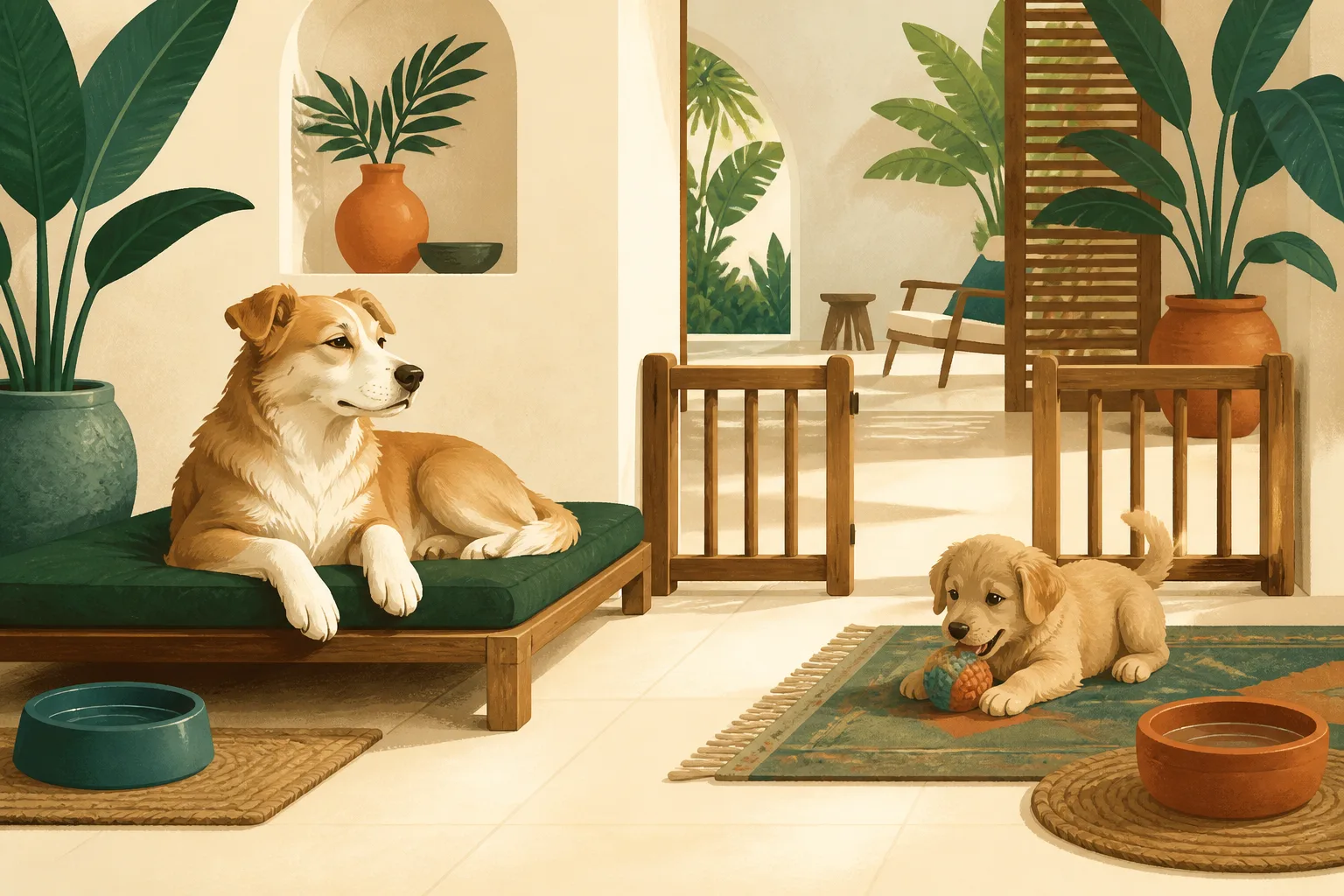
An older dog and a new puppy can become a wonderful pair. The easiest beginnings give the resident dog time to observe, the puppy something better to do than climb on their new friend, and both dogs their own beds, bowls and attention. Your older dog did not apply for full-time puppy childcare, but they may enjoy a cheerful junior colleague.
Prepare for two individual dogs
Set up a bed, food area, water and comfortable retreat for each dog. Put favourite chews and toys away for the first meeting, then reintroduce them thoughtfully once the household has found its rhythm.
Keep the older dog's usual walks, sleep and one-to-one time as familiar as possible. A new puppy adds to their life; it does not need to replace everything that already worked.
Make the first hello light and easy
A quiet outdoor area with one calm handler per dog is often a good starting point. Walk with space between them, keep leads relaxed and allow brief curved approaches if both dogs look comfortable.
Move on before either dog has had enough. Once home, gates help everyone share the same space without constant contact, and the puppy can arrive with a toy or chew instead of an immediate plan to reorganise the older dog.
Protect the resident expert from pestering
Puppies often believe personal space is a rumour. Step in early, redirect the puppy and give the older dog regular puppy-free rest. Reward both dogs for settling calmly near one another.
A brief growl can be useful communication, but the adults should manage the situation before either dog has to keep repeating themselves. Do not ask the older dog to raise the puppy for you.
Let the relationship find its own shape
Some pairs play quickly; others prefer companionable naps and polite coexistence. Both can be lovely. Increase shared freedom after repeated calm days rather than forcing interaction on a timetable.
If either dog repeatedly freezes, guards, pursues or cannot relax, add distance and seek individual reward-led help. Most introductions simply benefit from patience, predictable resources and a puppy who is occasionally persuaded to take a nap.
A few questions families often ask
How long until they are friends?
There is no fixed timetable. Some dogs play quickly and others build a quieter companionship. Follow the less comfortable dog and value calm coexistence.
Can they be left alone together?
Use secure separation whenever nobody can supervise during the early period. Consider more freedom only after a long, reliable history of calm behaviour.
Will my older dog teach the puppy manners?
They may communicate preferences, but adults should guide the puppy and prevent pestering. The older dog should not carry the training workload.