
Training and behaviour
First Walks and Loose Leads
Turn your puppy's first walks into relaxed little adventures with comfortable equipment, easy practice and time to sniff.
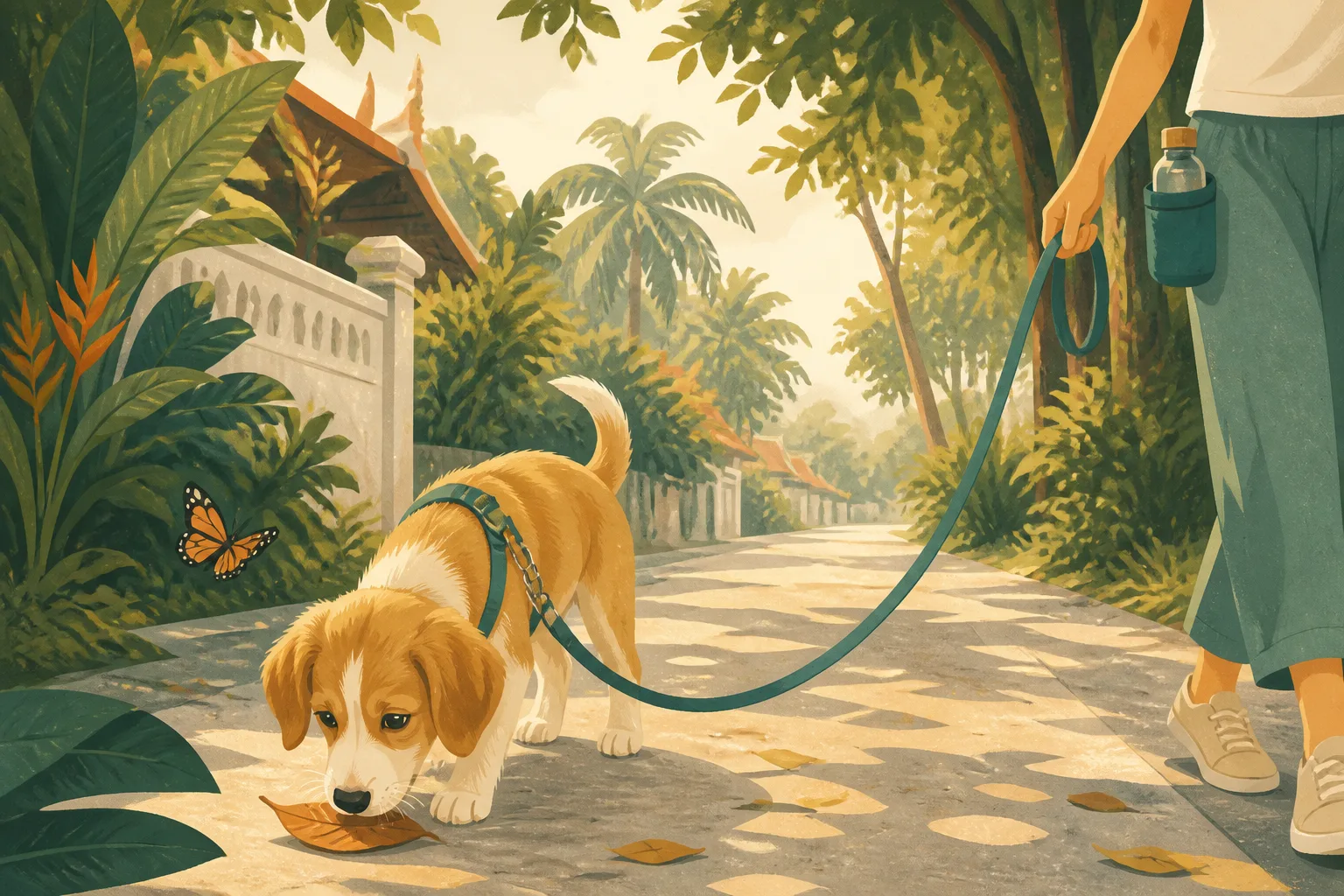
A lovely puppy walk is not measured by kilometres or perfect marching. It is a relaxed conversation on a loose lead: a few connected steps, time to investigate the world and an easy return home before heat or tiredness takes over. Begin somewhere quiet, reward the position you like and let confidence set the pace.
Make the equipment pleasantly ordinary
Introduce a comfortable, correctly fitted harness or collar at home. Reward your puppy for approaching it, putting their head through and moving freely before a light lead becomes part of the picture.
Check the fit often while your puppy grows. The equipment should feel secure without rubbing or restricting movement. Then practise in the calmest room in the house, where the furniture is unlikely to roar past on a motorbike.
Begin with a handful of good steps
Reward your puppy beside you while the lead is slack. Take one or two steps, reward again and gradually join those small successes together. If the lead tightens, pause or change direction rather than beginning a pulling contest.
A full formal heel is not required for an enjoyable family walk. Aim for a comfortable lead, frequent check-ins and enough flexibility for your puppy to explore safely.
Remember that sniffing is part of the walk
Sniffing helps a puppy gather information and settle into a new place. Allow generous investigation where it is safe. Your puppy has correspondence to read at every interesting leaf, and some of it is apparently urgent.
Build busier routes gradually. If your puppy stops, look at novelty, noise, heat or tiredness before assuming stubbornness. A little distance or an easier route can bring the conversation back.
Let Thailand set the timetable
Choose cooler hours, shade and comfortable surfaces, carry water and turn home while your puppy is still enjoying the outing. On a hot day, a short sniff outside plus indoor play and training can be an excellent plan.
Ask your veterinarian when ground-level walks are suitable for your puppy's vaccination stage and local disease risk. There is no single minute-per-age formula that fits every breed, build and individual puppy.
A few questions families often ask
Is a harness or collar better?
Either can be introduced positively, and many families use both for identification and control. Comfortable fit and gentle handling matter most.
Why does my puppy stop outside?
The world may be new, noisy, hot or tiring. Pause, create more distance and make the next outing easier rather than dragging the puppy forward.
How long should a puppy walk?
There is no universal formula. Breed, build, health, weather, route and the puppy in front of you matter. Keep early outings exploratory and finish before fatigue.