
Family and other pets
Growing Up Together: Children and Puppies
Simple family habits that help children and puppies build a gentle, joyful friendship from the beginning.
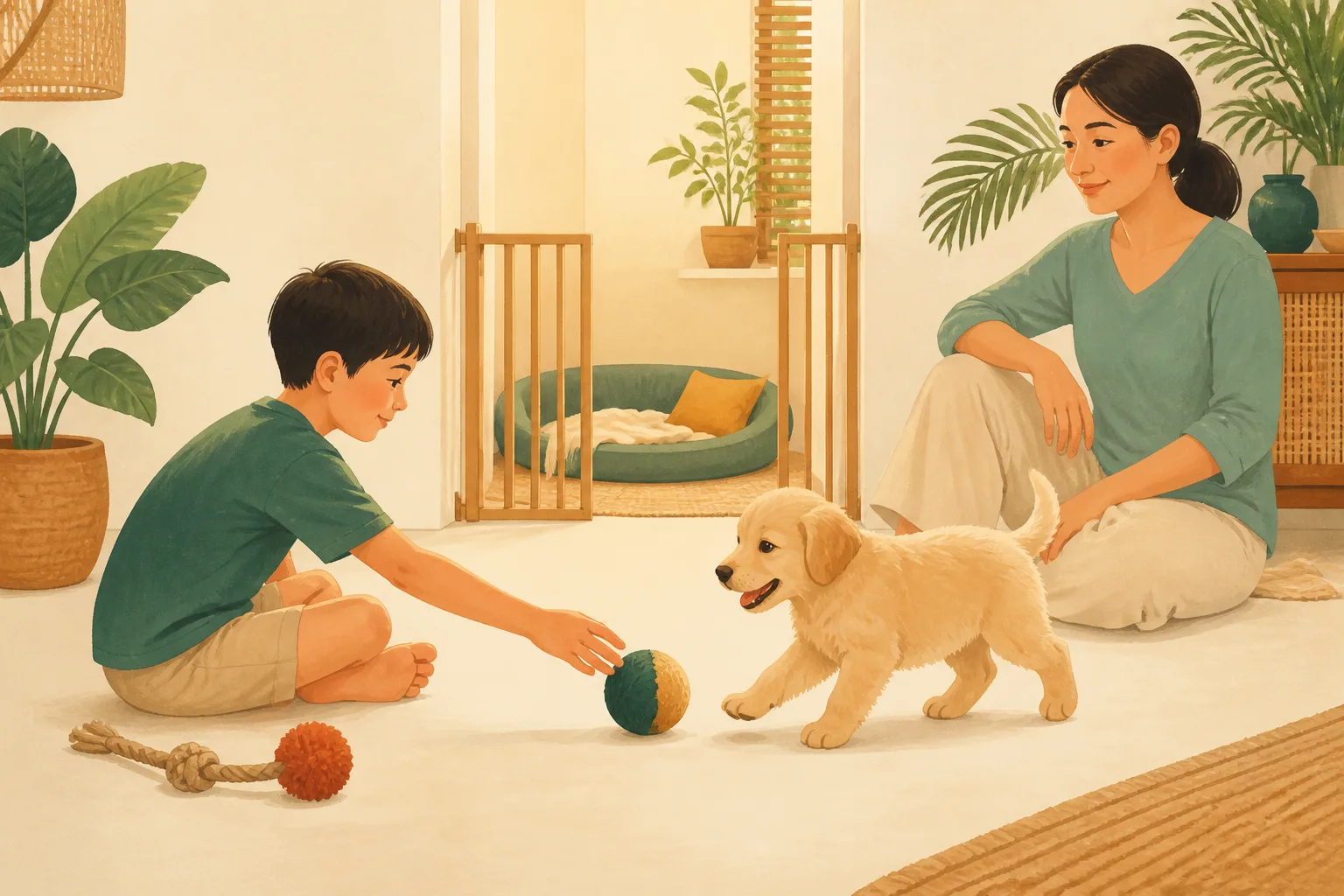
Children and puppies can be an enormously happy combination. They bring play, companionship and a great many stories to the family. The adults make that friendship easy by guiding the games, protecting puppy sleep and staying close enough to help. Neither child nor puppy arrives with a reliable volume control, so a little thoughtful structure is a gift to both.
Let the grown-ups make it easy
Begin with one calm child seated on the floor and let the puppy choose to approach. An adult stays within reach, guides the interaction and ends it before excitement takes over.
Active supervision is different from simply being in the same room. When the adult needs to cook, work or answer the door, a gate or pen lets child and puppy take a comfortable break without anyone being in trouble.
Give the puppy a room of their own
Create a bed, crate or quiet nook that children never enter and never disturb. Puppies need a surprising amount of sleep, and a reliable retreat helps them return to family life rested and ready to be charming again.
Feed meals and special chews in peace. The family rule can be beautifully simple: when the puppy is in bed, eating or walking away, we give them space.
Choose games everyone can enjoy
Rolling a ball, hiding a few pieces of food, gentle training with an adult and playing with a longer toy all keep fingers and faces away from busy puppy teeth. Finish while the game is still calm and successful.
Show children how to stroke the shoulder or side, then pause. If the puppy comes back for more, lovely. Avoid hugging, climbing, cornering or lifting; friendship grows better when the puppy has a choice.
Teach children the kindest response
Turning away, becoming still, moving off or retreating to bed all mean the puppy would like a pause. Children do not need to memorise a textbook of body language. They need one useful action: stop, give space and call an adult.
Adults remain responsible for every interaction and children are never left alone with a dog. With that calm framework in place, they can concentrate on the much nicer business of learning and growing together.
A few questions families often ask
Can my child pick up the puppy?
It is safer for an adult to handle lifting and for children to interact at floor level while seated. Puppies can wriggle, fall or feel trapped.
Can children help with training?
Yes. Short adult-led games such as tossing a reward to a mat can be wonderful for both. The adult manages timing and safety.
What if play becomes too lively?
The adult can calmly redirect the puppy to a toy or separate everyone for rest. A reset is ordinary family management, not a punishment.