
Family and other pets
Can Puppies and Cats Become Friends?
A calm introduction plan for puppies, cats and other pets, with height, distance and good choices on everyone's side.
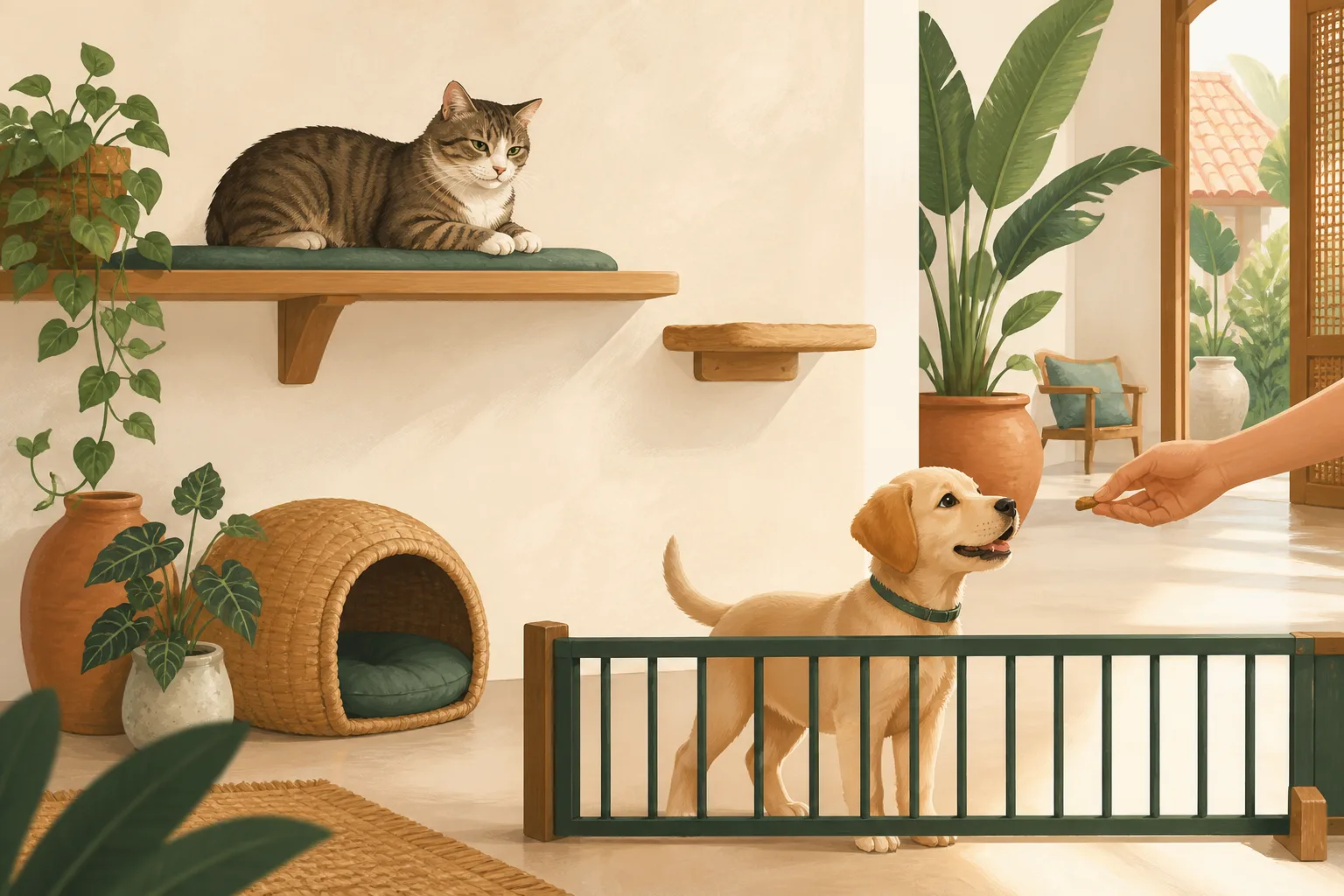
Many puppies and cats become comfortable companions, and some become genuine friends. The best introductions are unhurried: the cat keeps safe territory and high escape routes, the puppy learns that calm behaviour is rewarding, and nobody is pushed into a close meeting. The cat may prefer to chair negotiations from the top shelf. That is entirely acceptable.
Give the resident cat the penthouse
Before the puppy arrives, create puppy-free access to food, water, litter trays, favourite resting places and several high routes around the home. The cat should be able to watch, leave and return without crossing puppy territory.
Begin with separate rooms and scent. Swap bedding or let each animal investigate the other's space while it is empty. Familiarity can start before the first visual meeting.
Reward the puppy for looking away
Use a secure gate or screen and begin at a distance where both animals can remain calm. When the puppy notices the cat and turns back to you, reward that excellent choice. Short, uneventful sessions are exactly what you want.
As they progress, the puppy can wear a comfortably loose lead while the cat remains free to leave. Do not carry the cat towards the puppy or hold either animal in place for an official introduction.
Keep chasing out of the story
Every calm repetition makes the next one easier; every chase makes chasing more exciting. Use doors, gates and supervision so the puppy never gets to rehearse it, then redirect interest towards you, a mat or a toy.
Increase freedom only after plenty of relaxed sessions. Comfortable housemates may share a room without sharing a bed, and that is a perfectly good outcome.
Give smaller pets an extra layer of care
Rabbits, birds and other small animals need secure housing and a puppy-free room or robust double barrier. A puppy can be friendly and still be too large, fast or playful for close contact.
For strong fixation, stalking or explosive chasing, return to full separation and arrange individual professional guidance. For many puppy-and-cat homes, however, height, distance and consistent rewards create a very peaceful beginning.
A few questions families often ask
How long should introductions take?
Some animals relax over days and others need weeks. Move according to their behaviour rather than a calendar and return to more distance after a setback.
Should the cat and puppy meet nose to nose?
No. Let them observe with a barrier and allow the cat to choose whether to approach. A close formal greeting is unnecessary.
Can a puppy meet rabbits or birds?
Use much more conservative separation. Small pets need secure housing and puppy-free space because even friendly play can cause injury.