
Your puppy is reserved
Everything you need for a calm, confident start
One welcoming guide to getting ready, coming home and navigating the first few weeks together.
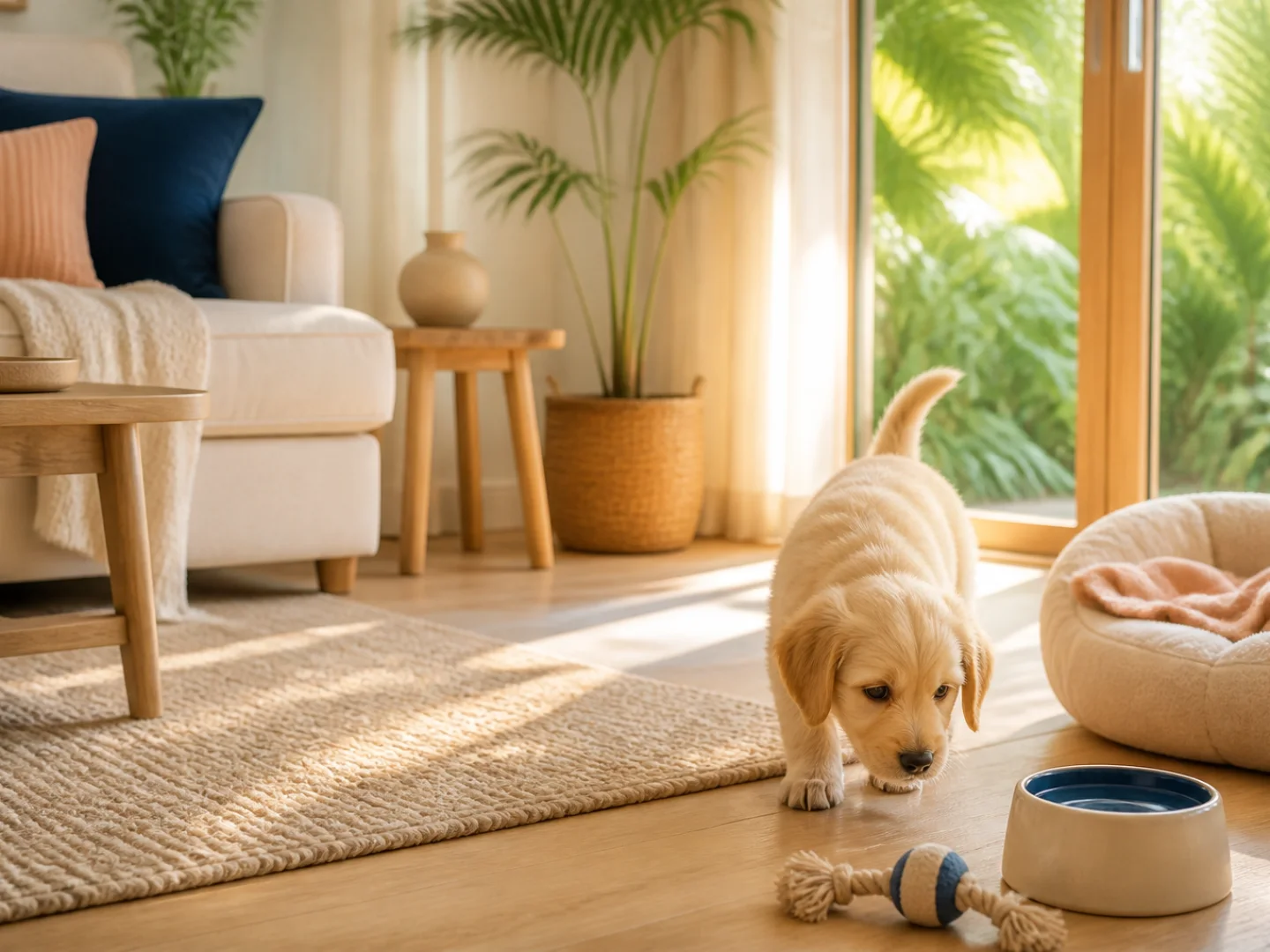
Bringing home a puppy is joyful, exciting and sometimes a little overwhelming. This guide turns the noise into a simple plan, from preparing every room and choosing the essentials to the first night, toilet training, feeding, socialisation and veterinary follow-up.
You do not need to do everything perfectly. A safe environment, a predictable rhythm and patient, positive care matter far more than a flawless first day.
Read what you need today, then come back as your puppy grows. You have got this.
The five-minute version
If you do only five things, do these
Create one safe base
Prepare a small, puppy-proofed area with a comfortable bed, fresh water and somewhere quiet to rest.
Keep food familiar
Begin with the same food and routine your puppy already knows. Make any later change gradually.
Choose the toilet place
Decide where you want your puppy to go and take them there after sleep, meals, drinks, play and excitement.
Choose your veterinarian
Register with a clinic and emergency option, then arrange a first visit to review your puppy's individual records.
Protect the first days
Keep arrivals calm, visitors limited and expectations gentle. Sleep and security come before entertainment.
Before arrival
Prepare your home from puppy height
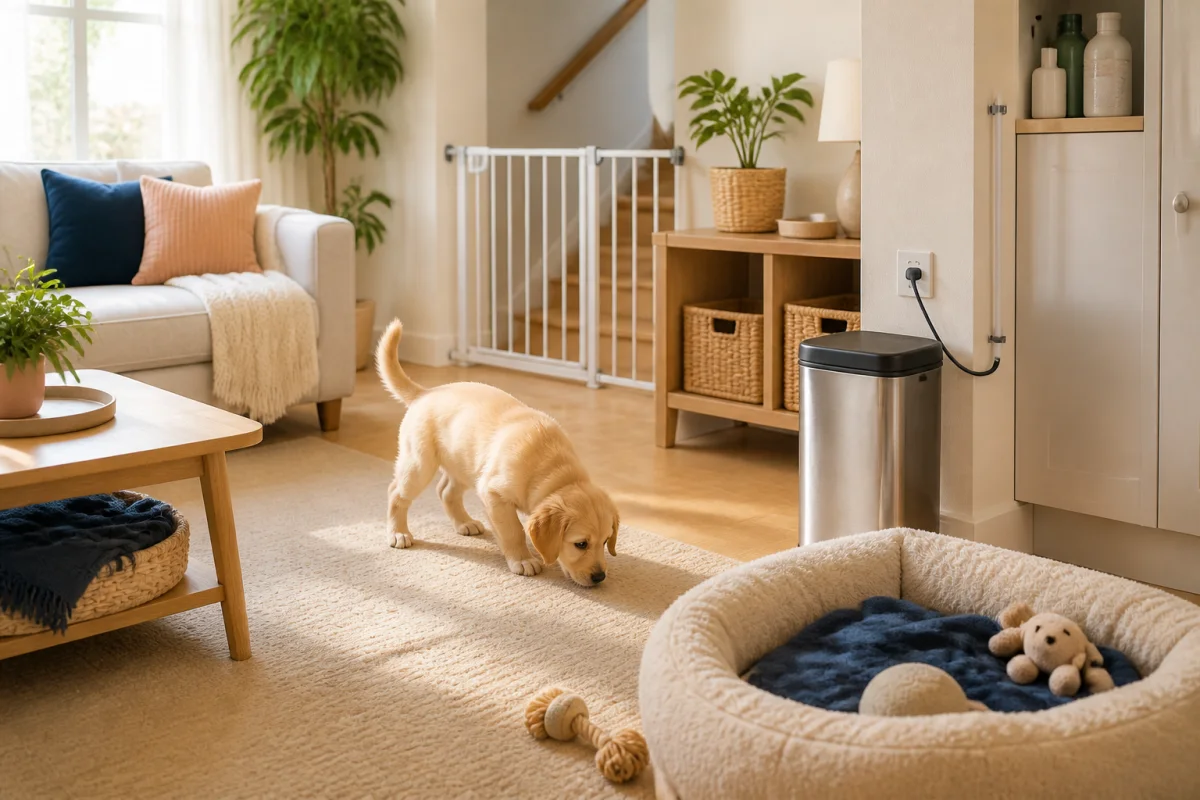
Puppies explore with their mouths, move faster than you expect and have very little understanding of danger. Get down to puppy level and inspect every place your puppy may reach. Start with a small safe zone, then open more of the home gradually as supervision and training improve.
Open one room at a time. A quick ten-minute check now can prevent a frightening surprise later.
01Kitchen and dining
- Lock away cleaning products, medicines and pest treatments.
- Secure rubbish and food-waste bins.
- Keep chocolate, grapes, raisins, onions, garlic, alcohol and xylitol products inaccessible.
- Clear low shelves, table edges and counters that invite climbing or counter-surfing.
- Keep hot pans, sharp utensils, bones, food wrappers and dropped ingredients out of reach.
02Living areas
- Lift, cover or secure electrical and charging cables.
- Remove batteries, remotes, small toys, coins, string, socks and anything swallowable.
- Protect furniture corners and move precious or chewable items.
- Check recliners, rocking chairs and sofa mechanisms before use.
- Use gates or a pen so supervision stays realistic.
03Bedrooms and home office
- Move handbags, backpacks, medicines, cosmetics and chewing gum off the floor.
- Secure cables, headphones and stationery.
- Keep laundry, shoes and children's toys behind closed storage.
- Check beneath beds and furniture for small or sharp objects.
- Decide now which furniture and rooms will be off-limits, then keep the rule consistent.
04Bathrooms and laundry
- Close toilet lids and keep bathroom bins inaccessible.
- Store razors, cosmetics, cotton buds and cleaning products securely.
- Keep washing-machine and dryer doors closed and check before use.
- Remove loose towels or laundry that may be chewed or swallowed.
- Use non-slip surfaces where wet floors could cause a fall.
05Stairs, balconies and entrances
- Measure gaps beneath gates and between railings.
- Fit reliable gates at stairs and unsafe doorways.
- Check balcony edges, screens and low windows.
- Create a family routine for closing doors and gates.
- Keep keys, delivery activity and busy entrances away from the puppy zone.
06Garden, pool and parking
- Inspect fences, drains, gaps and dig-out points.
- Block unsupervised access to pools, ponds and water features.
- Identify plants and remove or isolate unsafe ones.
- Store tools, fertilisers, fuel and pest products securely.
- Check under and around vehicles before moving them.
Create a premium, practical sleeping setup
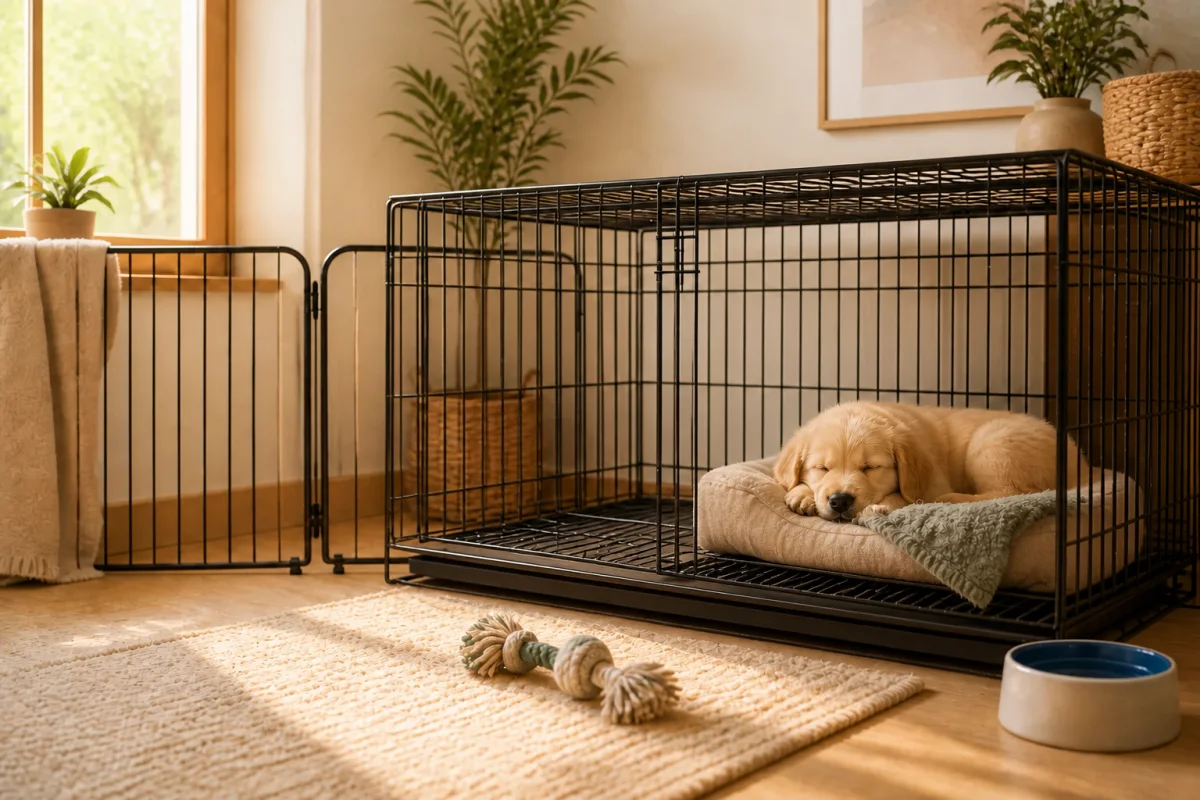
A large wire-floor crate can support nighttime toilet training when it is arranged thoughtfully. It should feel spacious, comfortable and secure, never like punishment.
- Choose a crate large enough for distinct sleeping and toilet areas.
- Keep the comfortable solid bed to no more than half of the crate floor.
- Leave the remaining wire-floor area clear so the puppy can toilet through to the removable tray below.
- Check that the wire spacing and construction are safe for your puppy's paws, size and weight.
- Keep the tray clean and the sleeping side dry.
- Place the crate near normal family life, away from direct sun, hot air and constant disturbance.
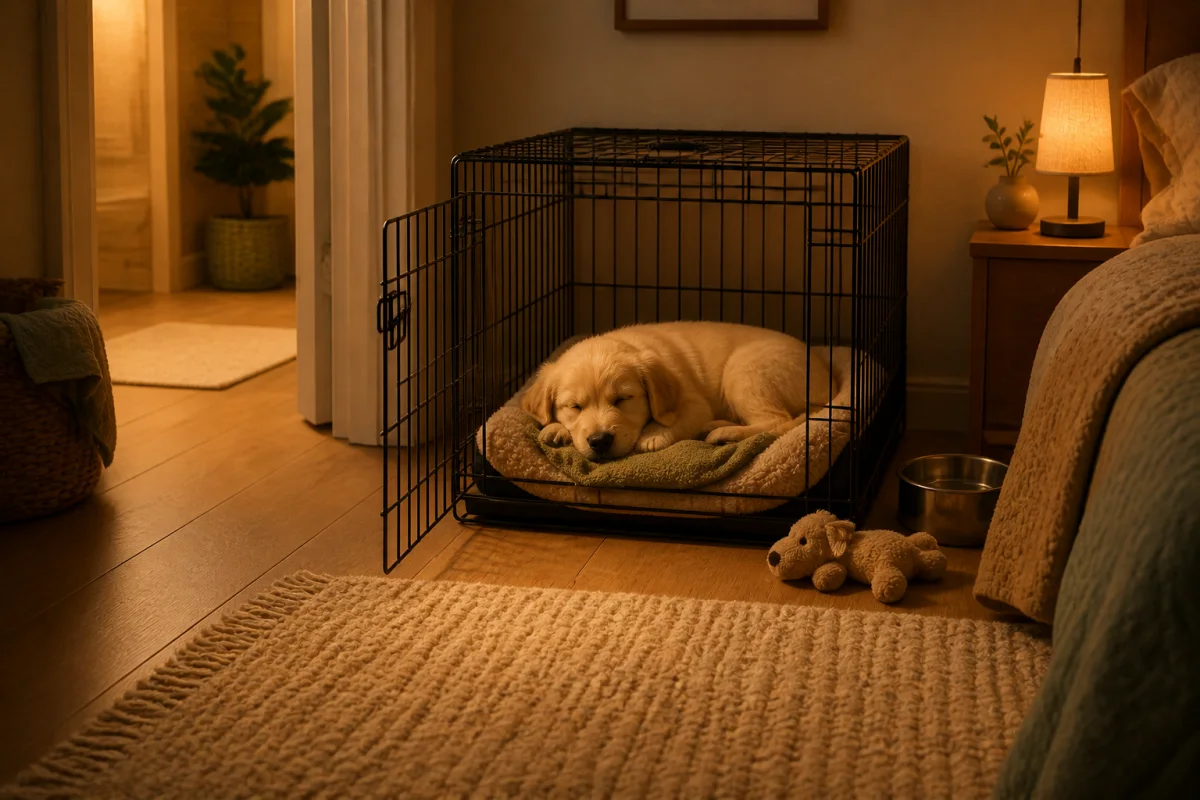
For the first nights, keeping the crate reasonably close to you can help your puppy settle and lets you hear when they wake. The setup should always include a comfortable solid place to rest rather than expecting a puppy to lie on open wire.
Buy the essentials first, then get to know your puppy
You do not need the whole pet shop before day one. Start with safe, good-quality essentials and add more once you understand your puppy's size, habits and preferences.
Essential now
Ready before arrival
- The familiar food your puppy currently eats
- Food and water bowls
- Large suitable crate and a bed sized for half its floor
- Puppy pen or gates
- Collar or harness and lead
- Transport crate or vehicle restraint
- Enzyme cleaner and pet-safe cleaning products
- Several puppy-safe chew and play options
Very useful
Makes the first weeks easier
- Puppy pads if they suit your toilet plan
- Treat pouch and tiny training rewards
- Brush or comb suitable for the coat
- Nail-care tool recommended for your puppy
- Food measuring scoop
- Folder for health and microchip records
- Washable spare bedding
Wait and see
Choose after you know them
- Large collections of toys
- Multiple beds
- Specialised grooming products
- Fashion accessories
- Supplements not recommended by your veterinarian
- A major change of food
Coming home
Make arrival day beautifully uneventful
Go to the toilet area first
After the journey, take your puppy calmly to the place you want them to toilet. Praise quietly if they go.
Open one small world
Show water, bed, toilet route and one safe room. Let your puppy explore rather than carrying them around the whole home.
Keep it familiar
Offer the food and approximate routine your puppy already knows. Watch the whole puppy, not just the bowl.
Lower the volume
Limit visitors and excitement. Alternate brief connection with generous sleep and frequent toilet opportunities.
A puppy may be excited, sleepy, clingy, cautious or unsettled. None of these first-day moods predicts their future personality. Give them time to feel safe.
The first night
Your puppy has left familiar smells, sounds and company. Some restlessness is normal. Reassurance on the first nights does not spoil a puppy or prevent future independence.
- Settle close by. Position the crate where your presence is reassuring and you can hear stirring.
- Finish with a toilet opportunity. Keep the last part of the evening calm and predictable.
- Respond quietly. If your puppy wakes, offer a calm toilet opportunity, then return directly to bed.
- Build distance gradually. Once your puppy settles reliably, move the crate towards its long-term position in small stages if needed.
Never turn a 3am toilet break into playtime, and never use the crate as punishment.
The first few weeks
A gentle roadmap, not a rigid timetable
Safety and decompression
Keep the world small. Learn your puppy's sleep, appetite and toilet signals. Prioritise calm connection and familiar food.
Predictable rhythm
Build anchors around waking, meals, toilet opportunities, short play, training and rest. Complete the first veterinary review.
Confidence in small doses
Add positive experiences, gentle handling and tiny periods of calm independence without flooding your puppy with novelty.
Useful life skills
Continue safe socialisation, practise name response and recall, reward settling, and widen the puppy's world as confidence and health allow.
Feeding without guesswork
Begin with the food your puppy already eats. Use the handover information, manufacturer's guidance and your veterinarian to choose portions appropriate to age, expected adult size, food type and body condition.
- Measure meals so appetite changes are easier to notice.
- Keep fresh water available unless a veterinarian gives a specific medical instruction.
- Make later food changes gradually.
- Use part of the normal food allowance for training where practical.
- Do not add supplements or large amounts of human food without professional guidance.
Sleep is productive
Puppies sleep a great deal because their bodies and brains are developing. Protect naps rather than assuming every waking moment needs entertainment.
An overtired puppy may become frantic, mouthy, noisy, clumsy or unable to settle. After toilet, food, a little play and connection, help the environment become boring enough for sleep.
Chewing and mouthing
Keep safe chews within reach, redirect calmly and pause interaction if teeth become too hard. Avoid shouting, physical punishment or holding the mouth closed. Ask a qualified reward-based trainer for help if you are concerned.
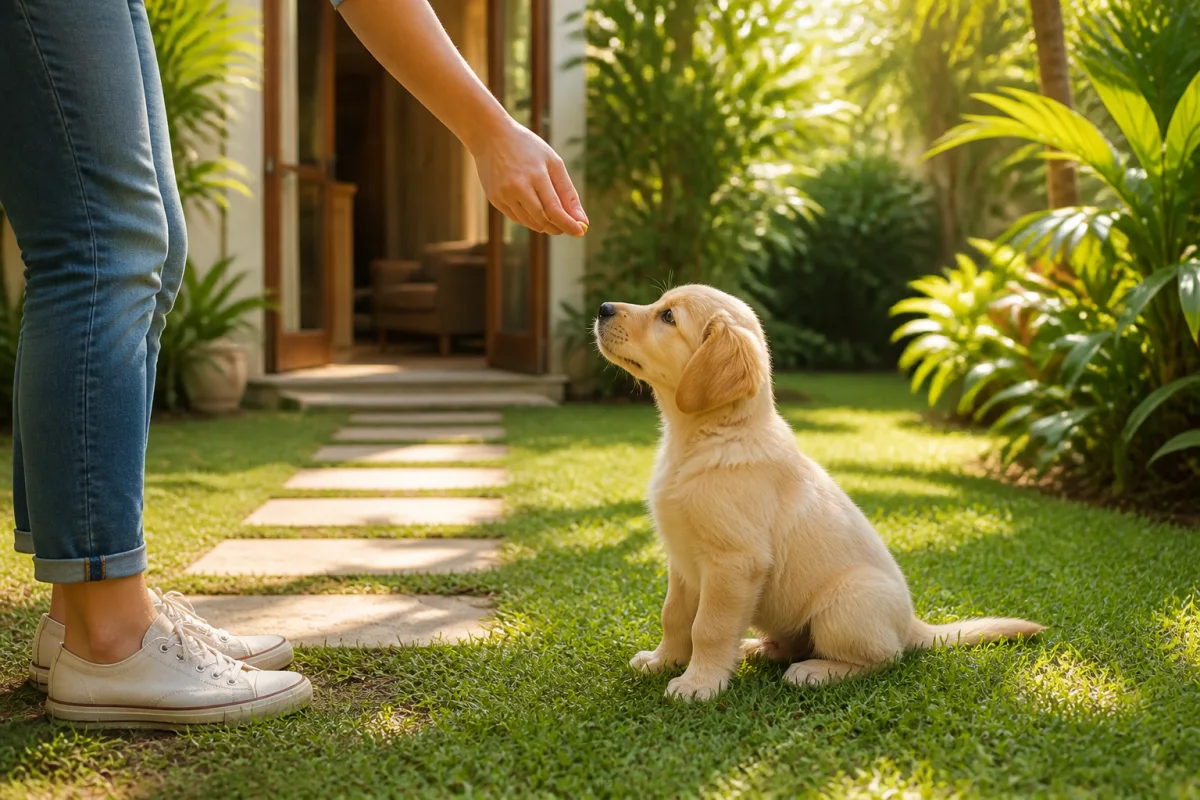
Toilet training: make success easy
Consistency, supervision and well-timed rewards matter much more than punishment.
Choose a clean private toilet area. Until your veterinarian confirms adequate vaccination protection, avoid public ground used by unknown dogs, even for a quick toilet break.
- Go often. Offer the toilet place after waking, meals, drinking, play, excitement, before bed and when you see sniffing, fidgeting or circling.
- Use the same route and place. Predictability helps your puppy understand the task.
- Stay quiet while they choose. Too much play or conversation can distract them.
- Reward immediately. Praise and reward as soon as they finish, while still in the correct place.
- Supervise or manage. When you cannot watch actively, use the safe crate, pen or puppy area.
- Treat accidents as information. Clean thoroughly with enzyme cleaner and offer the next opportunity sooner.
Do not punish, rub a puppy's nose in an accident or assume it was deliberate. Punishment can teach a puppy to hide toileting rather than teaching where to go.
Tiny lessons
Teach life skills from day one
Training is happening whenever your puppy experiences a consequence. Keep planned sessions very short, positive and easy to win.
- Name: say it once, then reward attention.
- Come: move away invitingly and reward the puppy for following.
- Settle: quietly reward choosing to lie down near you.
- Harness and lead: pair each step with food and stop before frustration.
- Give and drop: trade for something better rather than chasing or grabbing.
- Handling: touch briefly, reward and release before the puppy struggles.
Choose a trainer who uses humane, evidence-based, reward-led methods. Avoid frightening corrections or promises of instant results.
Quality over quantity
Socialisation is calm confidence
The goal is not to make your puppy greet everybody. It is to help them notice everyday life and remain comfortable, curious and connected to you.
Offer short, positive exposure to household sounds, people of varied appearances, gentle handling, surfaces, car travel, umbrellas, lifts, traffic sounds and calm animals known to be healthy.
If your puppy freezes, hides, repeatedly tries to escape, refuses food or cannot recover, increase distance and make the experience easier.
Early social learning overlaps with vulnerability to infectious disease. Ask your veterinarian how to provide safe exposure based on your puppy's records and local risk. This is better than either complete isolation or uncontrolled access to places used by unknown dogs.
Until your veterinarian confirms your puppy has adequate vaccination protection, avoid putting them on public ground used by unknown dogs, including pavements, parks, communal grass and pet areas. You can still take them outside safely by carrying them, using a clean private area, or arranging controlled contact with healthy, vaccinated dogs.
Health foundations
Make the first veterinary visit count
Register before or soon after arrival and know where you would go outside normal hours. Bring every record supplied with your puppy.
Ask your veterinarian to review
- Vaccination history and next steps
- Parasite prevention appropriate to Thailand, location and lifestyle
- Nutrition, portions, growth and body condition
- Microchip details and registration
- Teeth, ears, skin, heart, joints and general development
- Safe socialisation and exercise while vaccines continue
- Spay or neuter timing where relevant to the individual dog
Keep together
- Vaccination booklet
- Microchip documentation
- Veterinary health documentation
- Food and routine information
- Medication or treatment details
- Clinic and emergency-clinic numbers
- Questions noticed during the first days
Vaccination and parasite recommendations vary with age, prior records, geography, lifestyle and exposure. Your puppy's actual records and veterinarian are the source of truth, not a generic online timetable.
Thailand: plan around heat, water and parasites
Heat and hydration
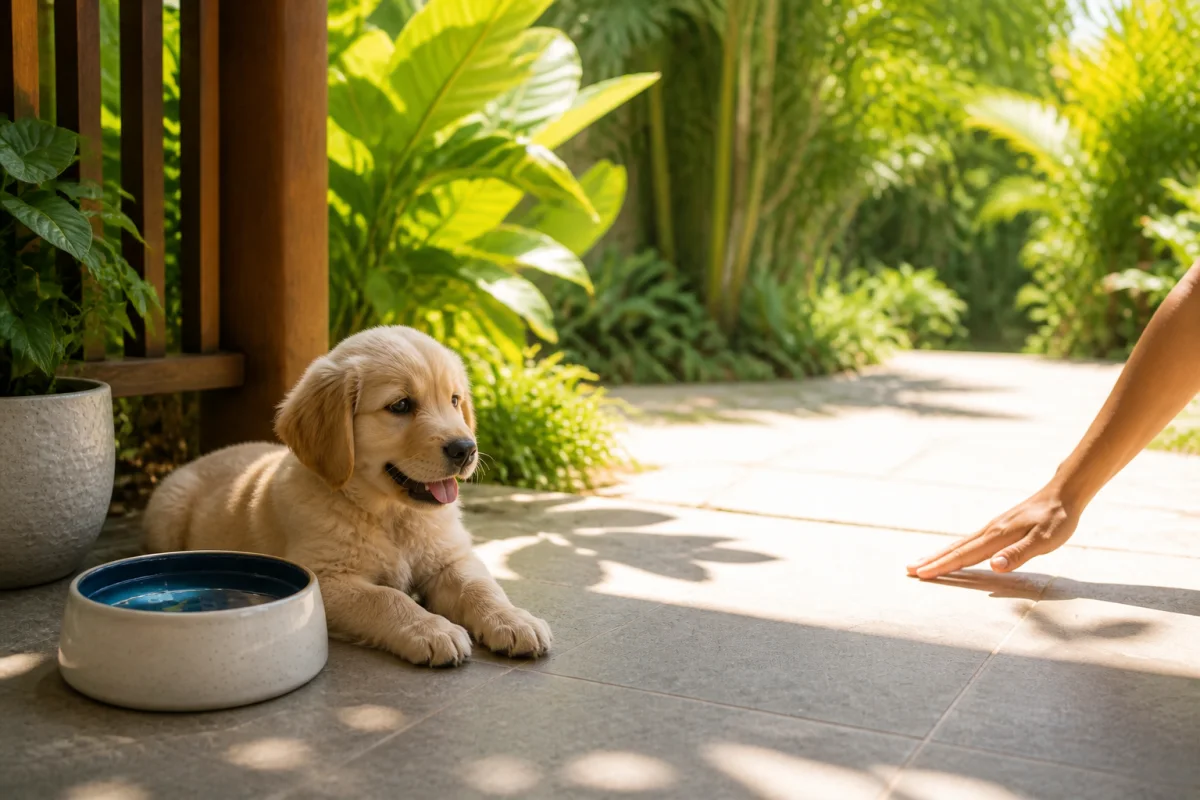
Provide constant access to fresh water, shade, ventilation and a comfortably cool indoor resting place. Plan activity for cooler parts of the day and keep it gentler than you think a puppy wants.
Before crossing paving, hold the back of your hand against it. If it is uncomfortable for you, choose grass, shade or another time. Never leave a puppy in a parked vehicle or enclosed hot area.
Know overheating signs
Heavy or distressed panting, excessive drooling, weakness, unsteadiness, confusion, vomiting or collapse require immediate action. Move the puppy out of the heat, begin cooling with water cooler than the dog, and contact a veterinarian urgently.
Parasites and local exposure
Ticks, fleas, mosquitoes and intestinal parasites need an individual prevention plan based on age, weight, location, other animals, travel and lifestyle. Use veterinary products exactly as directed.
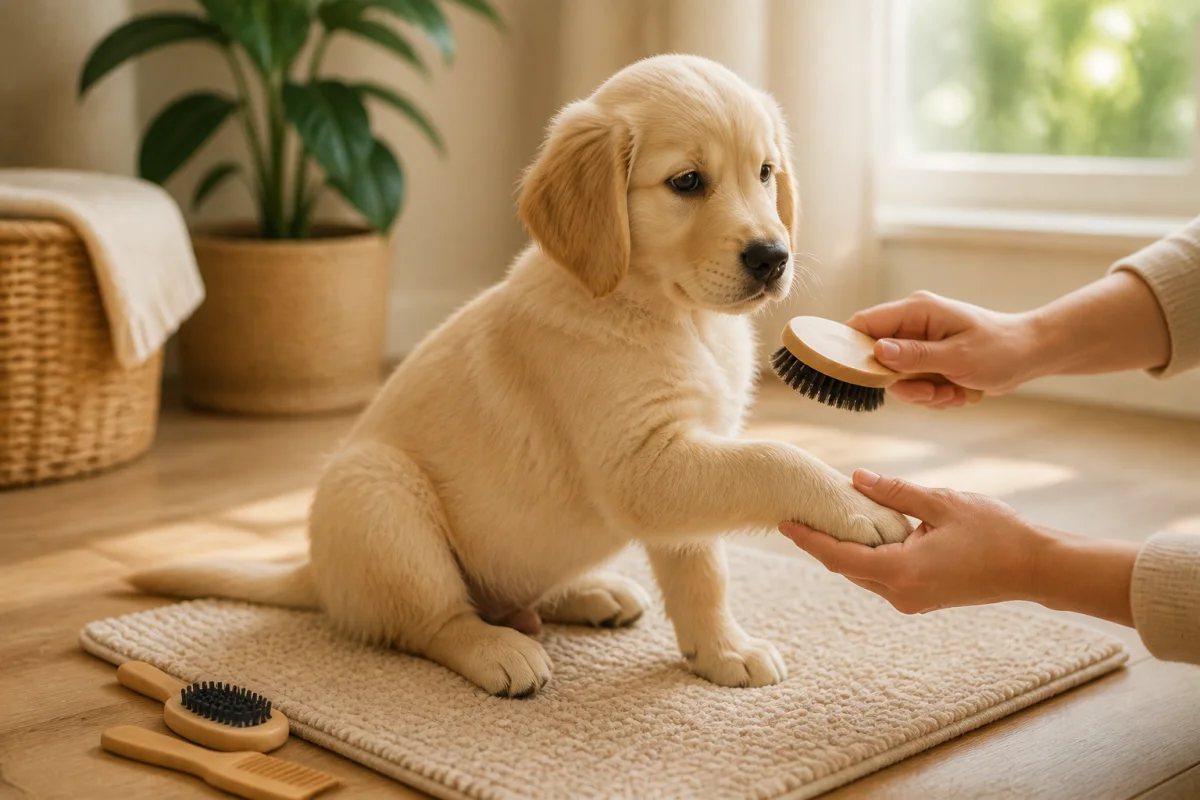
Make handling feel safe
Future grooming and veterinary care become easier when touch predicts good things. Practise for seconds, not minutes.
- Touch a shoulder or paw briefly.
- Reward calm acceptance.
- Release before your puppy pulls away.
- Gradually include ears, mouth, face, coat, tail and individual toes.
- Introduce brushes, combs and other tools without immediately using them for a full session.
For coated breeds, begin the correct brushing routine before tangles develop. Ask Perfect Pedigree or a qualified groomer which tools suit your puppy.
Preventable emergencies
Foods your puppy must not eat
Keep these foods securely inaccessible: xylitol; grapes, raisins and sultanas; chocolate, cocoa and caffeine; onions, garlic, leeks and chives; alcohol; raw yeast dough; and macadamia nuts. Onion-family foods remain unsafe when cooked, dried or powdered, and xylitol can hide in sugar-free gum, sweets, baked goods, toothpaste, vitamins, medicines and some nut butters.
Cooked bones, corn cobs, skewers, fruit stones and food packaging are choking, injury or obstruction hazards rather than suitable scraps. A puppy can find them in a handbag, beside a bed or in a bin with remarkable efficiency.
Calm, prompt action
When should you call a vet?
Young puppies can deteriorate more quickly than healthy adult dogs. If something feels wrong, calling early is always reasonable.
Seek urgent veterinary help
- Difficulty or noisy breathing
- Collapse, seizures, severe weakness or inability to stand
- Pale, blue, grey or otherwise abnormal-looking gums
- Suspected poisoning or swallowed foreign object
- Repeated vomiting or significant diarrhoea, especially with blood
- Severe pain, swollen painful abdomen or inability to urinate
- Distressed panting, confusion or collapse in heat
Call promptly for advice
- Refusing food together with lethargy, vomiting, diarrhoea or another symptom
- Persistent coughing, wheezing, nasal discharge or eye inflammation
- A marked change in energy, behaviour, drinking or toileting
- Poor weight gain or concern that your puppy is not thriving
- A wound, limp or pain that does not settle quickly
- Anything worsening rather than improving
Keep one folder
What comes with your puppy
Keep every record handed over with your puppy together. Perfect Pedigree's preparation normally includes the relevant puppy documentation and veterinary records for that individual puppy, such as the vaccination booklet, microchip documentation and applicable veterinary health documents.
The exact documents vary by puppy and delivery circumstances. Photograph important pages as a backup and take the originals to your veterinarian.
We are here for you
When to contact Perfect Pedigree
Contact us about supplied records, collection or delivery arrangements, handover information, the Perfect Pedigree Health Guarantee, or anything unclear in information we provided.
For symptoms, diagnosis, medication or treatment decisions, contact your veterinarian.
Keep the essentials close
Your printable starter pack
Download any sheet individually, or keep all five together in the complete pack.
Foods Your Puppy Must Not Eat
A one-page fridge reference covering dangerous foods, hidden sources and what to do after an accident.
Download PDFFirst 72 Hours
A one-page calm-start guide with spaces for the details you may need quickly.
Download PDFNew Puppy Daily Routine
A reusable write-on sheet for meals, toilet, sleep, play, training and treatment.
Download PDFShopping & Home Checklist
A tick-box preparation list for sleep, feeding, cleaning, grooming, safety and records.
Download PDFPuppy Health Quick Reference
Important puppy, veterinarian, vaccination, parasite and emergency information in one place.
Download PDFHow this guide was prepared
This guide combines Perfect Pedigree's experience with current welfare-led guidance from the American Animal Hospital Association, World Small Animal Veterinary Association, RSPCA and ASPCA Animal Poison Control. It supports, but never replaces, advice based on your puppy's own records and veterinary examination.