
Everyday care
Essential Puppy Care, Made Simple
The everyday foundations that help a puppy eat well, rest properly, learn happily and feel at home.
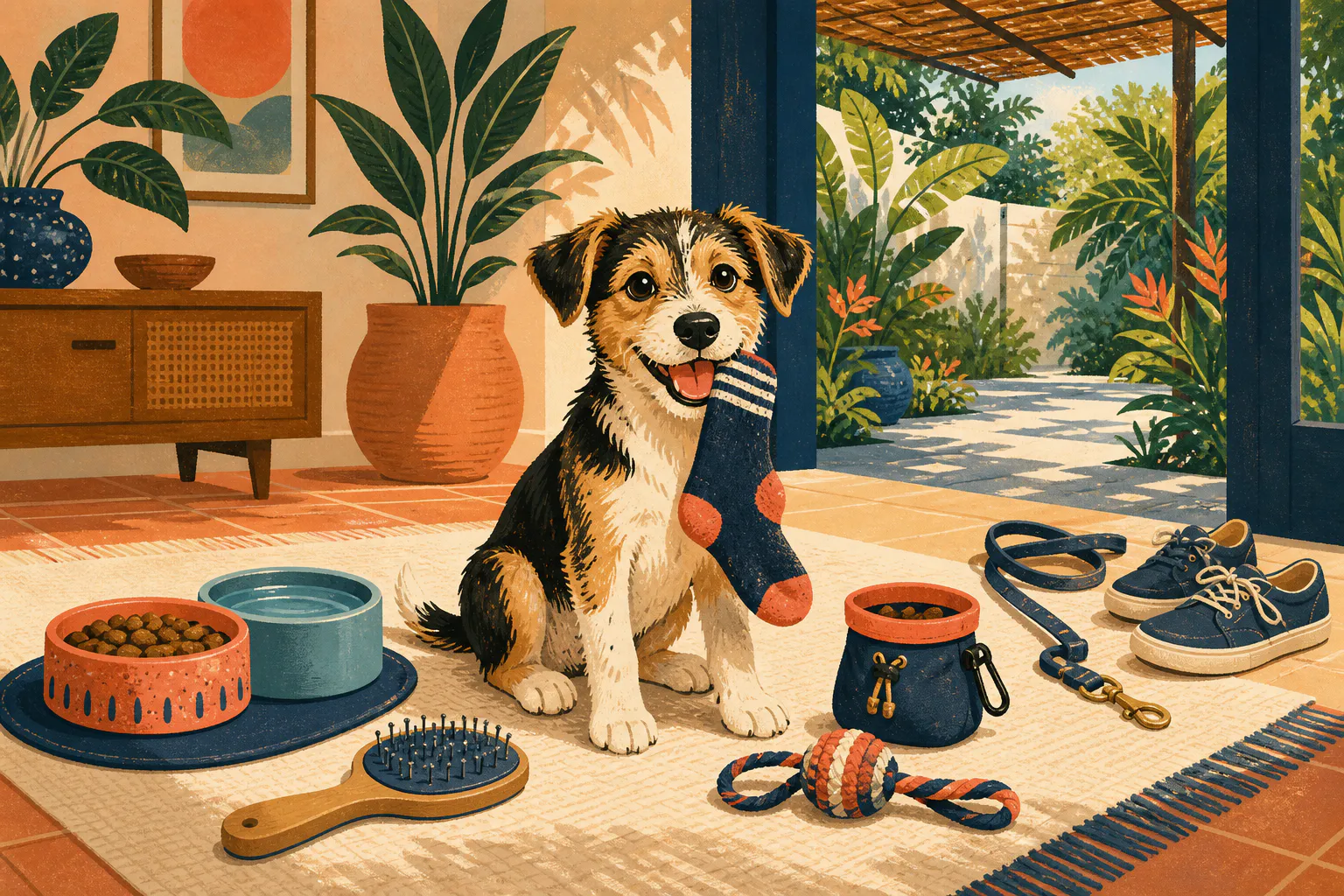
Good puppy care is not a complicated daily project. Get five foundations right: suitable food and fresh water, plenty of sleep, regular toilet opportunities, short positive learning and comfortable movement and play. Add simple grooming, a heat-aware routine and an established veterinarian, and most days become a happy rhythm rather than a checklist.
Food, water and a remarkable amount of sleep
Begin with the food and meal pattern your puppy already knows. Sudden changes can upset a small stomach, so make any later transition gradually. Measure the day's food, keep fresh water easy to reach and use part of the normal allowance for training rather than adding an endless second menu of treats.
Puppies sleep a great deal because growing, learning and being charming are all surprisingly tiring. Give your puppy a quiet comfortable place where family members let them rest. A puppy who suddenly becomes wild, mouthy or unable to listen may simply have stayed awake beyond their better judgement.
Build care into moments that already happen
Offer the toilet area after waking, meals, drinks, play and excitement, then reward success immediately. Handle paws, ears and the mouth gently for a few seconds at a time, introduce the right brush for the coat and make drying after a wet outing ordinary.
Training can be equally small. Reward a response to the puppy's name, four paws on the floor, choosing a toy or settling beside you. These tiny repetitions create useful manners without asking a young puppy to attend a lengthy seminar.
Play, explore and let Thailand set the pace
Short play, sniffing, simple food searches and gentle exploration give a puppy both movement and things to think about. Introduce new people, surfaces, household sounds and experiences gradually, while the puppy is relaxed enough to stay curious.
Plan outdoor activity for cooler times and follow your veterinarian's advice about safe public access during the vaccination course. There is no need to chase a universal exercise formula. The puppy's age, breed, health, confidence and the weather are much better guides.
Know your puppy's normal
Notice the ordinary pattern of appetite, drinking, toilet habits, energy, sleep and sociability. That familiar baseline makes a real change much easier to spot. Keep the puppy's veterinary, vaccination, parasite-protection and identification records together and arrange continuing care with a veterinarian.
You do not need to inspect your puppy as though conducting a daily examination. Enjoy them. A quick look during feeding, grooming and play is usually enough to notice whether something seems different and ask for help when needed.
A few questions families often ask
How much routine does a puppy need?
Use a recognisable rhythm rather than a minute-by-minute timetable. Meals, toilet trips, naps, play and bedtime at broadly familiar times help a puppy settle while still fitting real family life.
How much should my puppy sleep?
Many young puppies sleep for much of the day. Let your puppy rest when tired and protect the sleeping area from enthusiastic visitors, children and other pets.
How much exercise should a puppy have?
Choose short, comfortable activity suited to the individual puppy, breed, weather and vaccination stage. Free play, sniffing and learning all count; stop before tiredness turns the outing into hard work.
When should I find a veterinarian?
Choose one before or soon after your puppy arrives. Bring the existing records so the veterinarian can plan future care around what has already been completed.