Everyday care
What Foods Should Dogs Never Eat?
A practical kitchen reference covering foods dogs must never eat, foods to limit, safer treats and what to do after an accident.
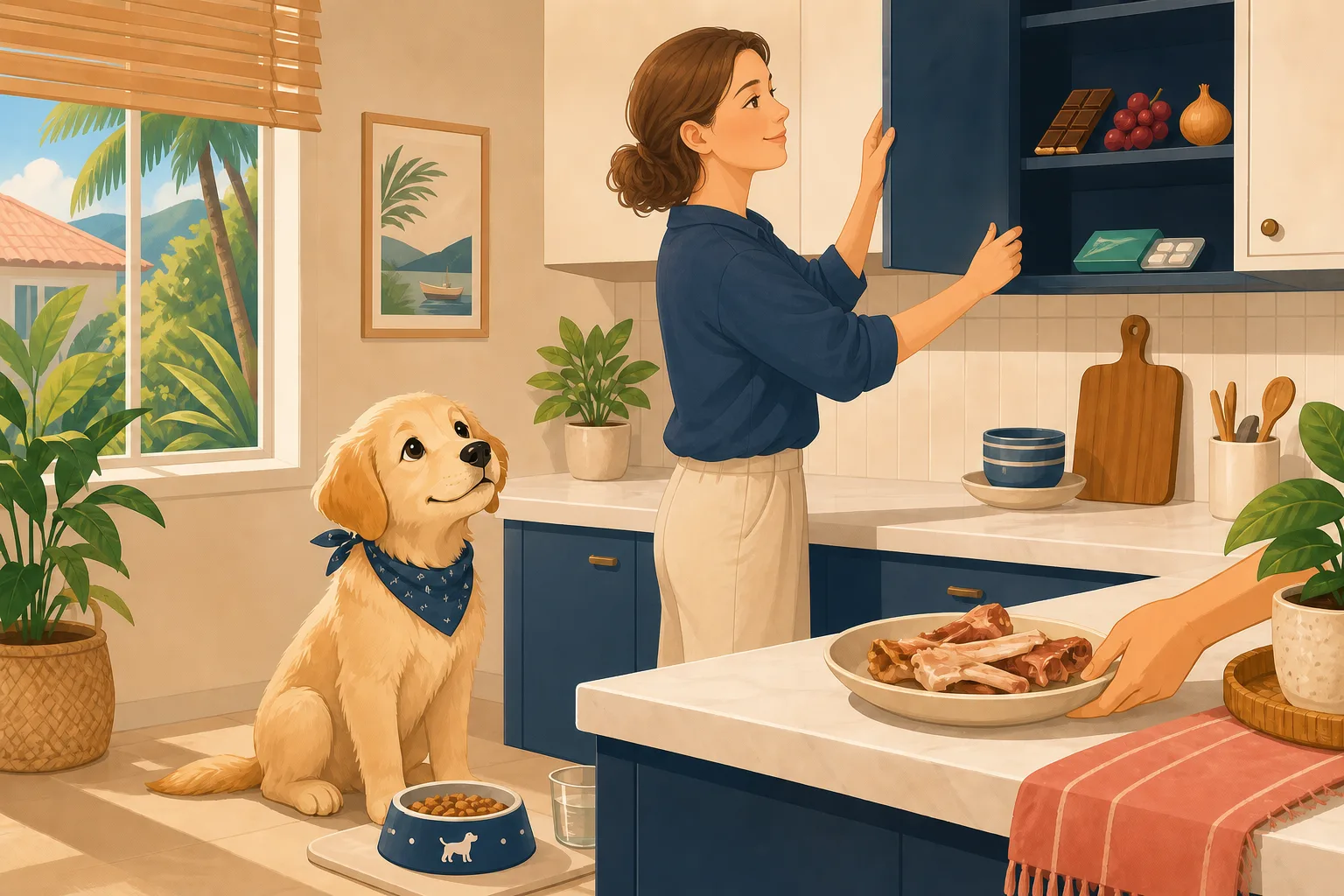
Some everyday foods can make a dog seriously ill, while others are simply too rich, salty or awkward to be sensible treats. This is the useful version: what must stay off the menu, what is best kept occasional, what you can offer instead, and exactly what to do if your dog gets there first.
Never feed these foods
Do not offer these deliberately. If your dog eats any of them, contact a veterinarian promptly rather than waiting for symptoms.
- Xylitol
- A sweetener found in some sugar-free gum, sweets, baked goods, toothpaste, vitamins, medicines and nut butters. Check the ingredient list every time.
- Grapes, raisins and sultanas
- Fresh, dried, baked into food or hidden in trail mix. The reaction is unpredictable, so there is no useful household safe amount.
- Chocolate, cocoa and caffeine
- Keep all chocolate away from dogs. Dark chocolate, baking chocolate and cocoa contain more of the compounds that cause poisoning, but none belongs on the treat list. Coffee, tea leaves, energy products and caffeine tablets are unsafe too.
- Onions, garlic, leeks and chives
- Unsafe raw, cooked, dried or powdered. Check sauces, gravies, seasoning mixes, soups and baby food rather than looking only for visible pieces.
- Alcohol
- This includes drinks, alcohol-containing desserts and unbaked mixtures.
- Raw yeast dough
- It can expand in the stomach and produce alcohol as it ferments.
- Macadamia nuts
- They can cause weakness, vomiting, tremors and other signs in dogs.
Never use these as chews or scraps
These are physical hazards as much as food hazards.
- Cooked bones
- They can splinter, damage the mouth or digestive tract, choke a dog or cause a blockage.
- Corn cobs, skewers and fruit stones
- A dog may swallow them surprisingly quickly and they can obstruct or injure the digestive tract.
- Food bags, wrappers and string
- Greasy packaging is very tempting. It can cause choking, suffocation or a blockage.
- Mouldy food and compost
- Bins and compost can contain several hazards at once. Keep both securely closed.
Limit these rather than making them routine treats
These are not all poisons. They are simply poor everyday choices, especially for a small puppy.
- Fatty leftovers
- Avoid roast drippings, poultry skin, fatty offcuts, fried food and rich sauces. They can cause digestive upset and may contribute to pancreatitis.
- Salty, spicy or heavily seasoned food
- Crisps, processed meat, takeaway food and sauces may be very salty and often contain onion or garlic.
- Milk, cream and large amounts of cheese
- Many dogs do not digest lactose well, and cheese can add a surprising amount of fat and salt.
- Nuts, coconut and avocado flesh
- They are high in fat and can upset the stomach. Avocado stones are also a choking and obstruction hazard.
- Sugary food
- Cake, biscuits and desserts add calories without improving the diet, and sugar-free versions may contain xylitol.
Better ideas for small treats
Keep treats small, plain and occasional. Together, treats and extras should usually stay below 10% of the day's calories.
- Part of the daily puppy food
- Set aside a measured handful from the normal allowance for training.
- Plain cooked lean meat
- Tiny pieces of boneless, skinless, unseasoned chicken or turkey work for many dogs.
- Crunchy vegetables
- Small pieces of carrot, cucumber or plain green beans are simple options.
- Prepared fruit
- Try a little seedless apple with the core removed, blueberries or a small piece of banana.
- Plain pumpkin
- Cooked pumpkin without sugar, spices or sweetener can be offered in a small amount.
If your dog eats something unsafe
Take the food away and check what is missing. Keep the packet, ingredient label or a clear photograph of it. Note what your dog ate, the likely amount, when it happened and your dog's approximate weight.
Call your veterinarian or an emergency veterinary clinic promptly. Do not wait for symptoms and do not try to make your dog vomit unless a veterinarian specifically instructs you to do so. If your dog is choking, collapsing, having a seizure or struggling to breathe, leave for emergency care immediately and call on the way.
Make the safe choice the easy choice
Keep the serious hazards in closed cupboards, including the chocolate beside a bed and the chewing gum in a handbag. Use a lidded bin, clear plates promptly and make sure children and visitors know that sharing is by invitation only.
Keep a small container of measured puppy food or suitable treats within easy reach. It gives the family an effortless answer when a hopeful face appears in the kitchen, as it reliably will.
A few questions families often ask
My dog ate only one grape or raisin. Should I still call?
Yes. Dogs do not respond predictably to grapes and raisins, so call a veterinarian promptly even when the amount seems small.
My dog ate chocolate. What details matter?
Call with your dog's weight, the type of chocolate, cocoa percentage if shown, likely amount and time. Keep the wrapper. Do not wait for vomiting, restlessness or other signs before asking for advice.
Is cooked onion or garlic safer than raw?
No. Onion-family foods can be harmful raw, cooked, dried or powdered. Remember that stock cubes, gravies, sauces and seasoning mixes may contain concentrated powder.
Can dogs have peanut butter?
Only use one whose ingredient list is explicitly free from xylitol, and offer a very small amount because peanut butter is high in fat and calories. Recheck the label when you buy a new jar.
What if my dog swallows a cooked bone?
Call a veterinarian for advice rather than trying to make your dog vomit. Seek urgent help for choking, repeated retching or vomiting, a painful abdomen, marked lethargy or difficulty passing stool.
Which fruit and vegetables are simple treats?
Small pieces of carrot, cucumber, plain green beans, blueberries, banana, or seedless and core-free apple suit many dogs. Introduce one at a time, keep portions small and stop if it causes digestive upset.