
Everyday care
Is My Puppy Healthy? A Simple Head-to-Tail Check
Learn what healthy usually looks like, make a quick everyday check and know which changes deserve a veterinary call.
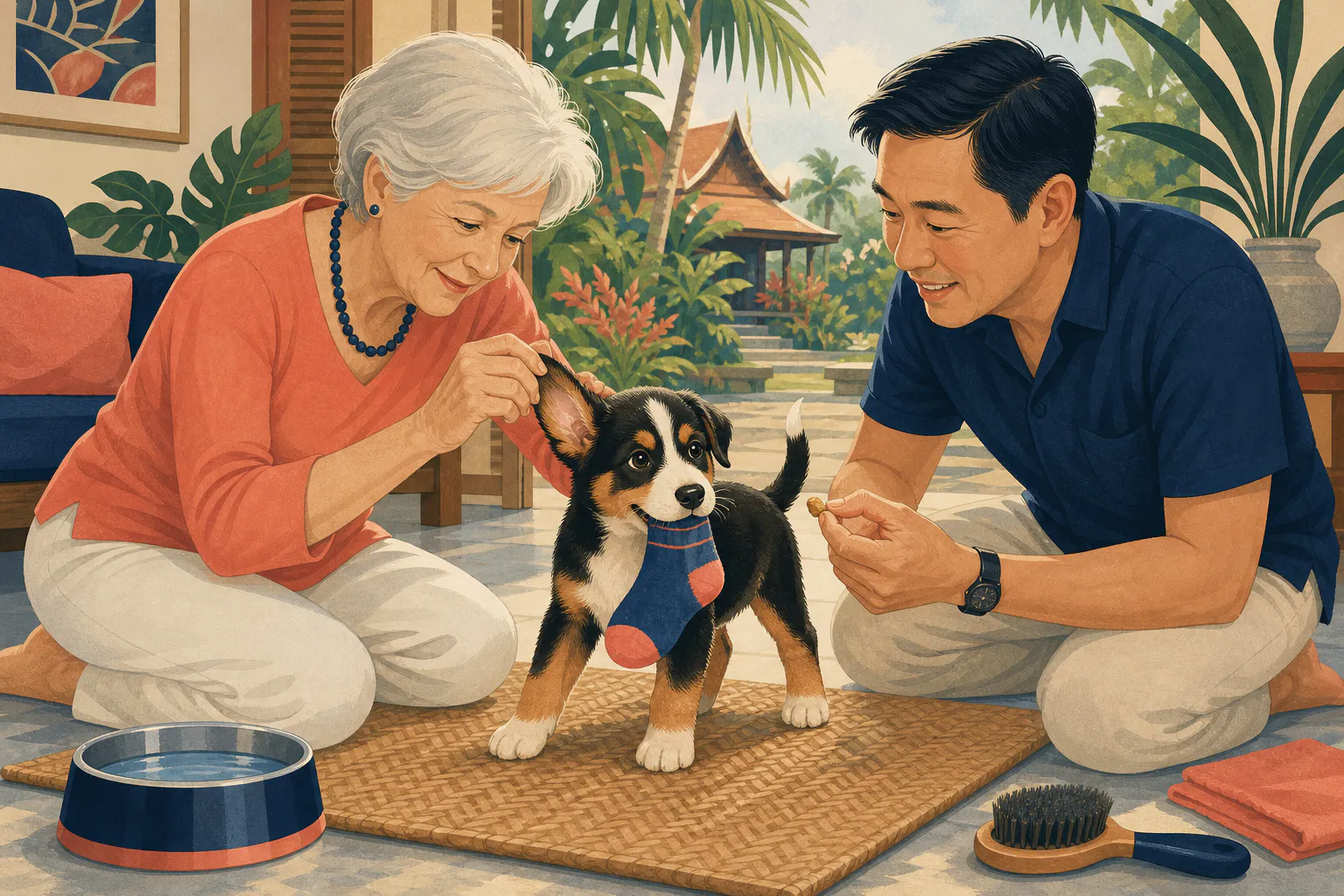
A healthy puppy is usually bright and curious when awake, comfortable when resting, keen to eat, drinking normally, toileting predictably and moving freely. Eyes, ears, mouth, skin and coat should look comfortable. The most useful skill is learning your puppy's normal pattern, because a clear change in appetite, energy, breathing, movement or toilet habits often tells you more than a perfect checklist.
Start with the puppy you know
Notice the ordinary rhythm: enthusiasm at mealtimes, water intake, stools and urine, bursts of play, long naps and interest in the household. Young puppies sleep a great deal, but when awake they should usually have moments of alertness and engagement.
Write down a change that lasts or comes with another symptom. A puppy who skips one mouthful but remains cheerful is different from one who refuses food and becomes quiet. The question is not whether every day is identical; it is whether your puppy still seems comfortably themselves.
Take a friendly look from nose to tail
Eyes should be open, clear and comfortable. Ears should not be sore, strongly smelly or full of discharge. Gums should look healthy, breathing should be easy and the mouth should not make eating painful. Run your hands gently over the coat and skin for soreness, swelling, parasites or sudden hair loss.
The belly should not be painful or unusually swollen. Watch your puppy walk, turn and rise without stiffness or limping, and check paws and nails after outdoor adventures. Handling should feel like calm attention with a treat attached, not a surprise inspection by the authorities.
These changes deserve a call today
Contact your veterinarian if your puppy repeatedly vomits or has diarrhoea, refuses food, becomes much less lively, coughs, develops eye or nose discharge, limps, appears painful, drinks or urinates unusually, or has a sore skin or ear problem. Young puppies can become dehydrated and weak more quickly than adult dogs, so call earlier rather than waiting several days.
Tell the clinic the puppy's age, weight, vaccination status, when the change began and what they have eaten, drunk, passed or possibly swallowed. A short video or photograph may help the team understand a cough, movement change or stool, but it does not replace an examination when one is advised.
For urgent signs, call while you are going
Breathing difficulty, collapse, a seizure, severe weakness, repeated vomiting or diarrhoea with rapid decline, a swollen painful abdomen, inability to urinate, significant injury, or possible poisoning or swallowed object needs urgent veterinary help. Phone the clinic on the way so they can prepare and tell you where to arrive.
Keep the puppy safely contained and bring any packaging, records or sample the clinic requests. Do not induce vomiting or give human medicine unless a veterinarian specifically instructs you to do so. Quick, useful information is the best thing to pack.
A few questions families often ask
Is it normal for a puppy to sleep so much?
Yes. Young puppies often sleep for much of the day. They should still wake for food and toilet trips and have alert, comfortable periods of play and interaction.
Does a warm or dry nose mean my puppy is ill?
Not by itself. A dog's nose changes with sleep, weather and activity. Appetite, energy, breathing, hydration and other signs give a much more useful picture.
Should I worry if my puppy misses one meal?
Offer the familiar food and watch closely. Call the veterinarian if appetite does not return promptly, your puppy is very young or small, or the missed meal comes with vomiting, diarrhoea, weakness, pain or unusual behaviour.
Is one soft stool an emergency?
One soft stool in an otherwise bright puppy may settle, but repeated or watery diarrhoea, blood, vomiting, poor appetite or reduced energy needs a prompt veterinary call.
How can I make changes easier to notice?
Keep a weekly weight note and occasional clear photographs, and learn the normal meal, water and toilet pattern. You are building a useful baseline, not a daily medical spreadsheet.