
Everyday care
Microchipping Your Puppy in Thailand
What the chip does, how the number becomes useful and why identification matters at home and when travelling.
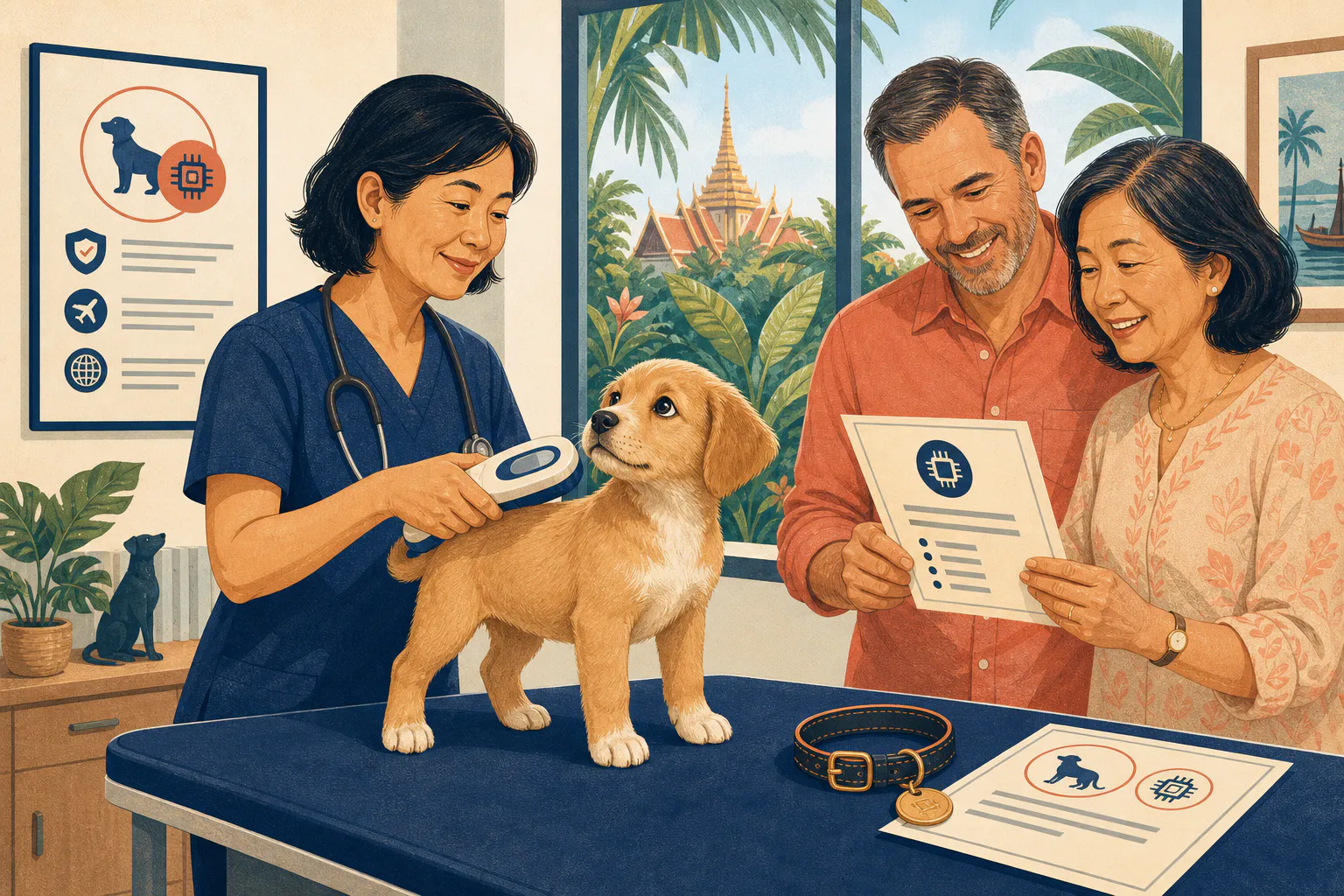
A microchip gives your puppy a permanent identification number that can still be read if a collar is lost. It is not GPS and it does not contain your address. Its value comes from three simple things working together: a readable chip, the correct certificate or record, and contact details that remain current.
A small chip with one clear job
The chip sits beneath the skin and carries a unique number. A handheld scanner reads that number, which can then be matched with the puppy's certificate and the contact record held by the relevant registry or provider. The chip has no battery and does not track location.
That makes it a quiet backup to an ordinary collar tag. A tag helps someone call you immediately; a microchip remains with the dog if the collar slips off during an unexpectedly ambitious adventure.
The number needs the right details behind it
Keep the microchip certificate with the puppy's veterinary records and save a clear photograph or secure digital copy. Confirm where the number is recorded and which contact details are attached to it. Update the record whenever your phone number, email, address or ownership changes.
Ask your veterinarian to scan the chip during routine care and before important travel paperwork is prepared. This confirms that the chip can be read and that the number copied onto documents is the right one. Fifteen digits are not the ideal place to rely on memory.
Microchips make travel paperwork easier to join up
An ISO-standard chip is widely readable and is commonly required for international pet travel. Destination rules vary, and the order of microchipping, rabies vaccination, testing and certification can matter. Tell the veterinarian or travel specialist the intended country and travel date before the schedule is planned.
The important practical rule is consistency: the number scanned from the puppy should match the microchip certificate, vaccination record and travel documents exactly. Check the destination's current official requirements rather than relying on an old checklist from a previous journey.
What Perfect Pedigree provides
Every Perfect Pedigree puppy is microchipped with an ISO-compliant chip and travels with a microchip certificate among their identification and health documents. Keep that certificate safe and use it when confirming the contact record, continuing veterinary care or preparing future travel.
Microchipping is one small part of responsible preparation, but it has a long useful life. The procedure takes moments; keeping the details current takes even less, provided somebody remembers where the certificate lives.
A few questions families often ask
Can a microchip track my puppy?
No. A standard pet microchip is not GPS. A scanner reads its identification number at close range, and that number is used to locate the associated contact record.
Does a microchip replace a collar tag?
No. Use both. A visible tag can reunite a dog with the family quickly, while the chip provides permanent identification if the collar is missing.
Does the microchip need charging or replacing?
It has no battery and normally remains in place for life. Ask your veterinarian to scan it periodically so you know it is readable and the recorded number is correct.
Why does an ISO-compliant chip matter?
ISO 11784 and 11785 are widely used international standards, making a compliant chip easier for compatible scanners to read. The destination's current travel rules still decide what documentation and timing are required.
What should I do if my contact details change?
Update the registry or contact record linked to the chip as soon as possible. If you are unsure who holds it, use the certificate or ask your veterinarian or the original provider for help identifying the correct service.