
Everyday care
Home at Last: Your Puppy's First Few Days
A calm arrival, an easy first night and a small familiar world that grows at your puppy's pace.
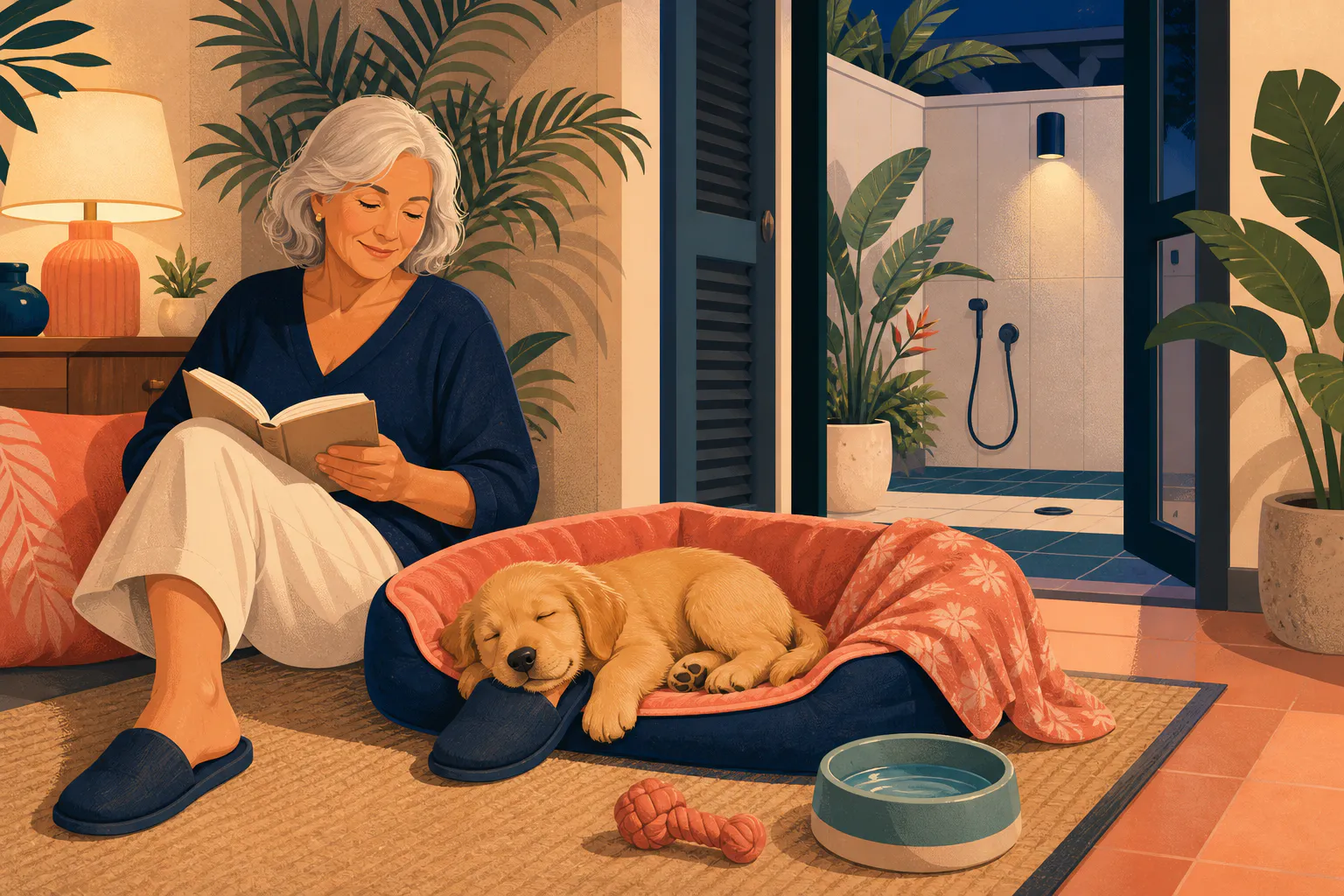
For the first few days, make your puppy's world smaller, calmer and more predictable. Begin with the toilet area, one comfortable part of the home, familiar food, plenty of sleep and family members who can resist turning arrival day into a welcome parade. Confidence grows quickly when everything new does not arrive at once.
The first hour: toilet, water, bed, breathe
After the journey, take your puppy directly to the chosen toilet area and quietly reward any success. Then show them the water, sleeping place and one or two rooms rather than opening the entire home for inspection.
Stay nearby and let the puppy explore without being passed from person to person. A short play, a little food at the familiar time and a long nap can make an excellent first afternoon. The grand tour will still be available tomorrow.
Keep the familiar things familiar
Use the food, portion guidance and meal pattern provided with your puppy. Keep the bed in a calm spot and offer toilet trips after waking, eating, drinking, playing and whenever sniffing begins to look particularly purposeful.
Limit visitors for the first few days and protect naps. You can introduce household sounds, people and new spaces in small pleasant pieces. The aim is not silence; it is enough breathing room for your puppy to decide that this new place is safe and interesting.
Make the first nights reassuringly boring
Settle your puppy near enough that you can hear when they wake and need you. A familiar-smelling blanket, a calm bedtime routine and a quiet toilet trip before sleep all help. Young puppies may need another toilet opportunity during the night.
If your puppy wakes worried, offer calm reassurance and check whether they need the toilet. Keep lights low and conversation uneventful, then help them settle again. Night-time should feel safe but not reveal a previously undiscovered programme of games and snacks.
Let the world grow over the next few days
Once your puppy is eating, sleeping and exploring comfortably, add another room, a short moment alone while you remain nearby, gentle handling and carefully chosen new experiences. Follow the vaccination guidance for your individual puppy before public ground or unfamiliar dogs.
Review the health, vaccination, parasite-protection and microchip records and arrange continuing veterinary care. If another dog, a cat or young children live at home, use the separate introduction guides rather than asking everyone to become best friends before dinner.
A few questions families often ask
Should I leave my puppy to cry at night?
No. Check whether your puppy needs the toilet and offer calm reassurance. Keep the interaction quiet, help them settle and build comfortable independence gradually during the day.
Where should my puppy sleep at first?
Choose a safe comfortable place close enough for you to hear them wake. You can gradually move the bed later if the permanent sleeping place is elsewhere.
What if my puppy does not finish a meal?
Travel and excitement can briefly affect appetite. Offer the familiar food and fresh water without adding a buffet of alternatives. Contact a veterinarian if poor appetite continues or comes with vomiting, diarrhoea, unusual tiredness or another concerning change.
What should I take to the first veterinary appointment?
Bring the health, vaccination, parasite-protection and microchip records, plus the name of the current food and any medicine. Note any changes you have noticed and the questions you want answered. Ask the veterinarian to confirm the next vaccination and parasite-care dates and to scan the microchip number.
When can visitors come?
Give your puppy a few calm days first, then introduce one or two considerate visitors at a time. Let the puppy approach and protect their sleeping place.